

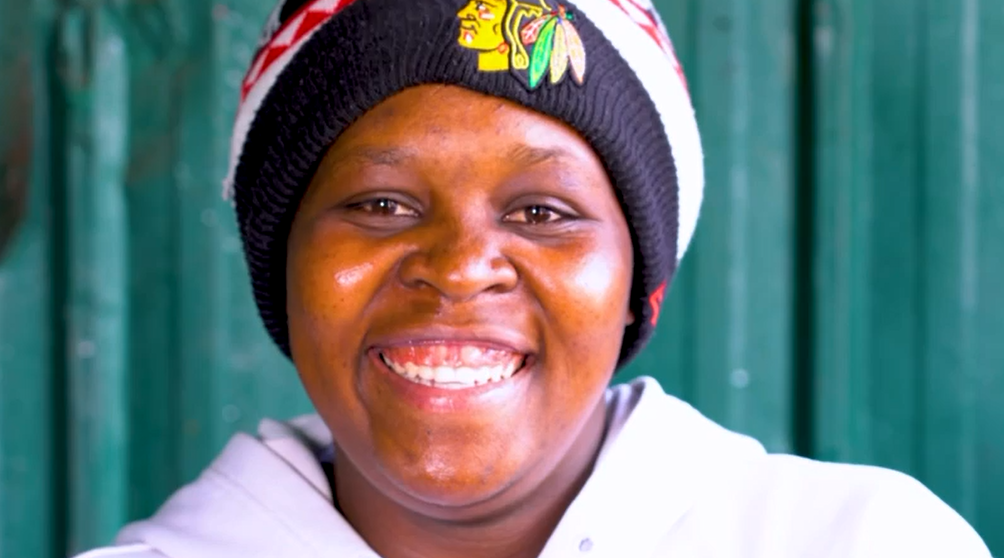
When Florence Mumbi gave birth under difficult circumstances, her future seemed uncertain.
Recovering from childbirth while struggling to provide for her family, she had the determination to rebuild her life but lacked the one thing many young entrepreneurs in Kenya never have enough of—capital. Then came an opportunity through the National Youth Opportunities Towards Advancement (NYOTA) programme.
Today, Florence runs a thriving fried chicken business. More importantly, she has regained her confidence, financial independence and hope.
Hundreds of kilometres away on Kenya’s coast, Ali’s story is different but no less remarkable. For years, his family’s livelihood depended on a fishing boat. When the vessel broke down, so did his income. A NYOTA grant enabled him to repair it, but necessity sparked innovation. Rather than relying solely on fishing, Ali converted the same boat into a tourism enterprise, taking visitors on excursions along the coast and creating a more stable source of income.
Then there is Samuel.
Like thousands of boda boda riders across Kenya, every morning began with one pressing obligation—finding KSh350 to service his motorcycle loan before he could earn anything for himself. When NYOTA selected him for support, he invested in his business and began earning around KSh500 daily. Today, he is thinking beyond survival. His ambition is to own an entire fleet of motorcycles that will employ other young riders.
These are the stories the Government hopes will define a new chapter in Kenya’s youth employment agenda.
A generation waiting for opportunity
Kenya is one of Africa’s youngest countries.
Nearly three-quarters of the population is under the age of 35, while close to 800,000 young people enter the labour market every year. Yet the formal economy cannot absorb all of them.
Most young Kenyans earn a living in the informal sector, while many remain unemployed or underemployed despite possessing the skills, ambition and creativity needed to succeed.
For years, policymakers have viewed this growing youth population as a potential crisis.
NYOTA takes a different view.
Instead of treating young people as a challenge to be managed, the programme views them as Kenya’s greatest economic asset—provided they receive access to skills, finance, mentorship and markets.
Supported jointly by the Government of Kenya and the World Bank, NYOTA combines entrepreneurship training, business mentorship, financial literacy, Recognition of Prior Learning, apprenticeship opportunities, savings support, government procurement training and start-up financing into one integrated programme.
Rather than simply issuing grants, the programme aims to build sustainable businesses capable of creating additional employment.
Demand exceeded every expectation
If policymakers needed proof that Kenya’s youth are eager to build businesses, they found it almost immediately.
More than 2.5 million young people applied for the programme.
From those applications, 121,800 entrepreneurs were competitively selected from all 1,450 wards across the country.
More than 91,000 beneficiaries completed Business Development Services training before receiving their first grants, while over 90,000 entrepreneurs underwent structured mentorship. By the end of the first mentorship cycle, an impressive 96 per cent had already established operating businesses.
Government invested over KSh2.28 billion into youth-owned enterprises during the first phase alone.
Behind every statistic is a business opening its doors.
A grocery shop with fuller shelves.
A salon serving more clients.
A mechanic buying new equipment.
A fishing boat returning to the water.
A boda boda rider becoming an employer.
From Nairobi to every county
The programme’s first phase focused primarily on Nairobi, Kiambu, Machakos and Kajiado.
Its success convinced Government that the model could work nationally.
Now comes Phase II.
Government will invest KSh3.06 billion to support 122,203 young entrepreneurs across Kenya.
The new phase includes 33,269 first-time beneficiaries receiving initial grants, while 88,934 existing entrepreneurs will receive second-round financing to help expand businesses they have already established.
The programme is no longer simply about helping young people start businesses.
It is about helping them grow.
Regional rollout will begin in northern Kenya before expanding to western Kenya, the Rift Valley, the Coast and the rest of the country under the leadership of senior government officials and Cabinet Secretaries.
The message is deliberate.
Opportunity should not depend on where a young Kenyan was born.
Beyond grants
Economists have long argued that access to finance alone rarely guarantees business success.
Many start-ups fail because entrepreneurs lack mentorship, bookkeeping skills, market access or networks.
NYOTA attempts to close all those gaps simultaneously.
Beneficiaries receive practical business training before grants are released. They are paired with mentors and trained on financial management while also learning how to access government procurement opportunities through the Access to Government Procurement Opportunities (AGPO) programme.
The programme’s designers believe this integrated approach explains why nearly all beneficiaries had operational businesses after mentorship.
Creating tomorrow’s employers
Perhaps the most ambitious aspect of NYOTA lies in what comes next.
As businesses mature, Government plans to work with county governments to ease barriers such as licensing requirements and business permits.
Entrepreneurs will also be linked to larger financing opportunities through institutions including the Youth Enterprise Development Fund, Uwezo Fund, Kenya Industrial Estates (KIE) and the Kenya Jobs and Economic Transformation (KJET) programme.
The objective is simple but ambitious.
Transform today’s micro-enterprises into tomorrow’s employers.
If successful, officials estimate the programme could stimulate between 150,000 and 250,000 additional jobs, strengthening Kenya’s micro, small and medium enterprise sector while helping unlock the country’s long-discussed demographic dividend.
More than numbers
Development programmes are often measured in budgets, beneficiaries and implementation targets.
NYOTA tells a different story.
It is the story of Florence discovering independence through entrepreneurship.
Ali transforming a broken fishing boat into a tourism business.
Samuel dreaming not just of paying his daily loan, but of employing other young people.
And Damaris, who expanded her roadside food business and now hopes to open a butcher shop bearing her own name.
Collectively, they illustrate something larger than individual success.
For decades, Kenya’s conversation around youth has often centred on unemployment, frustration and lost opportunities.
NYOTA seeks to change that narrative.
Its premise is that Kenyan youth have never lacked ambition or ideas—they have lacked opportunity.
Whether the programme ultimately fulfils its promise will become clear in the years ahead.
But for more than 122,000 young entrepreneurs preparing to receive support under Phase II, the opportunity itself may prove to be the first and most important investment in building Kenya’s next generation of businesses—and, perhaps, its next generation of employers.
Read: Govt Extends NYOTA Mentorship Programme as 98% of Beneficiaries Launch Businesses
>>> NYOTA Project: Over 12,000 Youth Receive Ksh303 Million in Start-Up Capital













Leave a comment