

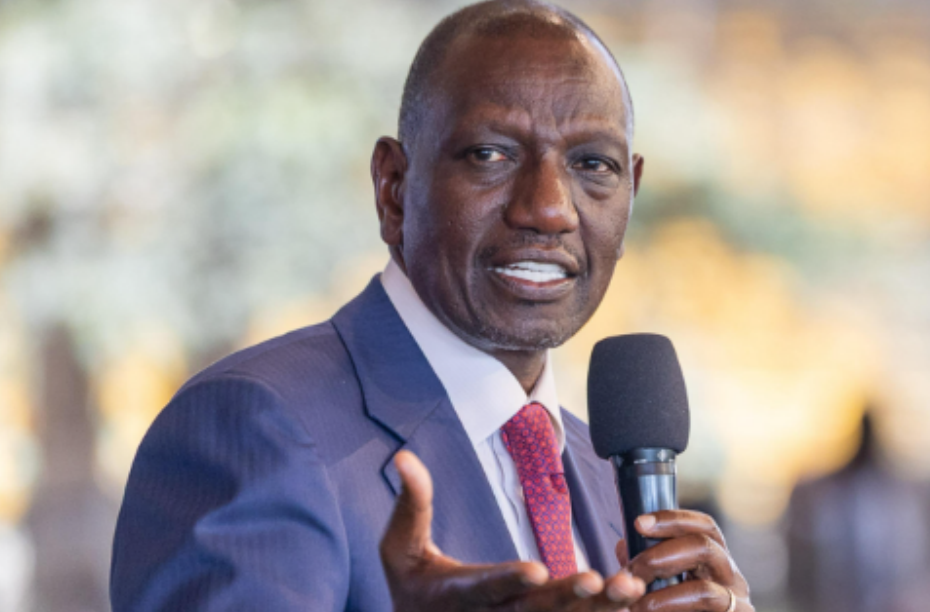
The 2024 anti-Finance Bill protests marked a defining moment in President William Ruto’s presidency, forcing significant changes in how the administration approaches taxation, policymaking, public communication, accountability and political coalition-building.
What began as widespread opposition to proposed tax increases quickly evolved into a broader national debate over how public funds are spent, how government policies are communicated and the extent to which citizens should influence decisions that affect their lives.
Two years later, the impact of the protests is evident not only in government policy but also in the way the presidency conducts its affairs.
Shift in taxation and policymaking
The most immediate impact of the protests was felt in taxation.
President Ruto withdrew the Finance Bill 2024 after demonstrations intensified, abandoning a package containing several proposed revenue measures. The withdrawal was followed by government expenditure cuts and a search for alternative ways to raise revenue.
The administration, however, did not abandon its revenue mobilisation agenda.
By December 2024, Parliament had passed the Tax Laws (Amendment) Act, introducing changes to income tax, VAT, excise duty and other taxes.
The approach differed from the original Finance Bill, with the government shifting towards smaller and more targeted amendments instead of combining numerous contentious proposals in a single legislative package.
The bigger change has been the increased emphasis on tax administration and enforcement rather than relying mainly on raising headline tax rates.
The National Treasury and Kenya Revenue Authority (KRA) have increasingly turned to digital systems, third-party information and data matching to identify taxable income and improve compliance.
Since the protests, KRA has also expanded direct digital engagement with taxpayers.
By 2026, Kenyans were increasingly receiving SMS notifications asking them to file returns, clarify income or settle outstanding tax obligations. Some of the messages were linked to discrepancies identified through eTIMS and other third-party data.
KRA also moved some compliance services to WhatsApp, launching the Shuru chatbot in April 2026 to enable taxpayers to file returns, check their obligations and obtain assistance.
The shift points to a more technology-driven strategy for widening tax compliance rather than relying primarily on new taxes.
It also reflects a delicate balance facing the government: raising sufficient domestic revenue to finance programmes and meet debt obligations while remaining conscious of public resistance to additional taxes.
Treasury Cabinet Secretary John Mbadi has acknowledged the lessons of the protests.
In explaining the 2025 Finance Bill, he said:
“Last year’s events were a learning point for us all. Those of us who joined the government after that had to look for ways of doing things differently.”
Government changes its communication strategy
The experience also changed how the government communicates fiscal policy.
President Ruto acknowledged during the 2024 protests that the administration had failed to adequately explain the Finance Bill to the public.
“We did not explain ourselves better; I am sure my communication team failed, and our communication architecture did not deliver. The message did not get out to the people,” he said on July 1, 2024.
The admission highlighted one of the defining features of the crisis.
While the government relied largely on conventional communication channels, young Kenyans were independently analysing the Bill on social media and circulating their own explanations of its provisions.
Since then, communication surrounding taxation and the budget has become more continuous and interactive.
Mbadi has emerged as one of the administration’s most prominent voices on fiscal policy, appearing at public forums, on television and before community groups to explain government proposals.
In February 2025, he visited Jeevanjee Gardens to engage members of Bunge la Mwananchi on the budget process. He told them that the traditional practice of Treasury officials simply taking the Budget Statement to Parliament was changing.
That approach continued into the 2026 budget cycle, with the Treasury CS repeatedly explaining the difference between the Finance Bill and Budget Estimates while urging Kenyans to study proposals before forming opinions.
“Before muanguke na hii Finance Bill yangu vile mulianguka na ile engine, I want you to take your time and understand what is in it,” Mbadi said while discussing the 2025 Bill.
He added:
“What we have done with this Finance Bill is simply to make tax systems more efficient and to deal with the tax administration.”
Public participation has consequently become more prominent in the budget-making process.
For the 2026 Finance Bill, Parliament’s Finance and National Planning Committee said it received memoranda from more than 100,000 respondents and held public hearings in 13 counties, in addition to stakeholder engagements.
The significance extends beyond the number of meetings and submissions.
Parliament and Treasury are increasingly presenting public consultation as an integral part of policymaking rather than an exercise conducted only after a proposal has already generated public attention.
Accountability takes centre stage
The 2024 demonstrations also transformed the national conversation around accountability.
The issue was no longer simply whether taxes should be reduced.
Kenyans increasingly questioned how money already collected by the government was being spent, with public expenditure, procurement, government travel, corruption and debt becoming central issues in the wider debate.
Ruto initially responded through a series of highly visible political and administrative decisions.
He withdrew the Finance Bill, dissolved almost the entire Cabinet and directed government to reduce expenditure.
The subsequent supplementary budget cut Sh145.7 billion from national government spending, including Sh139.81 billion from the Executive.
The Cabinet changes became one of the most significant moments of the presidency.
Ruto presented the reorganisation as an opportunity to assess performance and begin a new phase, placing greater emphasis on corruption, debt, job creation and government wastage.
Accountability has since increasingly been framed around institutional systems as well as individual responsibility.
The President has promoted digitisation of government procurement, with the objective of making it easier to establish who was awarded public contracts and how much was paid.
The administration has also presented digital government platforms as mechanisms for reducing corruption risks and strengthening oversight.
One of the clearest examples has been the fast-tracking of the Electronic Government Procurement (e-GP) system.
Mbadi has repeatedly linked the platform to greater transparency and accountability in government expenditure.
“EGP is a system that automates procurement processes from bid submission, tender opening to the tender award,” Mbadi said.
“The system minimises human interaction, which traditionally has been a major source of corruption, favouritism and solicitation of facilitation fees.”
Government response to protest victims
Accountability has also extended to the State’s response to people harmed during demonstrations.
In August 2025, President Ruto established a framework for compensating victims of protests and riots. The initiative was later supported by a Sh2 billion allocation.
It was subsequently incorporated into a broader reparations framework developed by the Kenya National Commission on Human Rights (KNCHR), covering human rights violations between 2017 and 2025.
By June 2026, KNCHR had received 1,937 claims and verified 1,101 cases.
The compensation programme has been framed as recognition of harm and part of a wider process of justice, accountability and national healing.
How the protests reshaped Ruto’s political strategy
Perhaps the most consequential change has been in Ruto’s political strategy.
In 2022, his political identity was built around the “hustler” narrative and a clear contest between Kenya Kwanza and the Azimio opposition.
The 2024 demonstrations presented a fundamentally different political challenge.
The protests were largely driven by young people and operated outside traditional party structures. They therefore could not easily be addressed through negotiations with established opposition leaders.
Ruto responded by seeking to broaden his political base.
In July 2024, he began bringing opposition figures into a new Cabinet, including Mbadi, and described the arrangement as a “broad-based” government.
The relationship that subsequently developed between Ruto and former Prime Minister Raila Odinga evolved into a formal Kenya Kwanza-ODM cooperation framework in 2025.
“I agreed with Raila Odinga that we should unite Kenyans and form a broad-based government that brings all Kenyans together so that we can eliminate tribalism, hatred, and discrimination,” the President said earlier in May this year.
The political significance of the shift became more pronounced as Ruto’s relationship with his former deputy, Rigathi Gachagua, deteriorated, culminating in Gachagua’s impeachment in October 2024.
Ruto was increasingly able to rebuild his parliamentary and political alliances around a wider group of parties and political leaders.
The result has been a shift from defending the coalition that brought him to power towards expanding his political reach ahead of the 2027 General Election.
His allies have increasingly sought support in regions traditionally associated with opposition politics, including Nyanza, Western Kenya, the Coast and Ukambani.
The language used by the presidency has changed alongside the political strategy.
The “hustler versus dynasty” narrative that dominated the 2022 election campaign has increasingly been replaced by themes of national unity, inclusion and development.
Earlier, Ruto described the broad-based approach in terms of expanding the national economic “cake”, saying the objective was to “bake a bigger cake for everybody to share.”
He has also said the arrangement with Raila was intended to unite Kenyans and tackle tribalism, hatred and discrimination.
Development has consequently become an increasingly important part of the administration’s political messaging.
Roads, healthcare facilities, housing, agriculture, jobs and infrastructure have become central to Ruto’s outreach, including in areas where his political support was previously limited.
A presidency reshaped by the 2024 protests
Taken together, the changes indicate that the 2024 protests went far beyond forcing the withdrawal of a single Finance Bill.
They altered the relationship between government policy and the public.
On taxation, the administration has shifted towards greater emphasis on compliance and tax administration.
On policymaking, there is greater emphasis on consultation before legislation reaches its final stages.
Government communication has become more continuous and explanatory, with senior officials increasingly engaging directly with citizens.
Accountability has become more closely associated with expenditure controls, compensation and redress for people affected by State actions, procurement transparency and government performance.
Politically, Ruto has moved from a straightforward government-versus-opposition model towards a broader coalition built around national unity, inclusion, development and the 2027 political contest.
The lasting significance of the 2024 protests, however, will ultimately be measured by whether these changes translate into greater public trust.
The demonstrations forced the administration to confront a new political reality: Kenyans are demanding not only to know what government intends to do, but also to understand why decisions are being made, participate in shaping them and see how public resources are being used.
Read: Ruto @ 4: How Govt Reshaped Kenya’s Education System Under CBC Reforms
>>> Ruto @ 4: Govt’s Teacher Recruitment Drive Cuts Staffing Gap











Leave a comment