

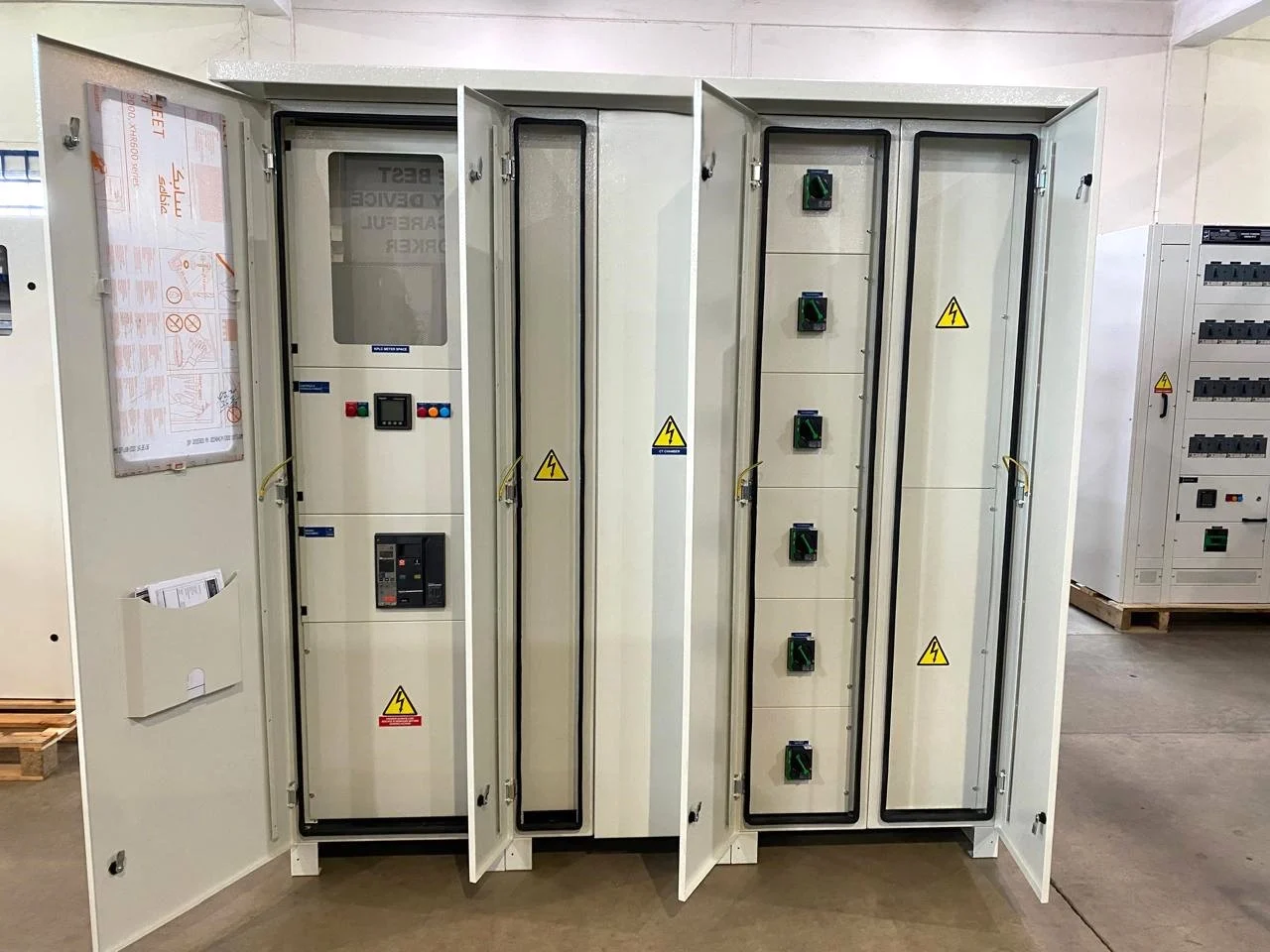
ACTOM Kenya, a leading provider of engineered solutions in the energy sector, recently completed an order to supply electrical distribution panels to a newly constructed Electric Vehicle (EV) charging site in Nairobi. This is the third such order that ACTOM Kenya has fulfilled for BasiGo, a leading provider of electric bus solutions in Sub-Saharan Africa.
Kelvin Ageng’o Oriwo, General Manager at ACTOM Kenya, explains that these installations are designed to handle huge electrical loads, with incoming ratings of up to 1 600 amps. The newest site has five dedicated charging lines rated at 250 amps each, specifically for electric buses, along with an additional 100-amp line to support general site usage.
“ACTOM’s panels connect the chargers to the electrical grid, ensuring safe, reliable and efficient power distribution. Our role is to help BasiGo translate its vision into operational reality by delivering infrastructure that is not only technically sound but future-ready,” says Oriwo.
Uptick in activity and investment
Support for EV infrastructure in Kenya is still in its early stages, but recently there has been a noticeable uptick in activity and investment. A private sector company is currently planning a nationwide rollout of EV charging stations, strategically alongside their existing petrol stations.
At the same time, state-owned utility Kenya Power is also showing a strong interest. Initially, its push was framed around climate goals and sustainability, however, they are now also viewing EV charging as a strategic opportunity to diversify revenue streams. “Private sector players like BasiGo are already operational. Due to limited public infrastructure, many are building private charging stations tailored to their own standards, filling critical gaps and accelerating ecosystem growth,” says Oriwo.
“ACTOM sees EV charging as a natural extension of our renewable energy strategy and a key pillar in our contribution to the global Net Zero and climate conservation agenda. Our work with clients like BasiGo, including residential EV charging deployments, aligns directly with this mission.”
Addressing public transport challenges
Additionally, Oriwo says that electric mobility is a way to introduce a more formal structure to Kenya’s public transport sector, which has been characterised by various disruptions since privatisation in the 1990s. “The instability within the sector needs to be addressed, and one of the most promising ways to restore order is through the adoption of e-mobility, which, by its very nature, introduces structure. With structure comes not only standards, rhythms and operational discipline, but also heightened safety, service quality and environmental responsibility.”
> Interest Income Lifts Family Bank Q3 Profit by 56%
However, Oriwo notes that some technical and operational challenges do exist in terms of deploying EV charging stations in Kenya, especially as it is a new industry, with no set playbook to follow.
Each installation a learning curve
“Unlike petrol stations, offices or roads, where standards are well-established, EV infrastructure is being defined as we build it. Every installation is a learning curve, and every rollout demands close collaboration with a wide range of stakeholders,” he says. “The EV space is full of moving parts, and that is where the complexity lies. But it is also where the opportunity lies, because every challenge we solve becomes part of the foundation for a more structured, reliable and sustainable future.”
Philip Gorman, the Head of Charging Infrastructure at BasiGo, emphasised that the successful rollout of electric buses in Kenya depends on strong collaboration across the ecosystem. “We are glad to work with companies such as ACTOM Kenya to lay the foundation of charging infrastructure in the country and accelerate the transition to clean, reliable, and sustainable electric mobility for all.”















Leave a comment