

Kenya is stepping up surveillance at its border points with Uganda as health authorities seek to prevent imported Ebola infections and strengthen measures to contain the disease.
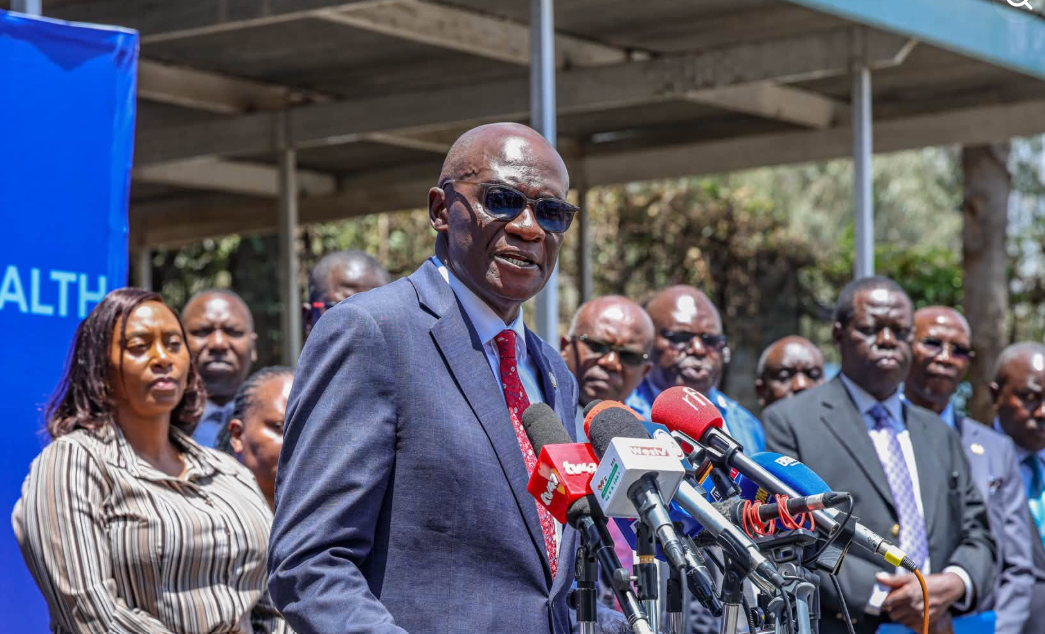
Director-General for Health Dr Patrick Amoth said Busia and Malaba had become areas of particular concern following the emergence of Uganda as a potential source of imported infections.
“Now that Uganda is also a potential source of imported infections, therefore Busia, Malaba, become areas of real serious concern. We need to be able to put more work there to ensure that the people who pass there undergo a real screening,” Amoth said.
He urged people with possible symptoms or a history of exposure to report early, saying prompt intervention could reduce the number of people requiring quarantine and prevent further transmission.
Amoth said contact tracing remains central to the country’s containment strategy, with health teams required to identify contacts, assess their level of risk and monitor them throughout Ebola’s incubation period of between two and 21 days.
“If you monitor contacts throughout that period and they don’t develop symptoms, we release them, but if they develop symptoms during monitoring, they move from being a contact to a case,” he said.
He added that health teams would also follow contacts of contacts as the chain of exposure develops.
Authorities discourage home treatment
Amoth warned people with suspected Ebola against attempting to manage the illness at home, particularly when they are experiencing significant fluid loss.
“It would be extremely dangerous to manage this at home because there is exposure to your family members, and you are unlikely as a non-clinical healthcare worker to be able to maintain infection prevention control measures at a home setting,” he said.
He said patients with severe symptoms require facility-based care because Ebola can cause substantial fluid loss.
At treatment centres, patients receive what Amoth described as “optimised supportive care”, which can include rehydration through oral or intravenous fluids, medication to reduce fever and nutritional support.
Doctors can also monitor blood sugar and kidney function, with patients requiring more advanced intervention potentially receiving dialysis.
Call 719 before seeking care
The government is urging suspected cases not to travel to health facilities using public transport or private vehicles without first alerting health authorities.
Amoth said people should call the national hotline so that medical teams can arrange safe transportation and notify the receiving facility.
“We’ll also be able to alert the facility that a case is coming so that we’ll be able to put the necessary preparedness measures. Rather than you walk and ambush the facility which is not prepared, call our line so that we can be able to alert the facility,” he said.
“What you need to do is to be able to call our line, 719, and our team will be able to pick you from wherever you are,” he added.
Amoth cautioned against using taxis, matatus or being transported by relatives because of the potential risk of exposing other people.
Quarantine does not mean isolation from basic needs
He said people placed in quarantine should be able to maintain a degree of normal life while following infection-control measures.
He said individuals could read, watch television or interact with others from a safe distance, provided there was no physical contact and health workers were supervising the process.
At the same time, he said authorities needed to consider the economic impact of quarantine, particularly on households whose members cannot work while under monitoring.
“When you are in a quarantine facility for that 2 to 21 days, we need to consider how to support livelihoods and ensure that families continue to access basic services, including food, housing accommodation, and children can go to school,” Amoth said.
He said reducing transmission early would also reduce the number of people who ultimately require such support.
Treatment capacity expanded
Kenya has also activated Ebola preparedness measures at several health facilities.
Amoth said Kenyatta National Hospital has an eight-bed Ebola treatment unit, while Moi Teaching and Referral Hospital has capacity for 50 beds. Nairobi Hospital has 130 beds, the National Police Service Hospital has about 49 to 50 beds, while Port Reitz Hospital in Mombasa currently has four beds.
Work is also ongoing to reopen and operationalise the facility at Alupe in Busia, with renovations underway to address gaps identified at the site.
Red Cross to distribute protective equipment
Kenya Red Cross Secretary General Dr Ahmed Idris said healthcare workers remain among those at greatest risk during an Ebola outbreak, making infection prevention measures in hospitals critical.
He said the organisation was working with the Ministry of Health to strengthen public health facilities and would distribute personal protective equipment (PPE) to frontline workers.
“Healthcare workers face the highest risk of transmission during an outbreak, making strict infection control in medical facilities critical to breaking the chain,” Idris said.
He said hospitals would need to operate under enhanced safety procedures to protect medical staff from exposure while continuing to provide essential services.
Officials reject misinformation
Idris also criticised claims circulating on social media questioning the authenticity of the reported Ebola case.
He said the diagnosis had been independently verified by the Kenya Medical Research Institute (KEMRI) and the National Reference Laboratory.
“The diagnosis was independently verified by KEMRI and the National Reference Laboratory—both world-class institutions adhering to strict international standards,” he said.
Idris warned that misinformation and denial could undermine containment efforts and expose healthcare workers and communities to greater risk.
He urged Kenyans to rely on verified information and cooperate with health authorities.
Officials defend confidentiality
Amoth and Idris also addressed questions surrounding the identity and circumstances of Ebola patients, saying personal medical information would not be released without the consent of immediate family members.
They said disclosure without consent could fuel panic, stigma and discrimination, potentially discouraging people from seeking treatment.
Amoth said protecting patient confidentiality should not be interpreted as withholding information about the outbreak.
“Protecting confidentiality of information is not the same thing as being secretive,” he said.
He added that respecting the dignity of people affected by the disease was important in encouraging others with symptoms or possible exposure to come forward.
No need for lockdown if tracing works
Amoth said Kenya’s focus should remain on identifying and monitoring contacts rather than imposing broad restrictions on movement.
“We talk about a lockdown, but let’s deal with contact tracing and putting people in quarantine, manage them. If we do that, there’ll be no need for a lockdown whatsoever,” he said.
He urged communities to cooperate with health teams, saying outbreaks are ultimately contained at community level.
“Outbreaks begin and end in communities,” Amoth said, stressing the importance of honesty, early reporting and accurate information.
Avoid physical contact
Amoth also urged Kenyans to avoid unnecessary physical contact and crowded gatherings during the outbreak response.
He said political events, family gatherings and other large meetings could create opportunities for transmission, while handshakes and hugs should be avoided where possible.
Instead, he advised people to maintain distance, wash their hands regularly with soap and water or use alcohol-based hand sanitiser, and report symptoms promptly.
Amoth said Ebola is primarily transmitted through direct contact with an infected person or the body of someone who has died from the disease, as well as contact with contaminated surfaces through broken skin or mucous membranes.
He said it is not spread through ordinary airborne or droplet transmission.
Early treatment can improve survival
Amoth said Ebola can be fatal but stressed that early medical intervention can improve outcomes.
He identified the Zaire, Sudan and Bundibugyo viruses as three Ebola virus species capable of causing major outbreaks, noting that treatment options vary by strain.
He said the Bundibugyo virus, like the Zaire virus in the context he was discussing, does not have a vaccine or specific treatment and is managed mainly through supportive care.
Amoth cited experience from the Democratic Republic of Congo, where he said more than 8,400 cases had been reported, with more than 2,000 people surviving.
His message to the public was that anyone experiencing possible symptoms should seek medical attention early rather than waiting for the illness to worsen.
Community cooperation key to containment
Idris said people exposed to Ebola should be honest about their symptoms and cooperate with health teams to gain access to monitoring and supportive care.
He said concealing symptoms could prevent health workers from providing timely treatment and monitoring patients after recovery.
“Full honesty and early declaration of symptoms are essential to access the comprehensive package of care and technical monitoring provided to individuals testing positive for Ebola,” Idris said.
Amoth also praised families affected by the outbreak for cooperating with health authorities, including the family of the deceased person who volunteered to enter quarantine.
He described their cooperation as an example of the role communities can play in containing the disease.
With screening being intensified at Busia and Malaba, authorities are urging Kenyans to remain vigilant while avoiding panic, stressing that early reporting, contact tracing, infection prevention and community cooperation remain the key tools in breaking the chain of transmission.
Read: Kenya Confirms First Ebola Case in Nairobi
>>> UAE Invests $10 million in Ebola Response as Kenya Steps Up Preparedness












Leave a comment