

A simple meal is quietly becoming more expensive for Kenyan families, as the cost of cooking gas rises sharply and stretches already tight household budgets.
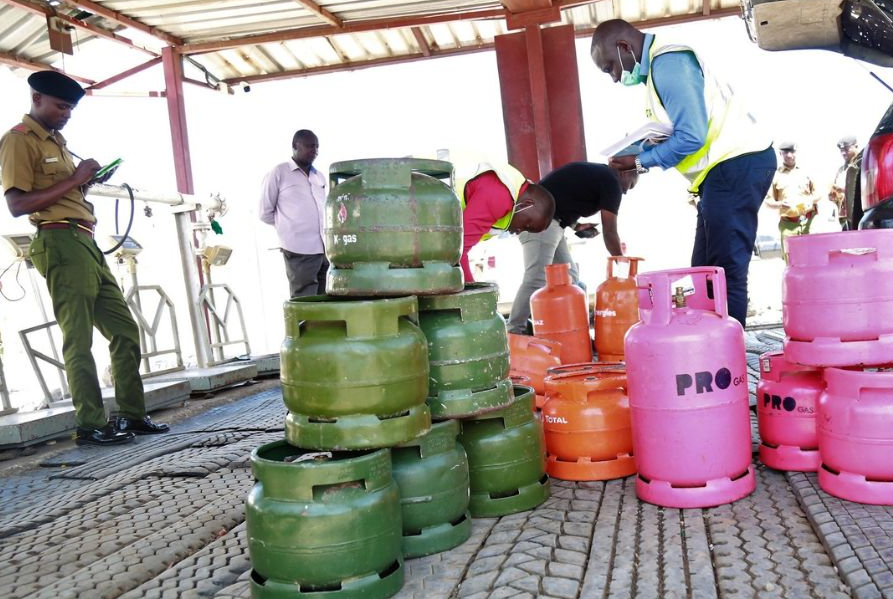
Across estates in Nairobi and other towns, consumers are paying significantly more to refill their cylinders. A 6-kilogramme cylinder, commonly used in many homes, now goes for between Ksh 1,200 and Ksh 1,400, up from an average of about Sh1,000. For larger households using 13-kilogramme cylinders, the refill cost has jumped to between Ksh 2,400 and Ksh 3,500 depending on the brand and location.
Well-known suppliers such as Shell Afrigas and TotalEnergies are among those retailing at the higher end, while brands like ProGas are slightly cheaper but still costlier than before. Not long ago, a 13-kilogramme refill averaged between Ksh 2,000 and Ksh 2,200 in most urban estates.
The increase is even more pronounced for businesses. A 50-kilogramme cylinder, widely used in hotels, eateries and workshops, now costs between Ksh 10,000 and Ksh 12,000, compared to Ksh 7,500–Ksh 8,000 previously. For many small businesses, this sharp rise is cutting directly into profits and forcing tough decisions.
Retailers say the adjustments are unavoidable.
Global tensions, local impact
The rising prices are not just a local issue. Globally, LPG costs surged in March 2026 following geopolitical tensions involving the United States, Israel and Iran. The situation disrupted movement through the Strait of Hormuz, a key global energy corridor responsible for nearly a third of seaborne oil and gas exports.
At the height of the disruption, propane prices climbed to about $973.75 per tonne (around Ksh125,000). Although prices later eased to roughly $650 per tonne by mid-April, they remain significantly higher than pre-conflict levels, keeping pressure on import-dependent markets like Kenya.
Tax burden sparks criticism
Even as global factors drive prices up, local taxation is adding to the burden. The government introduced a Petroleum Development Levy of Ksh 5,400 per 1,000 kilogrammes of LPG — translating to Ksh 5.40 per kilogramme — a move that has drawn sharp criticism.
The Consumer Federation of Kenya argues that the levy contradicts efforts to promote clean cooking energy
Cofek has also questioned the process used to introduce the levy, saying it lacked sufficient public participation and parliamentary oversight.
According to the lobby group, higher fuel costs tend to ripple through the economy, affecting transport, agriculture and manufacturing, and ultimately raising the cost of basic goods.
Clean energy progress under threat
Kenya has, in recent years, made steady progress in promoting LPG as a cleaner alternative to charcoal, firewood and kerosene. Data from the Petroleum Institute of East Africa shows that LPG consumption rose by 14.7 per cent in 2025 to 475,943 metric tonnes, following a 15.1 per cent increase in 2024.
At the same time, kerosene usage has been on a long-term decline, dropping by 41 per cent in 2024. Although there was a slight increase in 2025, it was largely linked to power generation rather than household use.
However, rising LPG prices now threaten to reverse these gains. Experts warn that many low-income households could be forced back to cheaper but more harmful fuels.
Indoor air pollution remains a serious health issue in Kenya, contributing to about 40 per cent of the country’s disease burden and an estimated 21,500 deaths annually.
Government steps and industry reforms
The Energy and Petroleum Regulatory Authority says it is working to stabilise the sector by improving oversight, curbing illegal refilling and ensuring safety standards are met.
“Whoever comes to the industry must show the level of seriousness that is desired so that, one, we can assure public safety, and two, we can assure business for the people who are within the system,” EPRA director for petroleum and gas Edward Kinyua said.
“The market is big. Today, we are talking about 7.6 kilos per capita,” he added.
The government is targeting an increase in LPG penetration from the current 24 per cent to 70 per cent by 2028. Plans include introducing an additional 10 million cylinders into the market and doubling per capita consumption to 15 kilogrammes.
“We are looking at doubling consumption so that we have at least 15 kilos per capita. The government plans to introduce an additional 10 million cylinders into the market. Discussions on how those cylinders will be introduced are ongoing, and how the distribution model will be,” Kinyua said.
Authorities are also exploring the use of the Open Tender System (OTS) for LPG imports, a model aimed at lowering costs through competitive bidding. In addition, there are plans to develop a common-user import facility at the Kenya Petroleum Refineries Limited in Mombasa to reduce landing costs.
Uncertain relief for consumers
Despite these interventions, it remains unclear when — or if — consumers will feel any relief. Regulators have indicated that price controls could be considered if lower import costs do not translate into lower retail prices.
For now, many Kenyans are left juggling their options in the kitchen as the cost of a basic necessity continues to rise. What was once seen as a cleaner and more convenient cooking solution is slowly turning into a luxury for some households, raising difficult questions about affordability and access in the country’s energy transition.











Leave a comment