

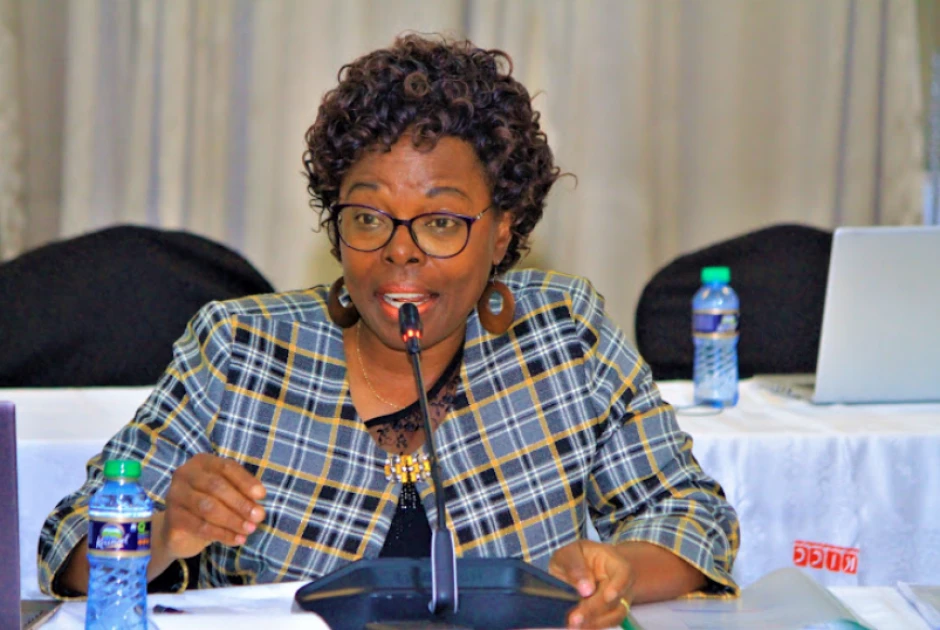
Counties have been warned against rushing through spending or leaving behind unpaid bills as the country moves closer to the end of the current devolved government term, with the Controller of Budget promising tighter oversight over public funds.
Controller of Budget (CoB) Margaret Nyakang’o said her office will closely monitor how county governments manage their finances during the 2026/27 financial year to ensure taxpayers’ money is used lawfully and responsibly. She cautioned that governors should not pass financial burdens to the next administration by accumulating pending bills in their final year in office.
Appearing before the National Assembly’s Public Petitions Committee on Tuesday, July 28, Nyakang’o said counties must comply with financial regulations from the beginning of the budgeting process to the final stage of spending.
She noted that while her office has authority to approve the release of money to counties, it has limited control over how some county governments spend the funds after they receive them. According to her, some counties comply with the conditions set before funds are released but later divert the money to activities that were never approved.
“Now, where they let me down is that after releasing the funds on very stringent grounds, they now go and do different things with the money,” she said.
The Controller of Budget explained that her office is working with the Central Bank of Kenya and the National Treasury to introduce an electronic payment system that would reduce opportunities for misuse of public funds. Under the proposed arrangement, payments approved by the Controller of Budget would go directly to verified suppliers instead of passing through county accounts.
She said the system is expected to protect businesses that supply goods and services to counties from delayed or diverted payments. The Office of the Controller of Budget has been receiving numerous complaints from suppliers who remain unpaid despite funds having been released.
Delayed payments have remained one of the biggest concerns in county governments over the years. The Office of the Auditor General has repeatedly flagged billions of shillings in pending bills owed to contractors, health facilities and suppliers, with many businesses forced to scale down operations because of delayed payments by counties.
Nyakang’o also criticised the manner in which some county governments prepare their annual budgets, saying several still fail to follow the legal procedures required under the Public Finance Management Act.
According to her, county assemblies may approve budgets, but the spending plans must still pass the Controller of Budget’s compliance review before public money can be accessed. She revealed that as of July 28, none of the 47 county budgets had fully met the compliance standards required by her office.
She added that counties have continued attempting to bypass proper budgeting procedures despite repeated guidance, forcing her office to tighten compliance before approving the release of funds.
CoB on stricter scrutiny
Nyakang’o said counties should expect stricter scrutiny this year because it marks the final stretch before Kenyans elect a new set of governors. She warned that her office would closely monitor pending bills to ensure outgoing administrations do not leave financial obligations for their successors.
Even with the challenges, the Controller of Budget acknowledged that some counties have made progress in improving financial management. She cited Makueni County as an example after it received a clean audit opinion, adding that several other counties have gradually improved their financial records over the years.
She also said her office continues to train financial officers who will strengthen oversight and promote accountability in public finance management in the years ahead.
The Controller of Budget further turned attention to the country’s growing debt burden, saying Kenya’s public debt now stands at Ksh12.82 trillion. She noted that debt repayments continue to consume the largest share of government revenue, leaving fewer resources for development projects and public services.
“The impact is that up to 71 per cent of the revenues that we collect goes to loan repayment. So when that happens, it leaves us with 29 per cent to do the rest of the expenditure that we would like to do,” she said.
Nyakang’o urged both the national and county governments to embrace fiscal discipline, saying reducing unnecessary spending and strengthening revenue collection would gradually reduce the country’s dependence on borrowing while improving service delivery to wananchi.









Leave a comment