

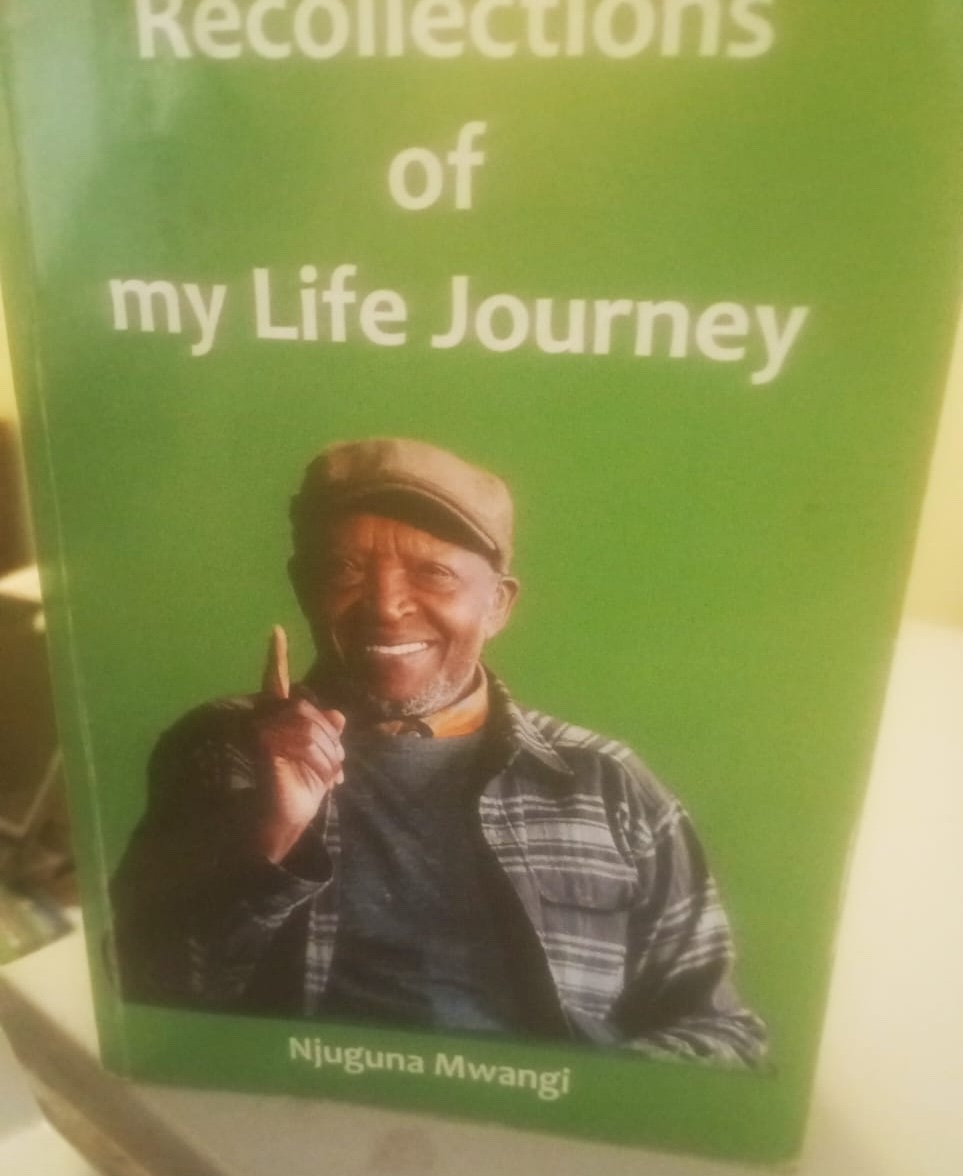
Book Title: Recollections of My Life Journey
Author: Njuguna Mwangi
Mzee Njuguna Mwangi may be entering his 20th year of retirement, but he certainly put the word ‘active’ into retirement. In the first six months of 2026, this author has been hard-pressed to catch up with the gentlemanly old chap I call my “Uncle Yardarm” at his United Kenya Club – he’s away in the USA for a medical click, he’s off in Koh Mak doing yoga in Thailand; and currently as the Tartan Army is away in America for the World Cup, mzee Njuguna is in the yardage of Scotland.
Standing at 480 pages in length, his memoir ‘Recollections of My Life Journey’ is an in-depth reflection on Njuguna’s life; so much so that this reviewer has decided to just focus on the ‘business’ element of this richly rendered tome.
Njuguna’s work ethic began when he was a young boy in rural Kenya, where there was tilling, weeding, ferrying product from land, and where he enjoyed herdsmanship. When his mother asked him to “gutaha mai” (be a water fetcher) and he demurred citing it as woman’s work, his mother would hear none of that:
“Do it then check your genitals later to see if your penis has fallen off!” she said.
His father, who passed away only recently as a centenarian, was a caring father.
We see the lengths his dad goes to ensuring young Njuguna goes to University of Dar in the years of “boom” (student stipends) when the East African Federation dream was still alive – and all the three E.A. currencies were of the same value (today, a Kenyan shilling gets you 28 Ugandan and 20 Tanzanian shillings; back then, 20 Kenyan shillings got you a pound; today a Sterling is worth Ksh170).
In Tanzania, in between Economics lessons and dancing with nurses, Mwangi sharpened his Swahili, his manners and listened to TZ students at their bar, DUSO, debate their Nyerere socialism versus the ‘man eat man’ capitalist Kenyan society.
Then he returned and became an industrial economist with the Industrial Survey & Promotion Center of the Ministry of Commerce and Industry, a job that not only provided him with a livelihood but the opportunity to attend conferences like the UNCTAD one in Addis Ababa in 1973, in the twilight of Haile Selassie’s rule; and the global DAVOS in the January of 1978 – where he made a good friend called Cyril Bright from Liberia who taught him the virtues of red St. Emilion wine (a bright man whose blood was spilled three years later by the putschist Seargeant Doe, who himself would suffer a very painful execution by militia leader Prince Johnson in 1990).
In those three years as Bright moved towards the dark, Njuguna Mwangi went West to better himself – first to get his Masters at McMasters in Ontario, and then for even further education in Boston (a course he almost did not complete due to imported troubles from his first wife; but was fortunate that his second wife, Celia, alongside their toddler daughter, came to live for a while with him).
Njuguna’s sharp memory, journaling and great observational skills means when he takes you along on his travels, his anecdotes carry and place you in the space.
For example when he goes to Sweden with UNIDO in mid-1978 (a super busy year it was for Mwangi) and they get to Kirina, the world’s largest open-pit iron mine, you can see the paper manufacturing, furniture-making and smell the wood alcohol; even as Mwangi makes the point that for all wood industry there in Sweden, the State was (still does) making sure serious reforestation programs are going on ( today, 68% of Sweden’s landmass is covered in forest, compared with a paltry 12% of tree cover for Kenya).
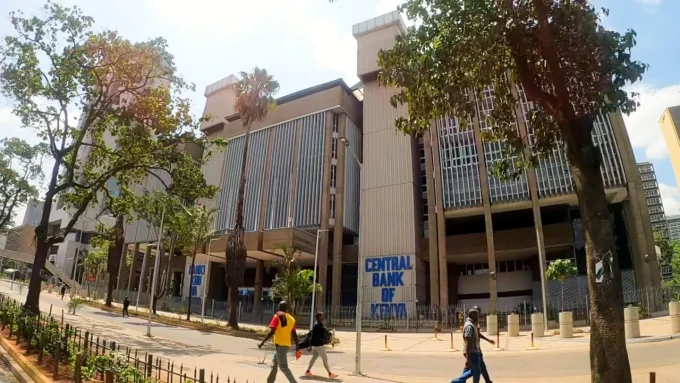
On returning to Kenya from America in 1981, Njuguna was made Deputy in the department to Eric Kotut, who a year later went on to become Central Bank Governor under President Moi (who was, post-attempted coup, consolidating his Kalenjin base in every high office and other public and private spheres of power – which would later have repercussions for Mwangi).
But in the 1980s, Njuguna Mwangi was getting into real estate – selling a house in Buruburu to buy one in Langata, Akiba, his wife Celia buying one in Parklands; as he also became a builder and ghetto landlord in Huruma, Dandora and Mlango Kubwa. But this business was no walk in a green picnic park.
In Dandora, drunken tenants would disappear when he appeared end-month and wait him out. In Huruma he would feel huruma for hustlers with (tall) tales of funerals and so on, who would then disappear with arrears after a few months; and after a good start, land agents in Mlango Kubwa would delay with remittance (how his brother Mburu mismanaged the estate, stayed for years in Parklands, and so on, is a family saga narrated in Mzee Njuguna’s always candid style).
He also dabbled in mitumba, and even a petrol tanker (that burnt his fingers), but it is in stocks, shares and Treasury Bond that Mwangi found gold, fitting for a Treasury economist.
But it was after doing a Situation Analysis, as head of Treasury Macro-economics, for the ‘Paris Club’ (World Bank and IMF) during the early ‘90s SAPs, that Njuguna got sucked into politics’ vortex.
At the time, the Civil Service had become super-bloated with Deputy Secretaries, under-secretaries and senior secretaries (as the KANU reward system exploded), “so that you would find a whole Deputy Secretary in the Ministry of Semi-Arid Lands assigned to assign GoK vehicles within the Ministry, and doing little else …”
He evokes that world where Civil Servants came into government offices at 9 AM to read newspapers, drink catered tea at 10.40 AM, gossip till 1 PM, then leave for ‘lunch’ (side hustles) till 4 PM, when they would come to pick their coats, go.
Njuguna Mwangi found that those surplus 100,000 jobs if removed and the money saved across ten years, would be able to build a dual carriage-way between Mombasa and Malaba, with not a cent of debt. Instead of praise, his meticulous report brought him immediate secret opprobrium in higher offices.
He was now a marked man.
A chance meeting with former Mayor Andrew Ngumba, as he caught up with an old friend in a restaurant (in those police surveillance days), his mzungu wife Celia’s principled support for Amnesty International, marked the meticulous man, Mwangi, as possible dissident (and though he doesn’t mention it, being Kikuyu …)
Soon after, Njuguna was moved from Treasury to the backwater of Manpower Development, where he had a large office with three secretaries (whose primary role seemed to be to provide him with tea, newspapers, and meaningless calls) – and when Mwangi got wind that his retirement was being ‘contemplated’ by GOK – after consultations, he decided to take early retirement and his pension in 1994.
But being a man of remarkable energy and mentality – right up to this moment – Njuguna immediately plunged into the world of consultancy with CIDA (Canada) and SIDA (Sweden).
He consulted with the Germans of GIZ on the sudden influx of Somali monies (distorting real estate prices in the mid-90s, sound like déjà vu?), mundane World Bank and repetitive IMF work on effects of factors of national production (SAPs), UNEP on Goldenberg effect on economy and renumeration, and with UK’s ODA in South Africa where one black governor Job Mokgoro switched him from colonial suits to ‘Mandela’ attire; but where Mwangi got to show up Boers at a seminar that he presented in.
Eventually, from 1999 to 2007, thanks to his excellent consultation work with UNDP, he became a UN diplomat under an arrangement with the Liberian State.
In the almost 20 years since his retirement, Mzee Njuguna Mwangi has kept himself fit both in body and mind through his worldwide travels, his excellent writing projects and cross-continental travels to cities like Guangzhou (where he describes the round-the-clock work culture, infrastructure projects and the Chinese turning out high quality products for corps like Apple, as early as 2008). Kenya, certainly, is a million miles from Singapore, never mind the promise.
Other than the description of the skyscrapers, solar panels, small bio-digesters and so on, this writer was especially taken by Mwangi’s description of snake whiskey in China (which I had the chance to partake of in Shanghai this January), and ‘snake chops’ which he describes as tasting as chicken (declined this in Guangdong).
Other than his memoirs, the diligent Mzee Njuguna Mwangi has his book on the ‘Mau Mau’ coming out very soon, as he pursues a third on the Abrahamic religions after decades of study on our ‘different’ Belief Systems. Busy as a bee.
Tony Mochama’s book ‘How to be an MCA’ comes out from Mvua Press in September.









Leave a comment