

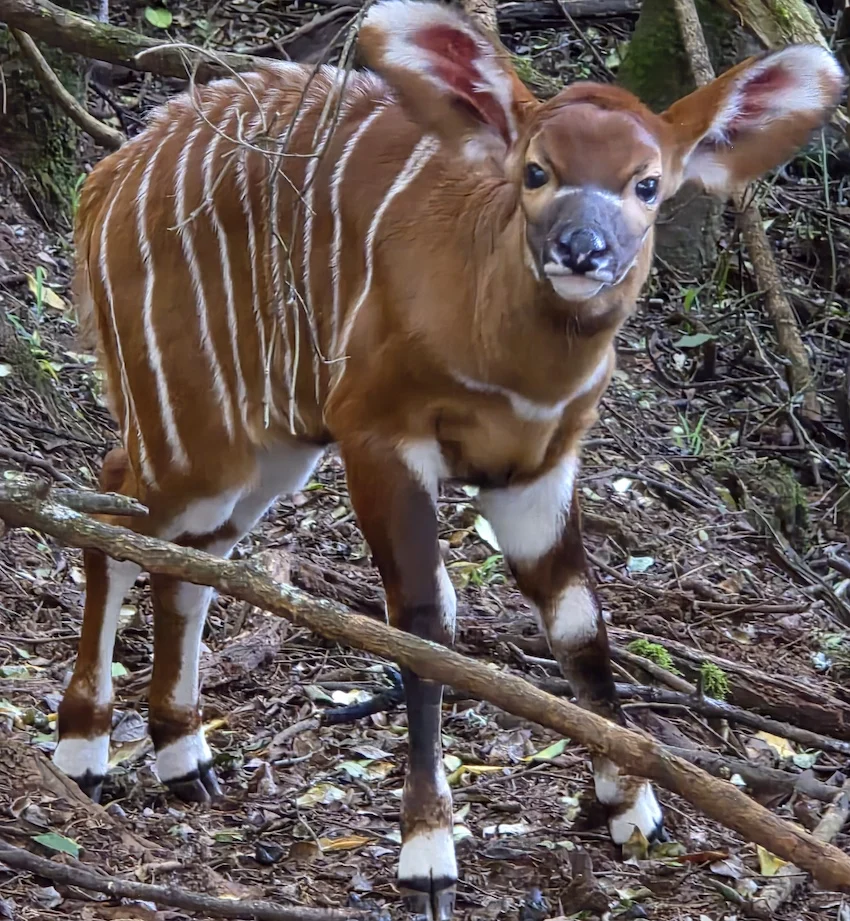
Mount Kenya Wildlife Conservancy (MKWC) on 8th January 2025 announced what it described as a historic milestone in the fight against the extinction of the critically endangered Mountain Bongo: the birth of the 100th Mountain Bongo calf. It says this birth marked a turning point in the recovery of Kenya’s native Mountain Bongo.
Prof. Erastus Kanga, Director General of Kenya Wildlife Service, said the latest birth under MKWC’s Breeding and Rewilding Programme offers renewed hope for the survival of this fragile species. “This work represents a significant step forward for wildlife conservation in Kenya,” Prof Kanga said. “The birth of the 100th Mountain Bongo reflects more than 20 years of dedication by conservation teams, researchers, veterinarians, and wildlife managers whose efforts in research, monitoring, and breeding have been critical to the recovery of this critically endangered species.”
Kenya Wildlife Service said it is committed to working closely with the Conservancy on the Mountain Bongo breeding and rewilding programme and advancing species recovery efforts across the country.
The Mountain Bongo, distinguished by its striking chestnut coat and spiralled horns, was once common across the Mount Kenya ecosystem. Decades of habitat loss and poaching, however, pushed the species to the brink of extinction. In response, Mount Kenya Wildlife Conservancy, in partnership with Kenya Wildlife Service (KWS), has remained steadfast in its mission to prevent the total loss of this iconic species.
> In Nairobi, a Monkey’s Quest For Christmas Sends Matatu Fleeing For Life
Humphrey Kariuki, Patron of Mount Kenya Wildlife Conservancy and IUCN Patron of Nature, said this achievement reflects decades of coordinated breeding, habitat restoration, and community engagement. “We look forward to continuing this journey, expanding our research and efforts to reintroduce a healthy, self-sustaining population into the wild, and ensuring that the Mountain Bongo is no longer endangered,” Mr Kariuki said. “Protecting this iconic species is our dedicated commitment to safeguard Kenya’s unique biodiversity and preserve a vital part of the country’s natural heritage for future generations.”
The journey to the 100th birth began in 2004 with the repatriation of 18 Mountain Bongos from the United States to Nanyuki. These animals became the founding population of the Mountain Bongo Breeding and Rewilding Programme. In 2022, the Conservancy reached another major milestone with the opening of the Mawingu Mountain Bongo Sanctuary, the world’s first dedicated wild sanctuary for the species. The sanctuary provides a safe, natural habitat where Bongos can continue their re-wilding process in preparation for reintroduction into their historic ranges in Mount Kenya, Eburu, and the Aberdares.
Dr. Robert Aruho, Head of Conservancy at MKWC, said: “Reaching this milestone is both a celebration and a challenge. It provides both the momentum and the confidence to continue our work to ensure the survival of this species. This achievement reflects years of dedication, collaboration, and commitment to restoring wildlife populations and preserving Mount Kenya’s unique biodiversity.”
The sanctuary provides a safe, natural habitat where Bongos can continue their re-wilding process in preparation for reintroduction into their historic ranges in Mount Kenya, Eburu, and the Aberdares.
To date, MKWC has successfully bred 100 Mountain Bongos through this programme and continues to lead efforts to re-establish a self-sustaining wild population, safeguarding Kenya’s unique wildlife heritage for generations to come. Operating under the patronage of Humphrey Kariuki, the Conservancy integrates species recovery with community empowerment and education.
Through rescue and rehabilitation centre visits, adoption programmes, habitat restoration, and community conservation education, individuals and organisations can contribute directly to the survival of the Mountain Bongo and the ecological health of the Mount Kenya forest. More than 30,000 students participate in MKWC’s education and empowerment programmes annually, fostering awareness of biodiversity conservation and sustainable natural resource management.
This achievement was made possible through partnerships with Kenya Wildlife Service and Kenya Forest Service, as well as technical collaboration with Chester Zoo, EAZA, and IUCN. MKWC also acknowledges the generous support of corporate partners including Janus Continental Group, Dalbit Petroleum, Kenya Pipeline Company, and I&M Bank, alongside the vital contributions of individual donors and foundations.
> Golden Voices: Meet Kenya’s Pioneering Broadcast Legends














Leave a comment