

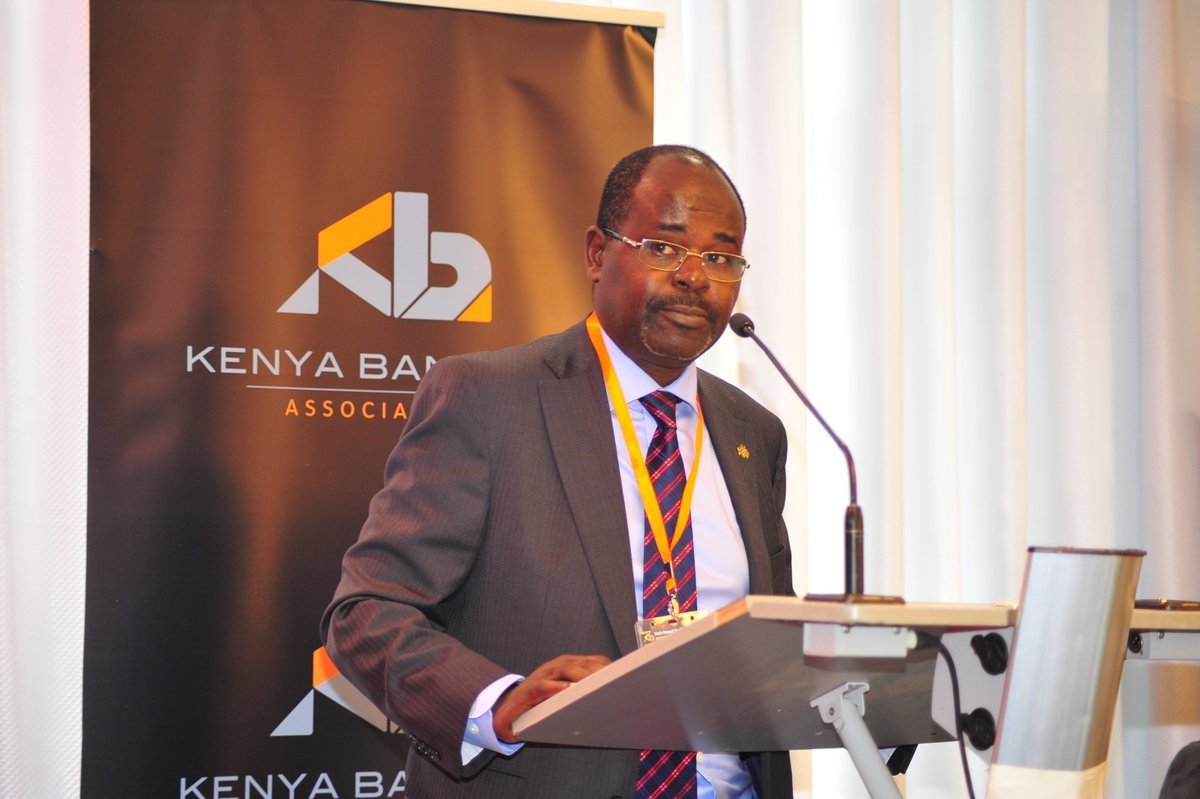
Bankers through their umbrella body, the Kenya Bankers Association of Kenya (KBA) have welcomed last week’s High Court ruling that declared the law capping interest rates unconstitutional, describing the one year grace period granted by the court as an opportunity to re-engage stakeholders.
In a Q&A interview with Business Today, KBA chief executive Dr Habil Olaka hailed the ruling saying that it offers bankers, Parliament and the Central Bank of Kenya (CBK) ample time to agree on amendments that will strike a balance between availing credit to Micro, Small and Medium Enterprises (MSMEs) and creating an enabling business environment.
“We have seen the limitations of a universal application of the rate cap. We have seen how forcing pricing in a liberalised market results in distortions,” said Dr Olaka.
He also confirmed that KBA still holds the opinion that by passing the law, parliament interfered with CBK’s monetary policy regulation mandate.
“The Central Bank’s monetary policy is transmitted through the credit market, if you legislate in a manner that controls the credit market pricing; then, you directly impair monetary policy transmission, which is a core function of the regulator,” said Dr Olaka “This means that when CBK wants to guide interest rates in the market, they are not able to do this effectively because of the controls,”
According to the chief executive, the different banks are contemplating adopting the Central Bank Charter which introduces risk based lending as a measure to avail credit to MSMEs.
CBK’s charter borrows from a proposal by Gatundu South MP Moses Kuria which mooted risk based lending to SMEs and unsecured borrowers.
{Read: Capitalising on exports will help Kenya settle debt with donors, experts say}
Kuria’s proposal sought to allow the two sets of borrowers classified as high risk by most banks to negotiate interest rates above the cap which is set at 4% above CBK’s base lending rate which is 9%.
The High Court declared the law unconstitutional faulting ambiguities in certain provisions of the law and as a result, declared Section 33 (B) (1) and (2) of the Banking Act unconstitutional.
{See also: Co-op Bank records Sh18.2 billion pre-tax profit}
Justices Francis Tuiyot, Jacqueline Kamau and Rachel Ngetich averred that parliament did not define the terms credit facility and Central Bank Rate (CBR).
The court however gave parliament one year to correct the anomalies.












2 Comments