

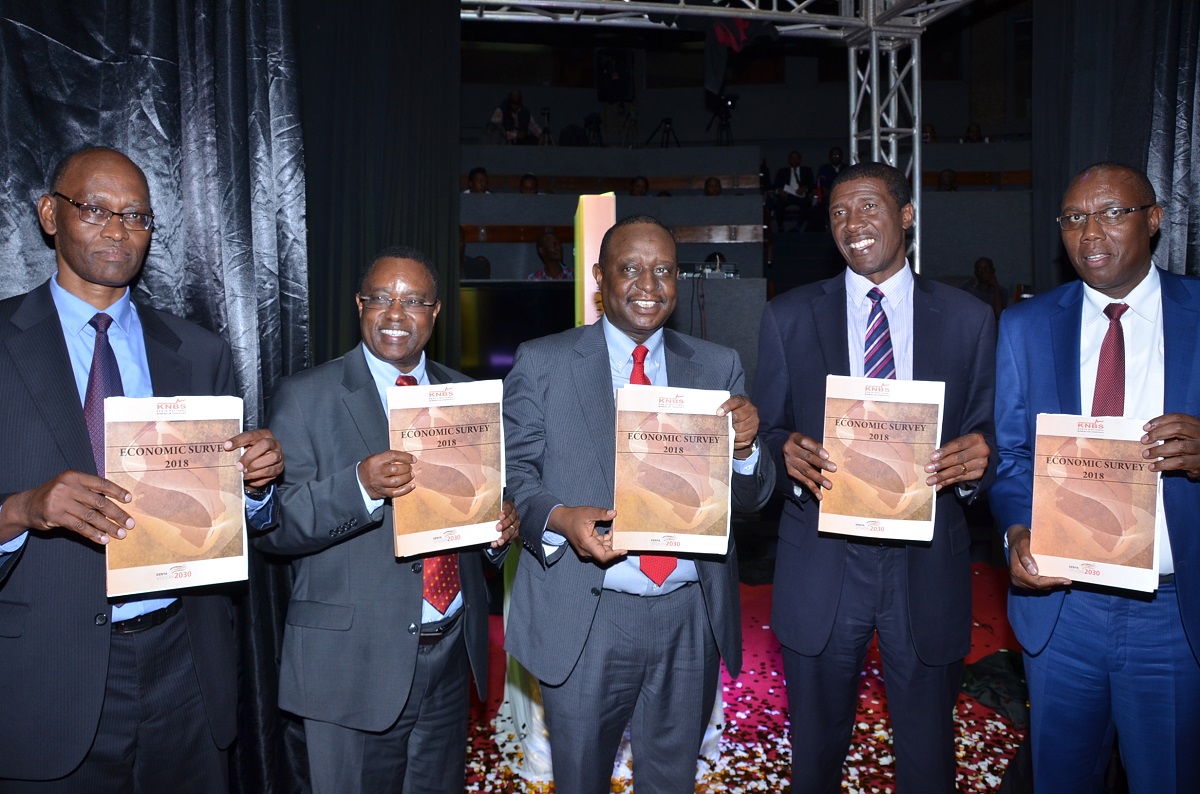
[dropcap]K[/dropcap]enya’s economy is estimated to have expanded by 4.9% in 2017 compared to a revised growth of 5.9% in 2016 due mainly to the uncertainty associated with prolonged electioneering period coupled with adverse weather conditions.
Speaking at the launch the launch of the 2018 economic survey report on April 25th, National Treasury Cabinet Secretary Henry Rotich noted that the agriculture sector recorded mixed performance recording a slowed growth of 1.6% compared to 5.1% growth in 2016. “The government has, however, identified three broad areas in 2018 that will ensure the country achieves food security and improve nutrition,” he said.
Enhancing of large scale production, boosting small holder productivity and reducing the cost of food have been identified as the measures that will scale up the agriculture value chain, he said. Mr Rotich said that the national and county governments are working together to ensure each devolved unit has at least one value-addition processing plant.
READ ALSO: Tech enthusiast rolls out paperless insurance
The Director General of the Kenya National Bureau of Statistics (KNBS), Mr Zachary Mwangi, said maize production declined from 37.8 million bags in 2016 to 35.4 million bags in 2017. Similarly, he added that sugarcane production dropped from 7.2 million tonnes in 2016 to 4.8 million tonnes in 2017. “The recorded decline in maize and sugar resulted in huge imports of both the commodities to bridge the deficit,” he said.
Other Agricultural products that under-performed were wheat, tea and coffee which declined by 23.1, 7.0 and 15.1 percent, respectively.
Mr Mwangi said despite reduced production of major crops during the period under review, better prices were realised for the marketed agricultural output.
“The value of marketed production increased by 8.2 percent from Sh. 413.2 billion in 2016 to Sh 446.9 billion in 2017,” he said.
The volume of fresh horticultural exports also increased from 261.2 thousand tonnes in 2016 to 304.1 thousand tonnes in 2017, while the marketed milk declined by 17.4% from 648.2 million litres in 2016 to 535.7 million litres in 2017.
The DG said the outlook for 2018 is promising noting that the weather forecast points to a possibility of sufficient and well spread long rains this year, which will be a boost for activities in agriculture. Drought coupled with pests such as the fall armworms led to the overall decline in agricultural production in 2017.












Leave a comment