Lender Raises Dividend 17% as Cost Cuts and Digital Push Offset Pressure on Interest Income
Absa Bank Kenya PLC posted a 10% increase in full-year profit and lifted its dividend payout after tighter cost controls and lower loan-loss provisions helped offset pressure on interest income.
Net income rose to 22.9 billion shillings ($177 million) in the year ended Dec. 31, from a year earlier, the Nairobi-based lender said Tuesday. Total revenue was little changed at 61.4 billion shillings as a softer interest-rate environment weighed on lending margins.
The bank proposed a 17% increase in total dividend to 2.05 shillings per share, comprising an interim payment of 0.20 shillings and a final dividend of 1.85 shillings.

Net interest income declined 6% to 43.3 billion shillings, reflecting shifts in monetary conditions, while non-interest income climbed 12% to 18.1 billion shillings, supported by growth in payments and other fee-based businesses.
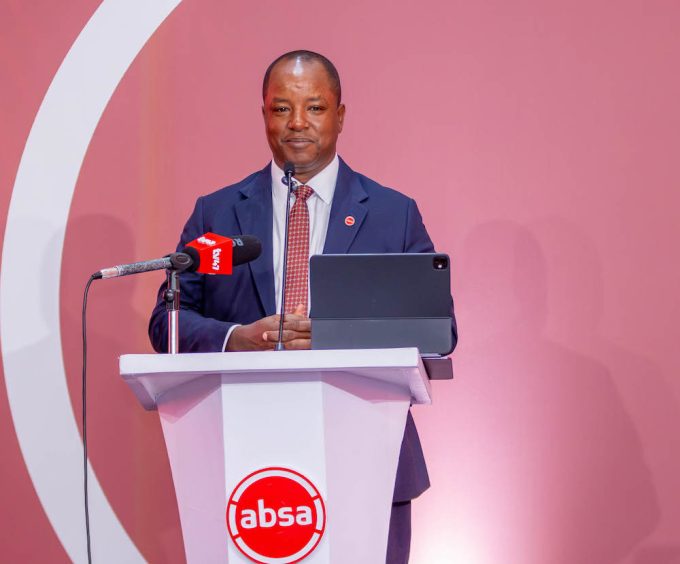
Chief Executive Officer Abdi Mohamed said the results underscored the lender’s focus on “disciplined execution” and sustainable returns, even as economic conditions remained dynamic.
Operating expenses fell 5% to 22.4 billion shillings, aided by digitization and automation initiatives. The bank said 71% of customer processes are now digitized, with 94% of transactions conducted through alternative channels. The cost-to-income ratio improved to 36.5%.
Loan-loss provisions dropped 32% to 6.2 billion shillings, signaling improved asset quality and tighter credit-risk management. Return on equity stood at 22.8%.
The balance sheet expanded, with total assets rising 6% to 537.6 billion shillings. Customer deposits edged up 1% to 372.4 billion shillings, while net loans and advances increased 1% to about 312 billion shillings.

In corporate banking, the lender arranged a 16 billion-shilling medium-term note and a $156 million solar securitization, while its global markets unit gained a 15% share of foreign-exchange revenues. Assets under custody surpassed 69 billion shillings.
The bank’s capital adequacy ratio was 21%, comfortably above regulatory requirements, while the liquidity reserve ratio stood at 45.6%, providing headroom for further expansion.
Mohamed said the lender will continue investing in technology, brand positioning and customer experience to sustain growth momentum in 2026.
Ooro George is a correspondent and editor at Business Today, where he writes on business, media, arts and culture, entertainment, and the forces shaping Africa’s creative economy.
Absa Bank Kenya has signed a Memorandum of Understanding (MoU) with Gen...
The board of directors has announced the resignation of Absa Bank Kenya...
South African banks are at the forefront of African lenders seeking for...
Absa Bank Kenya has unveiled a revamped asset financing proposition aimed at...
Leave a comment