

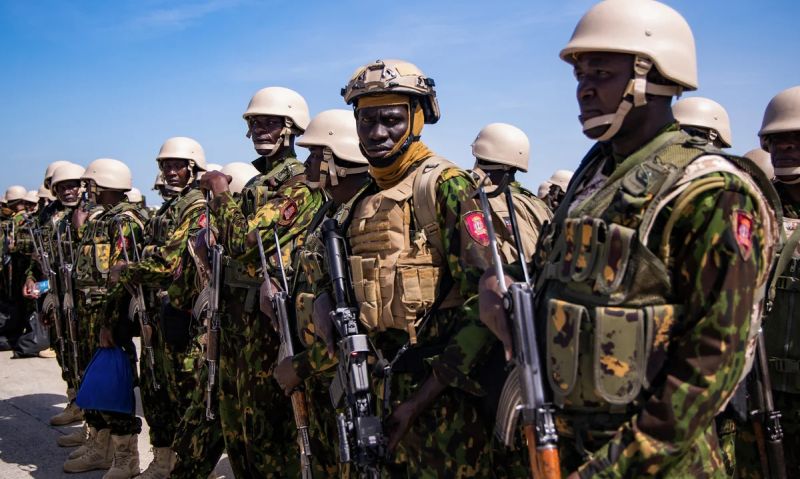
Overriding Republican opposition in Congress, Secretary of State Antony Blinken has ordered the release of $109 million in US funds to pay for a UN-approved and Kenyan-led police support mission tasked with reining in rampant gangs and restoring order in Haiti, the New Humanitarian (formerly IRIN News) which was founded by the United Nations in 1995 reported on June 20, 2024.
It said, ‘The United States has been by far the main political and financial backer of the Multinational Security Support mission, pledging a total of $300 million to support it despite opposition in the US Congress, from many Haitians, and in the Kenyan courts.’
Now, the amount of money paid to the Kenya Police, who landed in Haiti shortly on June 25, has been revealed during the vetting of Kithure Kindiki by the National Assembly for the Cabinet Secretary position in the Ministry of Interior and Coordination of National Government, a state organ to which the National Police Service (NPS) is part.
> Kenya Police Ranks: Everything You Need to Know
“Our officers are covered, insured, and paid for by the United Nations, and therefore, there is no cause for alarm,” Kindiki told the National Assembly’s Appointments Committee on Thursday, August 1.
How much do Kenya police in Haiti earn? – According to a law enacted by the UN General Assembly in June 2014, the members of the Kenya Police in the Haiti Mission are eligible for combat compensation as they are in a combat zone and face significant combat risk. The UN provides $1,410 (about Ksh183,000), including hostile fire pay/imminent danger pay and bonuses, for any month they are in Haiti, a designated imminent danger area.
In the past months, Haitian armed groups dominated global headlines for shutting down the airport, looting seaports, public buildings and shops, and attacking nearly a dozen police stations. They also blocked several roads and cut off the food supply in the capital of Port-au-Prince, effectively paralysing the city.
For decades, Haiti’s gangs have been closely associated with politicians, political parties, businessmen or other so-called “elites” in the country.
Robert Fatton, a Haiti expert and professor at the University of Virginia, said armed gangs are not a new phenomenon in Haiti. “They have been part of the history of the country for a very, very long time,” he told Al Jazeera.
Roughly, there are about 200 armed gangs, the most prominent one being the G9 Family and Allies alliance, or simply G9, which is led by Jimmy “Barbecue” Cherizier, a former Haitian police officer who is under UN and United States sanctions for his involvement in Haiti’s violence.
> Details of the National Intelligence Service (NIS) of Kenya












Leave a comment