

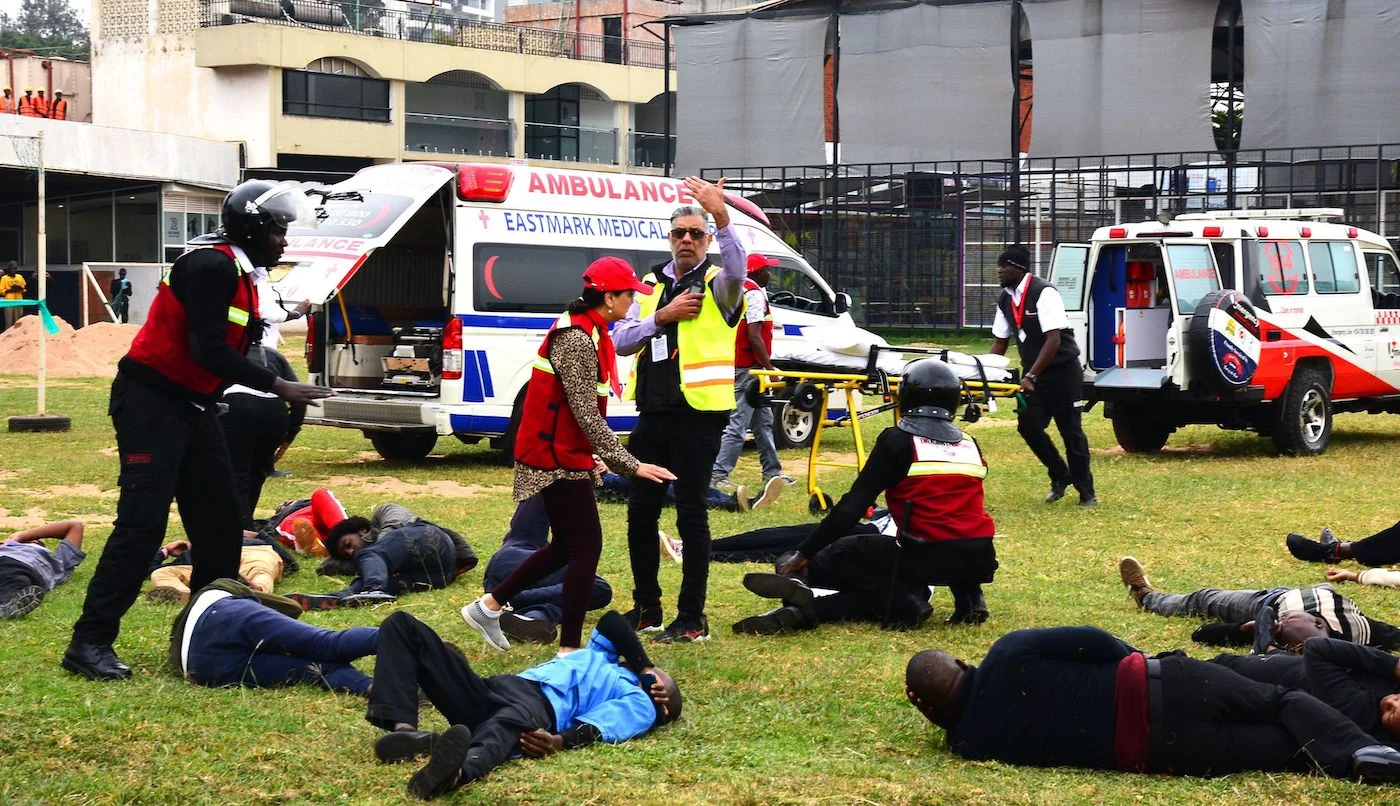
Aga Khan University Hospital joined M.P. Shah Hospital, Gertrude’s Children’s Hospital, and Avenue Hospital in conducting a joint mass casualty drill to evaluate readiness for a large-scale emergency.
The coordinated terror attack simulation, staged at the Aga Khan Sports Club Pavilion, involved a mock incident of a lone shooter in a workplace environment, leaving 70 mock casualties with critical injuries.
“Drills like this are critical because they allow hospitals to test and strengthen their emergency preparedness without the consequences of a real incident. They provide an opportunity to evaluate systems, staff readiness, coordination with partners, and response times under pressure,” said Dr. Benjamin Wachira, Emergency Physician at Aga Khan University Hospital and Lead Coordinator of the drill.
Triage was conducted on-site by the Ismaili Jamati Health Board before patients were transferred to the four hospitals for advanced medical care. Transfers were facilitated by E-Plus and Rescue.co ambulance services.
“By simulating high-pressure scenarios such as mass casualty events, we can identify gaps, refine processes, and ensure our teams are ready to act swiftly and effectively when real emergencies occur.”
The three-hour exercise was observed by representatives from the United States, British, and Canadian embassies, as well as officials from the National Disaster Management Unit and the National Police Service. The assessment was aimed at identifying strengths and areas for improvement in coordination, response times, and inter-agency collaboration during such emergencies.
“Emergencies, especially large-scale incidents, rarely affect a single facility. Bringing together four major hospitals, ambulance services, and disaster management agencies allows us to test our collective capacity to share patient loads, coordinate resources and communicate effectively. This builds the trust and coordination essential for saving lives in real crises,” Dr. Wachira added
The drill demonstrated strong readiness in key areas, including rapid activation of emergency plans, effective interdepartmental coordination, and efficient triage and treatment under pressure. Staff exhibited clear role awareness, effective communication systems, and timely mobilisation of critical resources. Areas identified for improvement included strengthening integration of prehospital coordination with ambulance teams and healthcare facilities.
To ensure that the lessons from the drill are implemented in daily hospital operations, a formal debrief was conducted that involved all participating teams and agencies. The findings were documented, with improvement plans, timelines, and responsibilities. Lessons learnt will be integrated into regular staff training, and standard operating procedures updated to be tested in future simulations.
> Fat Dividend Excites KCB Shares at the NSE, Investors Get Into Overdrive












Leave a comment