


Workers across Kenya’s Coastal region have been challenged to take a more deliberate approach to saving, investing and retirement planning as economic uncertainty, rising living costs and longer life expectancy continue to reshape the financial realities facing working Kenyans.
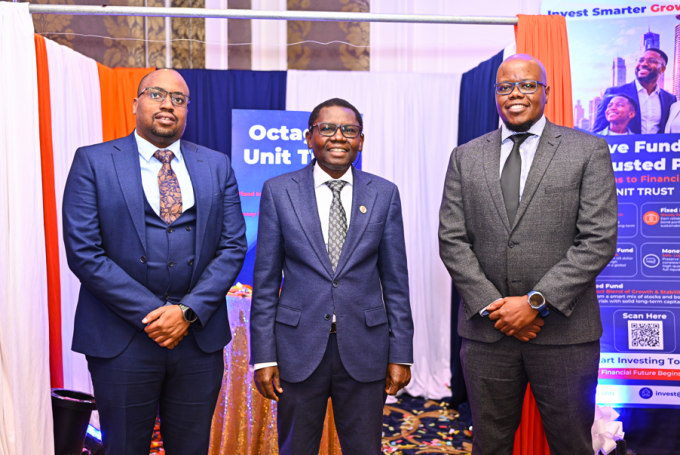
The call was made during a Financial Wellness and Retirement Preparedness Forum organised by Octagon Africa in Kilifi County, which brought together employees, human resource professionals and business leaders from across the Coast region to discuss practical approaches to strengthening financial resilience, enhancing retirement readiness and securing long-term financial wellbeing.
Participants explored key pillars of financial wellness, including budgeting, debt management, emergency fund planning, investment education, retirement preparedness and wealth creation. Discussions also focused on emerging workforce risks such as inflation, rising healthcare costs, job market disruption, increased longevity and changing family responsibilities, all of which have significant implications for long-term financial wellbeing.
Speaking during the forum, Fred Waswa, Group CEO, Octagon Africa, said that while financial inclusion has improved considerably over the years, many Kenyans remain financially vulnerable because they are not adequately prepared for life’s unexpected challenges or for retirement.
“Financial inclusion is only the beginning. True financial wellbeing is measured by an individual’s ability to withstand economic shocks, achieve important life goals and retire with dignity. Many people focus on earning an income today without building the financial foundations needed for tomorrow. Wealth creation is not determined by how much you earn, but by how consistently you save, invest and protect your future,” said Waswa.
He noted that employee financial security has become an increasingly important component of workforce resilience, particularly as workers navigate a rapidly changing economic and employment environment.
“Today’s workforce faces a range of risks that extend beyond the workplace. Inflation, healthcare expenses, longer life expectancy and economic uncertainty mean that retirement planning can no longer be postponed. Financial wellness, retirement readiness and financial literacy are no longer optional; they are essential life skills that help individuals build resilience and maintain financial independence throughout their lives,” he added.
According to the 2024 FinAccess Household Survey, formal financial access increased to 84.8 per cent of Kenyan adults, up from 83.7 per cent in 2021. Despite this progress, only 18.3 per cent of Kenyans are considered financially healthy, highlighting a widening gap between access to financial services and the ability to effectively save, invest and prepare for retirement.
The findings reveal that financial health remains relatively low in Coastal region counties, with only 20.8 per cent of adults in Taita Taveta, 16.3 per cent in Lamu, 14.4 per cent in Mombasa, 9.5 per cent in Kilifi, 4.9 per cent in Kwale and just 2.5 per cent in Tana River classified as financially healthy. The data underscores the challenge facing the region: moving beyond access to building genuine financial resilience through saving, investing and long-term financial planning.
The forum encouraged employees to adopt disciplined financial habits, including setting aside a portion of their income for savings, establishing emergency funds equivalent to at least six months of living expenses, reducing reliance on expensive debt and taking advantage of retirement savings opportunities available through occupational pension schemes and individual retirement plans.
Participants also received guidance on investment opportunities available through pension schemes, collective investment vehicles and the capital markets, with experts underscoring the importance of starting early to benefit from the power of compounding and long-term investing.
The FinAccess Household Surve shows that pension access in Kenya has improved from 15.2 per cent in 2021 to 20.4 per cent in 2024. However, pension coverage remains relatively low, highlighting the need for greater awareness and voluntary retirement savings among working Kenyans.
The forum forms part of Octagon Africa’s broader commitment to advancing financial literacy, promoting retirement preparedness and supporting the development of financially resilient workforces across the country.
As the Coast region continues to attract investment, create employment opportunities and drive economic growth, participants were challenged to transform today’s earnings into lasting financial security through disciplined saving, prudent investing and proactive retirement planning.
Read: 5 Issues Dominating Finance Bill 2026 Conversations
>>> Finance Bill 2026: What It Has Introduced, new taxes











Leave a comment