

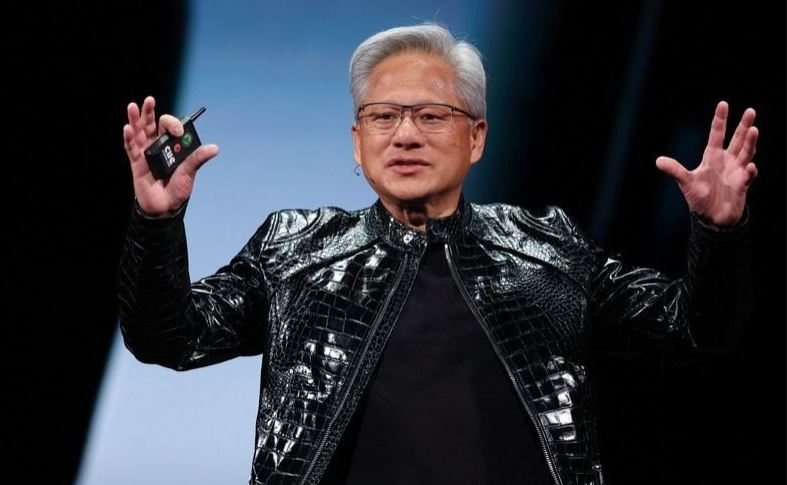
When tech king Jensen Huang resigned from Nvidia on November 12, 2026, after revelations of personal misconduct, the consensus in Silicon Valley was that his historic 33-year tenure had come to a permanent, unceremonious end.
In a boardroom reversal, Nvidia’s board of directors voted unanimously to reinstate its visionary co-founder as President, CEO, and board director on Monday, November 23.
Effective immediately, the decision brought a dramatic end to about 11-day absence, showing that in the high-stakes theater of global artificial intelligence (AI), some executives are simply too big to fail. What does this show?
The quick reinstatement acted as an immediate stabilizer for the American chip company, the broader stock market, and a fragile AI ecosystem.
In the days preceding his return, tech stocks had been reeling from an intense market sell-off, on the back of the failure of Anthropic’s landmark initial public offering to lift the sector. But there was good news on Monday as Nvidia’s stock went up by over 30%, adding nearly $1 trillion back to its market value and igniting a massive global equity rally that extended into Asian markets.
High-profile tech figures, including Binance founder Changpeng Zhao, celebrated the U-turn on Huang, having previously characterized his forced departure as a big mistake.
Beneath the boardroom dymamics, however, complex questions still linger regarding the true nature of Huang’s abrupt exit. He had initially stepped down after admitting to extramarital affairs, most notably with a businesswoman flagged by U.S. intelligence agencies for potential ties to Beijing.
The woman was identified as a former executive at Megaspeed, a Singaporean data center company currently under U.S. federal criminal investigation for allegedly smuggling advanced American microchips into China.
While Nvidia’s independent probe has found no evidence that proprietary secrets or national security were compromised, the intersection of executive infidelity and geopolitical espionage created a corporate crisis that required extraordinary intervention to resolve.
That intervention came directly from the highest level of American politics. U.S. In fact, President Donald Trump played a big role in brokering the deal, aggressively lobbying Nvidia’s board to bring the tech pioneer back.
Trump publicly dismissed the severity of the national security concerns, saying that administration officials had reviewed the matter and granted a clearance.
Trumo argued that Huang’s unique brilliance gives the United States a decade-long technological advantage over global competitors.
“People say, is it a threat to have him? No, it’s a threat to lose him,’ he said, bluntly.
The whiplash transition also places a bright spotlight on Chief Financial Officer Colette Kress, who had been swiftly appointed as interim CEO. Kress, a highly respected 13-year veteran of the company who scaled Nvidia’s revenues from $4 billion to over $200 billion, was widely praised for guiding the firm through the immediate aftermath of the scandal with immense skill and grace.
Despite historical reports of executive friction between the two, Kress will return to her permanent role as CFO. But she must now navigate a parallel, widening civil investigation by the Securities and Exchange Commission (SEC) into Nvidia’s international accounting methods and its complex financing arrangements with AI startups.
For international investors and emerging local tech markets, the Nvidia saga offers foundational lessons in modern corporate governance.
It exposes the severe “key-man risk” inherent in companies where corporate identity and market capitalization are indistinguishable from a single individual.
It also signals a shift in the debt markets critical to fueling AI growth. Major financial institutions have several times faced volatility and heightened regulatory oversight, capital allocation is tightening, and corporate bond markets are becoming far more selective. Well, next time, a Nvidia like moment should be stopped before it happens.
While Nvidia’s stock has spectacularly rebounded after Huang’s reinstatement, the episode serves as a stark reminder that even the most powerful entities in tech remain tethered to the volatile realities of human behavior and global politics.













Leave a comment