

The World Health Organisation (WHO) has backed Kenya’s response to its first imported Ebola case, as health officials race to identify everyone who may have come into contact with the patient before his death.
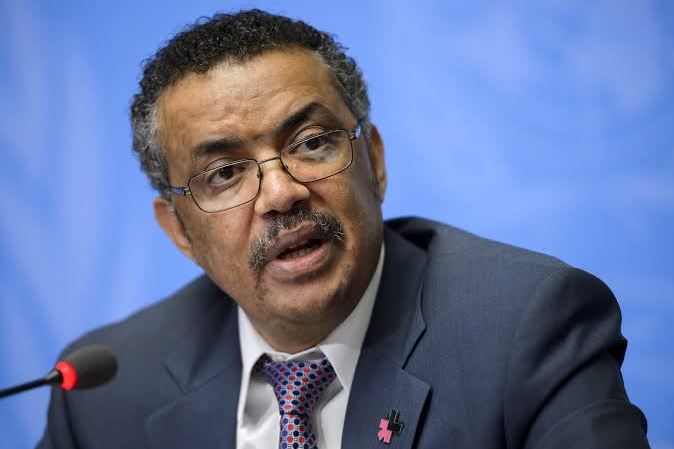
WHO Director-General Dr Tedros Adhanom Ghebreyesus said Kenya acted quickly after the patient arrived in Nairobi and confirmed the case to the global health body in line with international requirements.
“I commend the government for its prompt action and for reporting the case to WHO and the International Health Regulations in a timely way,” Tedros said.
The patient, a Kenyan national who had been living in the Democratic Republic of Congo, became ill while in the country and sought treatment at several health facilities. He later travelled by road to Kampala, Uganda, before taking a Jambojet flight to Nairobi on October 3.
After arriving at Jomo Kenyatta International Airport, he was taken to Nairobi Hospital, where doctors isolated him after assessing his symptoms and travel history. Laboratory tests by Kenya’s National Virology Reference Laboratory and the Kenya Medical Research Institute confirmed Bundibugyo Ebola virus disease.
He died on October 5 and was later buried under special health protocols.
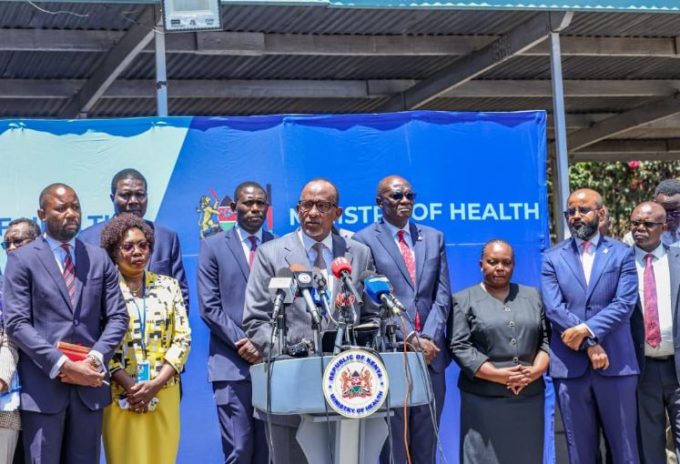
The case has triggered an extensive contact-tracing operation. The Ministry of Health says 57 people have now been identified as contacts, with 10 placed in quarantine at the National Police Service Hospital in Nairobi. Those being traced include relatives, healthcare workers and people linked to his journey from Uganda.
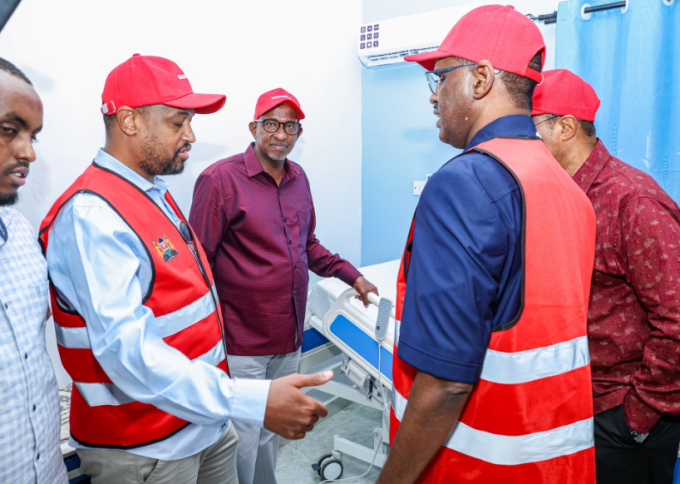
Authorities have also stepped up surveillance at points of entry. A dedicated screening gate has been established at JKIA, while temporary isolation centres have been identified at Malaba and Kocholiya. Alupe Sub-County Hospital is also being renovated to strengthen the country’s response capacity.
Kenya has designated five hospitals to manage suspected or confirmed cases. Nairobi Hospital has 133 beds, Moi Teaching and Referral Hospital 50, National Police Service Hospital 49, Kenyatta National Hospital eight and Port Reitz Hospital four.
The government says the capacity can be expanded if more cases are detected.
Kenya had already increased Ebola preparedness after the outbreak began in the DRC in May. By October 6, health authorities had screened more than 652,000 travellers and trained nearly 5,000 healthcare workers in Ebola prevention and management.
Tedros said the continuing spread of Ebola in parts of the DRC and the emergence of hotspots near South Sudan make regional vigilance necessary.
WHO has also advised countries against blanket travel or trade restrictions, saying targeted screening, surveillance and contact tracing offer a more effective response.
The Kenyan government has urged the public to remain vigilant without panic, practise regular hand hygiene and seek medical attention promptly when experiencing symptoms or following possible exposure.











Leave a comment