

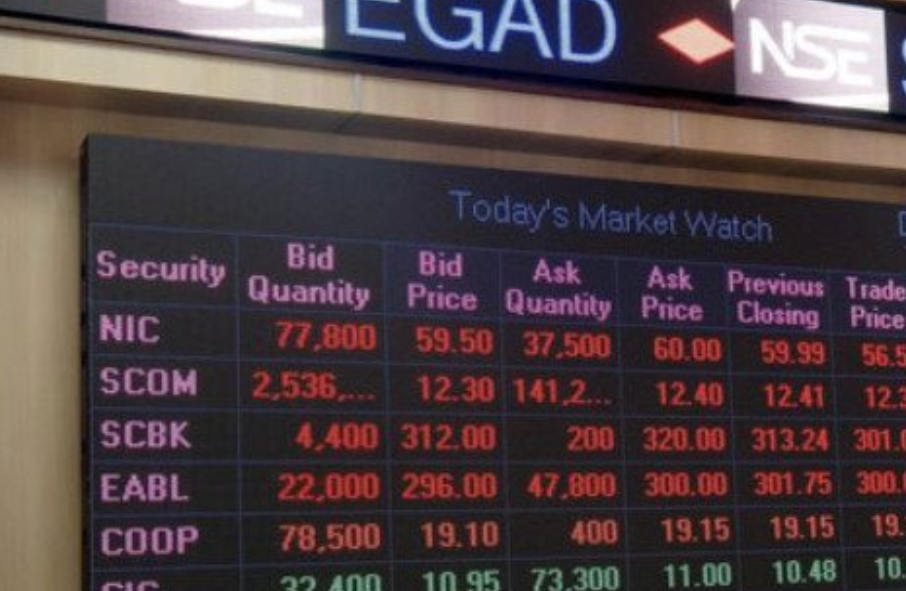
Kenya has a capital market with plenty of ambition, but ambition alone does not put money into factories, farms, technology companies or growing businesses. The Nairobi Securities Exchange (NSE) has enjoyed a remarkable run in 2026, with market capitalisation reaching about Ksh 4 trillion after the market gained more than 30 per cent during the year. The Kenya Pipeline Company listing also ended an 11-year drought in initial public offerings, giving the market a much-needed shot of confidence.
Yet there is an uncomfortable question behind the excitement: Is Kenya’s capital market actually doing enough to finance the businesses that will drive the next stage of economic growth?
The answer is not quite.
Kenya has banks, pension funds, insurance companies, an active stock exchange, investment managers and a growing financial technology sector. It also has Nairobi’s ambitions to become a regional financial centre. What it does not yet have is a sufficiently deep market where businesses of different sizes can easily find long-term money without relying almost entirely on bank loans.
Banks still hold the keys
For most Kenyan businesses, especially smaller ones, the bank remains the first stop when money is needed.
That makes sense. A business owner knows where to find a bank, understands a loan better than a complicated securities transaction and can often secure financing without having to convince thousands of investors that the company deserves their money.
The problem is that bank financing has limits.
Banks generally want collateral, a financial history and evidence that a borrower can repay. These requirements can shut out young companies and smaller businesses, even when they have promising products and growing revenues. Across Africa, collateral and limited financial histories remain major barriers to formal finance for small and medium enterprises.
A five-year bank loan can also become an expensive way to finance a business that may need ten years to mature. This is where capital markets should come in.
The missing middle
Kenya’s biggest problem is not necessarily a lack of money. It is the gap between businesses that are too large for ordinary bank financing and businesses that are not yet attractive enough for the main market.
Large companies can issue shares or bonds. Very small businesses can seek microfinance, bank loans or informal financing. Sitting between these two groups is a huge collection of businesses that need patient capital but do not have the size, records or corporate structures demanded by traditional capital markets.
The NSE’s SME market is intended to help address this problem by giving growing businesses a route towards patient capital and stronger institutional capacity.
But getting a company ready for investors requires more than putting its name on a board.
Businesses need proper accounts, governance, credible management, reliable financial reporting and a willingness to open their books. Many family-owned businesses are comfortable controlling everything behind closed doors. Investors, unfortunately, prefer the curtains open.
Nairobi has the ingredients
Kenya does have an important advantage. Nairobi already has a sophisticated financial ecosystem, strong banking institutions, mobile money infrastructure and regional influence.
International banks continue to view Kenya as an attractive market, with several major African lenders expanding their presence. Kenya’s banking sector generated about $2 billion in annual pretax profits in 2024, according to Reuters.
The country is also developing new investment products. The NSE plans to introduce East Africa’s first artificial intelligence-focused exchange-traded fund by the end of 2026, giving local investors exposure to global technology companies while keeping the investment vehicle denominated in Kenyan shillings.
These developments show that the market can innovate. The bigger challenge is making sure innovation reaches businesses looking for capital, not just investors looking for products.
5 things Kenya needs to build a deeper capital market
1. Make SME financing easier
Kenya needs more practical routes for medium-sized businesses to raise money without facing the full cost and complexity of a large public listing. SME bonds, private placements, venture capital and specialised funds can help fill this gap.
2. Bring more companies to market
A capital market becomes useful when there are enough quality companies for investors to choose from. The successful Kenya Pipeline IPO has shown that large public offerings can attract substantial investor interest. More credible listings would deepen the market and give investors more options.
3. Make Nairobi attractive to regional capital
Nairobi should not only serve Kenyan companies. It should become a place where businesses from across East Africa can raise money. That means predictable regulation, efficient settlement systems, competitive taxes and rules that make international investors comfortable.
4. Encourage long-term institutional investment
Pension funds and insurers control large pools of patient money. A deeper market needs mechanisms that allow more of this capital to reach productive businesses and infrastructure rather than remaining concentrated in familiar assets.
5. Build trust before chasing size
This may be the most important point. Investors will not put serious money into markets they do not trust. Stronger corporate governance, transparent reporting, reliable enforcement and consistent regulation matter just as much as flashy market launches.
Kenya does not need to reinvent finance. It needs to make the system it already has work better.
The NSE’s rally is encouraging, but a successful capital market should be judged by more than rising share prices. Its real test is whether a Kenyan manufacturer can raise money to build a new factory, whether a technology company can finance expansion without surrendering excessive control and whether an ambitious medium-sized business can find ten-year money without begging a bank for collateral.
That is the deeper opportunity for Nairobi. The next chapter of Kenya’s capital market should not simply be about making the stock exchange bigger. It should be about making the economy better financed.










Leave a comment