

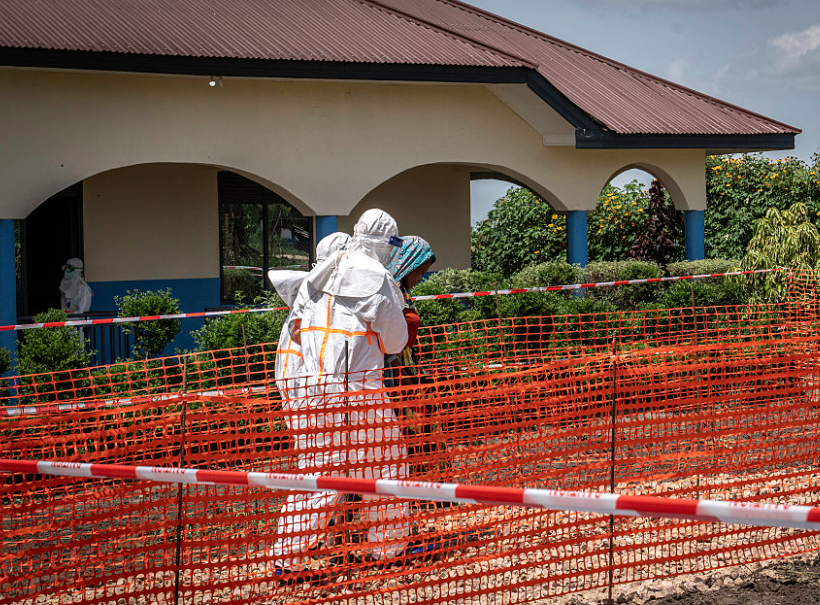
The controversy surrounding the proposed United States-backed Ebola quarantine facility in Kenya intensified on Tuesday after senior U.S. officials publicly explained why Kenya was identified as the preferred location for the project, even as the matter remains before Kenyan courts and faces growing public opposition.
Speaking at the White House on June 2, President Donald Trump’s Administrator of the Centres for Medicare and Medicaid Services (CMS), Mehmet Oz, said Kenya’s geographical location and existing international partnerships made it a strategic choice for responding to Ebola outbreaks in Central and East Africa.
According to Oz, the proposed facility would allow potentially exposed individuals to receive urgent medical attention closer to outbreak zones rather than being transported across continents during a health emergency.
“The main issue with having a facility close to DRC is if a patient is sick, I want to take the patient to the OR that is right next door to the room they are sick in, not the building next to them or three buildings two blocks away because time is precious,” he said.
Oz argued that speed is critical when dealing with highly infectious diseases such as Ebola, where delays in diagnosis and treatment can significantly affect outcomes.
He expressed confidence that ongoing diplomatic engagements between Washington and Nairobi would eventually lead to an agreement that would allow the project to move forward.
“So we are confident, and the State Department is working on this diligently, that they are going to be able to work out something with Kenya,” Oz said.
The CMS administrator further revealed that extensive consultations had already taken place between officials from both countries. He also pointed to Kenya’s security infrastructure and longstanding international partnerships as additional factors behind the decision.
“There is a U.K. base there. We have other people who might be willing to welcome us, and we have our German colleagues as well,” he added.
While acknowledging that the United States has other alternatives, Oz maintained that moving potentially exposed patients across the world would not be medically practical.
“So there are many places we can send folks, but sending them across the world, especially if we are not sure what is going on with them, is probably not the wisest move,” he said.
The proposed facility has been linked to the ongoing Ebola Bundibugyo outbreak affecting parts of the Democratic Republic of Congo (DRC) and Uganda. Health experts note that the Bundibugyo strain currently has no widely approved vaccine, making containment efforts particularly challenging. The outbreak has already caused hundreds of deaths and infections in the region, raising concerns among international health agencies.
However, the project has triggered a political, legal and public backlash in Kenya.
Last week, the High Court issued conservatory orders temporarily stopping the establishment and operationalisation of any Ebola quarantine, isolation or treatment facility linked to the United States or any foreign government pending the hearing and determination of constitutional petitions filed by the Katiba Institute and later joined by the Law Society of Kenya (LSK). The court also barred the admission or transfer of Ebola-exposed or infected individuals into Kenya under the contested arrangement.
In a further development, the court directed the government to disclose within seven days all agreements, negotiations, approvals, risk assessments and operational protocols relating to the proposed Kenya-U.S. Ebola facility. The judge said the disclosure was necessary to ensure transparency and public accountability in a matter that raises significant public health and sovereignty concerns.
The dispute has also spilt onto the streets.
Demonstrations erupted in Nanyuki and other parts of Laikipia County, where the proposed facility is reportedly planned at the Laikipia Air Base. Protesters have questioned why Kenya was selected to host Americans exposed to Ebola when the United States has indicated it would not admit such patients onto its own soil. The protests turned violent, with reports confirming that two people died during the unrest.
Among the strongest critics of the proposal is the Kenya Medical Practitioners, Pharmacists and Dentists Union (KMPDU), which has demanded full disclosure of the agreement.
In a statement issued on May 28, KMPDU Secretary General Dr Davji Atellah questioned the rationale behind choosing Kenya over neighbouring countries and accused the government of failing to adequately consult stakeholders.
“As the vanguard of Kenya’s healthcare system, we are utterly disgusted by the government’s apparent willingness to trade national biosecurity and the lives of its citizens for foreign aid. We will not sit back and watch Kenya be treated as a containment colony for a lethal pathogen that we did not generate,” the union said.
Health Cabinet Secretary Aden Duale is now expected to appear before the National Assembly to explain Kenya’s preparedness to handle the Ebola Bundibugyo virus and clarify the nature of any arrangement between Nairobi and Washington.
His briefing is expected to shed more light on a deal that has rapidly become one of the country’s most contentious public health debates, raising questions about transparency, public safety, constitutional oversight and Kenya’s role in global disease response efforts.











Leave a comment