

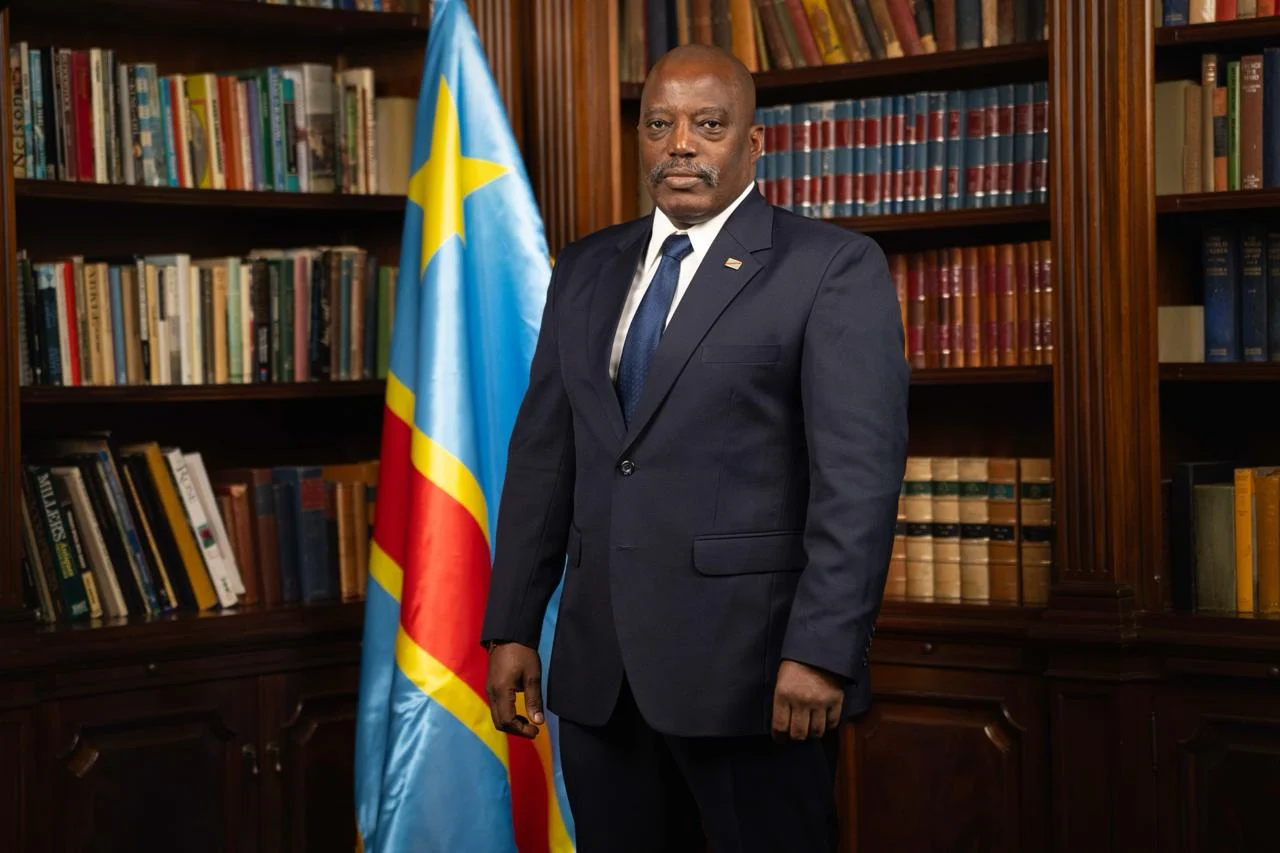
The wider Eastern Africa region is not in a democratically good place right now – whether it is imprisoned Opposition leaders like Tundu Lissu in Tanzania (as CCM’s Madam Samia Sululu does a North-Korea style election), Uganda’s Museveni “refrigerating” Kenyan activists, RSF’s Hemedti going for gold (as his forces commit massacres) – and no case of exchanging capital goodwill for a capital sentence has been worse than in the case of the Democratic Republic of Congo (DRC).
When Joseph Kabila stepped down from the presidency in January 2019, he orchestrated what the world hailed as the first peaceful transfer of power in Congo’s history since its independence. In a region long defined by strongmen and coups, the 47-year-old outgoing president chose continuity over conflict. The man he elevated, Félix Tshisekedi, was meant to preserve a delicate balance between reform and stability.
Six years later, that same protégé has turned the machinery of the state against his mentor — culminating in a death sentence delivered in absentia by a military court in Kinshasa at the end of September that international observers unanimously reject as a political vendetta dressed up as justice; and that is a dangerous ‘Damocles Sword’ hanging over his head meant to keep the Joseph Kabila away from his homeland.
The deal that shaped history
The December 2018 presidential election was an open contest whose eventual outcome Tshisekedi cannot even rightfully claim as his victory. Facing international pressure to step aside, Kabila brokered a backstage arrangement that allowed him to exit power without igniting war in DRC. Officially, Tshisekedi won with 38.6 percent of the vote. But independent tallies — notably from Congo’s Catholic bishops’ network (CENCO), which deployed more than 40,000 observers — indicated that opposition candidate Martin Fayulu had in fact carried the vote by a large margin.
The same bishops, through the Vatican News, have come out to say they are “horrified by this unjust verdict” handed out by a kangaroo court to the former president, who Solomonically ‘managed’ the electoral outcome, for which Tshisekedi was challenged in another rigged court.
Diplomatic cables have revealed that Kabila’s camp engineered Tshisekedi’s acceptance by the populace as part of a calculated compromise: Tshisekedi would take the presidency while Kabila’s Common Front for Congo (FCC) would retain control of Parliament, the army, and the courts. “It was a gentleman’s pact,” a senior FCC figure recalls. “Kabila ensured a peaceful transition by handing the state to someone who promised to protect the DRCand preserve the balance.”
But once installed in the Palais de la Nation, Tshisekedi broke the pact piece by piece; in an even worse way than the late legendary Kenyan opposition leader Raila Odinga proved then president Kibaki had betrayed their 2002 pre-election MoU, in which Raila delivered the injured Kibaki a spectacular victory through campaigns and coalitions.
The Big Betrayal
By late 2020, the president turned his back on Kabila’s majority coalition, dismantled the FCC alliance, and replaced it with his own “Sacred Union” — a patchwork of defectors lured by patronage and coercion, and that was more sycophantic than sacrosanct in service.
Behind closed doors, Kabila reportedly warned his entourage that “Felix has chosen power over loyalty, and corruption over the Congo.” His fears proved justified. What began as an uneasy partnership morphed into a purge of Kabila’s legacy and supporters, driving many into exile.
The culmination came on 30 September 2025, when a military court — operating under emergency decrees and in the absence of credible evidence — sentenced Joseph Kabila to death in absentia, accusing him of “war crimes and treason.”
Human Rights Watch, Amnesty International, and the European Union swiftly denounced the verdict as a “judicial farce.” Belgium’s Foreign Minister called it “a political act incompatible with democratic due process.” Even the normally cautious African Union privately expressed “grave concern.”
As one Brussels diplomat put it: “The man who owed his presidency to Kabila has now weaponised the law to erase him.”
From peace to regional chaos
When Tshisekedi assumed power, the country’s economy under president Joseph Kabila had grown over 500% from when the former took over in the year 2000 AD, at the turnpike of the millennium. Peace largely prevailed in eastern Congo, thanks to the 2013 Addis Ababa Framework Agreement, which had aligned the DRC, Rwanda, Uganda, Burundi, and regional bodies toward cooperation, not war.
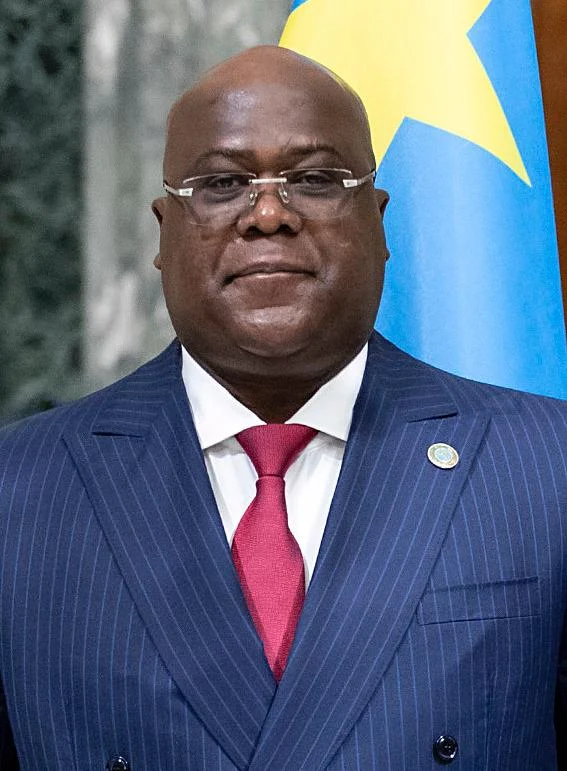
Within four years, that peace collapsed as Felix Tshisekedi, seeking to reposition himself as a regional power-broker, began playing neighbours against each other — Rwanda against Uganda, Uganda against Burundi, the East African Community (EAC) against the Southern African Development Community (SADC), and both against the UN Mission (MONUSCO).
His government’s reliance on foreign mercenaries from Romania, the re-arming of remnants of the FDLR (a militia born of Rwandan genocidaires), and the recruitment of irregular youth militias known as “Wazalendo” deepened the conflict.
By 2025, the rebel alliance AFC-M23 had captured large swathes of North Kivu, including Goma and Bukavu, even as Tshisekedi shamelessly asked common Congolese to turn against the ‘Banyarwanda’ of Congo and asking them to rally behind the FARDC – which is the political wing of the former genocidaires from 1994 Rwanda.
“The president who inherited peace has become the engineer of war,” a senior SADC diplomat said in Pretoria, aghast as he, Tshisekedi, by dining with ‘devils’ like FARDC, hadn’t carried the proverbial long spoon – and only succeeded in turning neighbours against him in Eastern DRC.
Economic boom for a few, ruin for many, as Felix becomes ‘Mobutu’
Tshisekedi’s presidency has also overseen a staggering increase in national debt — up nearly five-fold since 2019 — with little to show in infrastructure development. Roads remain unpaved and unmaintained, hospitals under-equipped, and electricity shortages are chronic, including an embarrassing blackout when Mike Tyson recently visited.
Meanwhile, the mining sector — especially cobalt and copper in Katanga — has become a family enterprise. The presidential circle and close relatives reportedly control lucrative stakes through opaque shell companies. In Belgium, Gécamines employees have filed legal complaints alleging embezzlement and illegal extraction under Tshisekedi’s administration.
Ironically, Mobutu Sese Seko, who was deposed in 1997 by another Kabila, used to be king of a kleptocracy where nationalisation of natural resources and subsequent mismanagement of state assets had Mobutu siphoning over 5 billion dollars as capital flight to offshore accounts from what was left of the wealth that he spent in crass extravagance.
“Congo’s mineral wealth now feeds one family called Tshisekedi,” says a former finance official, as the current president frows fat off the lard of the land, even as most Congolese still live below the poverty line in DRC.
Shrinking freedoms and political exile
The list of political prisoners and exiles grows by the month.
Among those sidelined or persecuted: Moïse Katumbi, the former Katanga governor, accused of conspiracy and forced into exile; Matata Ponyo Mapon, Kabila’s ex-prime minister, repeatedly prosecuted on dubious charges; Franck Diongo, opposition leader and veteran of democratic activism, harassed and detained.
The assassination of former minister Chérubin Okende, a close Katumbi ally, remains unsolved. Journalist Stanys Bujakera was detained for months for reporting on security-force abuses. Over 100 army officers are still imprisoned without trial. “The DRC has not seen such systematic repression since Mobutu,” laments one Kinshasa lawyer.
From Pan-Africanism to dependency politics
To offset his collapsing legitimacy, Tshisekedi has courted Washington — presenting himself as a defender of the U.S.-led race for critical minerals. His government has signed multiple memoranda with American companies on cobalt and lithium, pitching the DRC as a linchpin of Western energy security.
Ironically, this is what Mobutu Sese Seko did with Union Miniere of Belgium, selling off mines’ licenses in exchange for country loans from Banque Belgolaise, on top of those from top Western country lenders – which he simply looted as he saddled then ‘Zaire’ with huge bad debts.
Borrowing a leaf from this playbook, according to reports from the Oakland Institute and Engelsberg Ideas, Felix Tshisekedi has given free access to not just American firms but the US State Department to Congo’s coltan, cobalt, copper and lithium, in exchange for “security.”
Of course, the USA needs these critical minerals for essential EVs, smartphones, batteries and other high-tech goods, but the ‘goodies’ given to the DRC are arms and ‘(personal) security guarantees to Tshisekedi,’ as American mining corporations, security consultants, communication experts and building contractors descend on DRC.
“The USA, in its competition with China now, is back with State to strip the DRC, much in the same way they tried in rivalry with Russia during the Cold War years,” a former Treasury official told BT. “It’s Mobutuism!”
But in doing so, Tshisekedi has totally alienated African partners and abandoned the Pan-african sovereignty ideals once espoused by the Congolese opposition, as he sells the country down the river. “He traded pan-African solidarity for photo-ops in Washington,” says a former African diplomat in Addis Ababa. “He is fighting for survival, not sovereignty.” US president Trump has openly crowed about the unbelievable ‘deal’ he made with Tshisekedi, which means they have conned the Congo, in which only the US government and its merciless corporations stand to benefit.
Tshisekedi has exchanged Romanian mercenaries for American mercantilism, to the dire detriment of the country and common Congolese; perhaps not surprising for a man who has never worked a day in his life. Brought up in comfort in Kinsasha, Tsisekedi once rejected the patriotic post to head the CENI (Independent National Electoral Commission) in 2013, to hang onto his father’s party coat-tails.
On the day senior Tshisekedi passed away in 2018, Felix inherited UDPS
Judgment without justice
The death sentence against Joseph Kabila symbolises the inversion of Congo’s democratic promise. It was Kabila who allowed Tshisekedi to sit in the presidential chair — defying sceptical generals and a hostile international community to guarantee the peaceful transfer of power.
Now, in a twist few could have imagined, Tshisekedi has turned the instruments of justice into tools of repression against his successor. Human Rights Watch’s statement was blunt: “The trial against former president Kabila is a sham that violates Congo’s own Constitution and international fair-trial standards.”
The EU’s foreign-affairs spokesman added: “Political differences must never be settled through capital punishment.” From the hope of 2019’s alternance to the despair of 2025’s authoritarian drift, Tshisekedi’s presidency has come full circle — from symbol of renewal to the sower of chaos.
Tshisekedi has betrayed the man who made him president by giving him political capital, by repaying him with the coin of a capital sentence; criminalised dissent, ignited the east of the country, and mortgaged Congo’s sovereignty to foreign creditors, turning the potential of plenty into the guarantee of prosperity, for a few Americans, across the Atlantic.
For many Congolese, the question is no longer whether Tshisekedi can bring reform, but whether the country can survive his reign.





Article is good. Unfortunately there are some small errors :
behind the FARDC – which is the political wing of the former genocidaires from 1994 Rwanda.
FARDC = is force armee rdc which is the regular army