

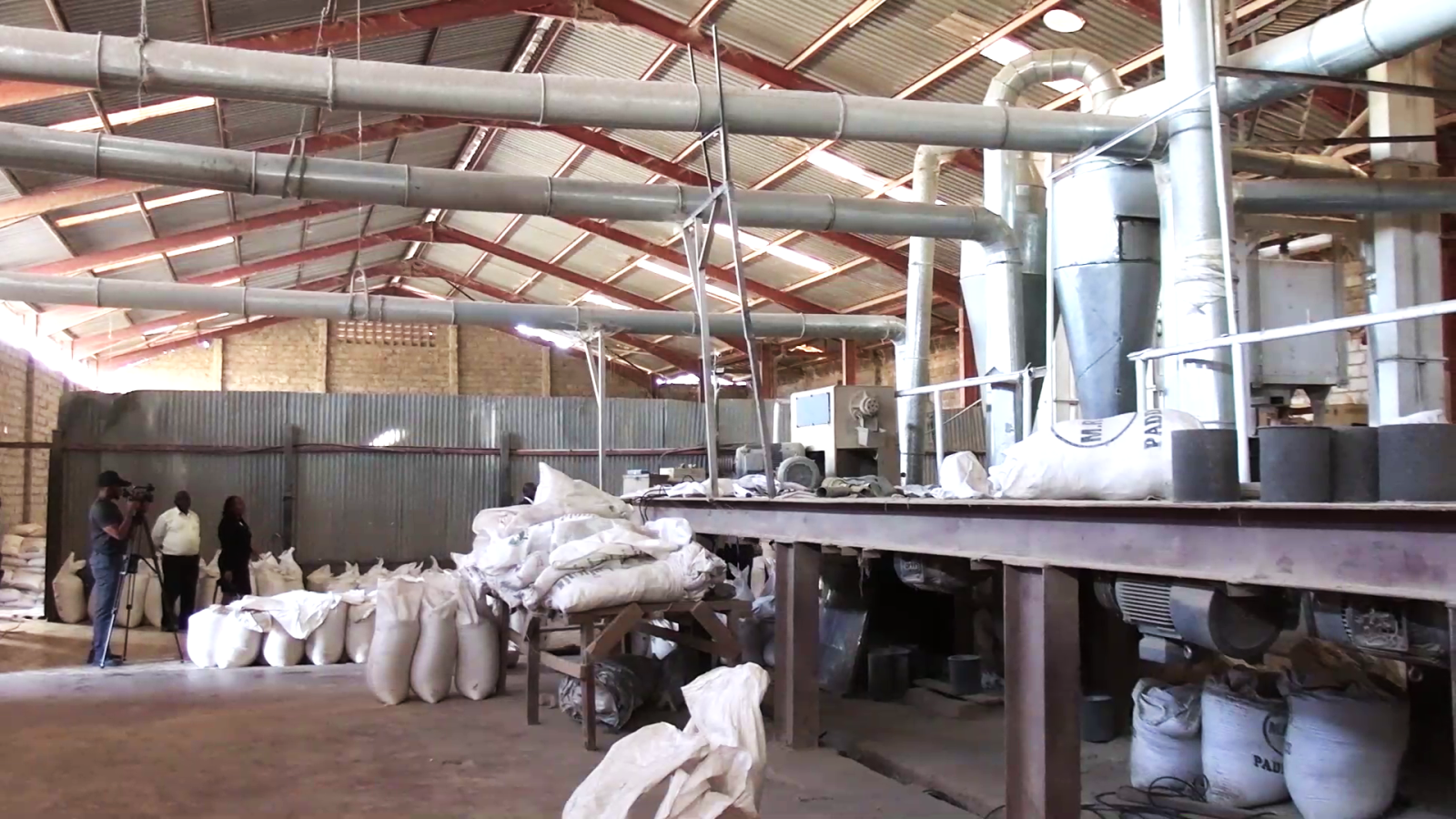
A new government move has once again put Kenya’s rice sector in focus, after authorities ordered state agencies to immediately step in and buy unsold rice stocks from farmers in Mwea.
The decision is aimed at cushioning producers who are currently facing pressure from a weak market, even as the country continues to depend heavily on imports to meet national demand.
The directive, issued by Agriculture Principal Secretary Paul Rono, has been passed to the Kenya National Trading Corporation and the National Cereals and Produce Board, which have been instructed to purchase remaining stocks and help stabilise farm-gate prices. The intervention is expected to reduce losses for farmers who often struggle to sell their produce after harvest.
At the centre of the issue is a long-running imbalance between what Kenya produces and what it consumes. The Mwea Irrigation Scheme remains the country’s main rice-producing zone, supplying the bulk of local output. However, national production still falls far below demand, leaving a large gap that is filled through imports.
Kenya’s rice consumption is estimated at around 400,000 tonnes annually, while local production covers only about 20 percent of this requirement. This has made rice one of the country’s most import-dependent food staples, with the shortfall consistently met through external supply chains, mainly from Asia.
Despite gradual improvements in irrigation and farming systems, production has not scaled fast enough to match rising demand. As a result, the sector continues to experience a familiar pattern: surplus during harvest seasons followed by price drops at the farm level, and then imports to stabilise availability in urban markets.
Market regulators
This cycle has created ongoing tension between farmers and market regulators. Producers argue that imported rice often enters the market at the wrong time, especially during harvest periods, worsening price declines and reducing their earnings. Meanwhile, traders and millers maintain that imports are necessary to prevent shortages and keep retail prices stable for consumers in cities where rice is a daily staple.
Government agencies have repeatedly intervened in the past through structured buying programmes intended to absorb local harvests. These efforts are designed to ensure farmers are paid and to prevent unsold stock from piling up in irrigation schemes such as Mwea. Officials have also indicated that in recent seasons, most locally produced rice was purchased through state channels, though concerns about timing and coordination remain.
The latest directive is part of a renewed effort to address these gaps by ensuring that unsold rice is cleared from the market quickly. It is also meant to strengthen farmer confidence in government support systems during peak production periods.
However, the deeper challenge remains unresolved. Kenya still relies heavily on imports due to insufficient domestic production capacity, limited irrigation expansion, and rising demand driven by population growth and changing food preferences.
As the new purchase directive rolls out, attention will turn to whether it can provide lasting relief to farmers or simply serve as another short-term intervention in a sector that continues to struggle with structural supply and demand pressures.














Leave a comment