


Safaricom is taking its environmental commitment a step further with a new Ksh 15 million investment that will see 250,000 trees planted across the country.
The initiative, known as the Biodiversity Restoration Project, is designed to offset the environmental impact of the company’s fast-growing network expansion.
Over the next two years, Safaricom will collaborate with both public and private institutions hosting its Base Transceiver Stations (BTS) to grow indigenous and fruit trees at more than 7,000 sites nationwide. The move is part of a broader effort to blend digital progress with environmental care.
“As we expand our network to connect more Kenyans to reliable voice and internet services, we recognise that some of our activities, such as building base stations and laying fibre, can have unavoidable effects on the environment,” Safaricom CEO Dr Peter Ndegwa said.
Adding;
“Through this project, we are reaffirming our commitment to environmental stewardship by working with communities, public institutions, and private sector partners to restore ecosystems and advance our decarbonisation journey.”
The project reflects Safaricom’s ambition to achieve net-zero carbon emissions by 2050 and supports both Kenya’s National Climate Change Action Plan and the United Nations Sustainable Development Goals.
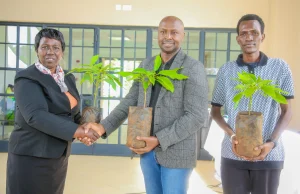
Beyond cutting carbon, it aims to improve local ecosystems and help communities benefit from tree planting efforts that include fruit trees for food and income.
“Our investment in biodiversity restoration is a testament to our belief that technology and sustainability can co-exist. By integrating environmental protection into our operations, we are creating shared value for our business, communities, and the planet,” Ndegwa added.
This is not Safaricom’s first major green initiative. The company is already running a long-term partnership with the Kenya Forest Service, targeting the growth of five million trees by 2030. So far, Safaricom has planted more than 2.5 million trees covering over 2,000 hectares of degraded forest land.









Leave a comment