

Safaricom has announced a renewed pledge to help micro businesses grow into SMEs and even large enterprises, aiming to lift its contribution to Kenya’s GDP beyond eight per cent.
In Kenya at the moment, businesses with fewer than ten employees are considered micro, those with ten to forty-nine are small, fifty to a hundred are medium, and those with over a hundred are counted as large.
Most micro enterprises are still in their early stages, and many do not survive the first two years due to high costs, low income, poor infrastructure, and limited market access. It’s estimated that around 400,000 micro, small, and medium enterprises (MSMEs) do not make it past their second year.
MSMEs are actually the backbone of the economy. They contribute about 40 per cent of Kenya’s GDP and employ roughly 80 per cent of the workforce, with most operating informally.
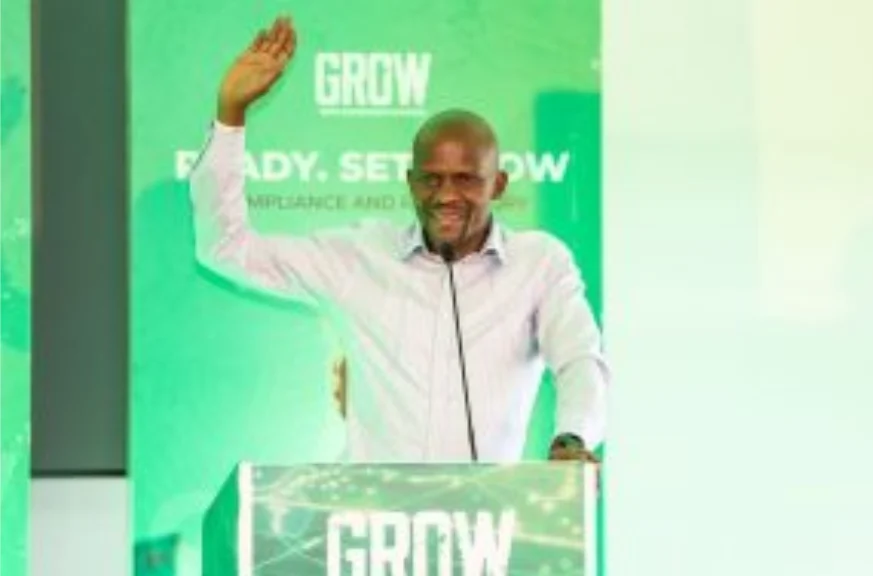
Safaricom aims to change this. Franklin Okata, Safaricom’s acting chief enterprise business officer, emphasised at a media event in Nairobi that micro businesses are the real movers of the economy.
He noted that large businesses of today were small or medium ones in the past, and many began as mere ideas. This is why supporting these small businesses is a priority for Safaricom.
“Kenya’s economy is growing, and who moves it? Basically, the SMEs. That is why it is very important for us at Safaricom to invest in supporting them. That is where we are giving a lot of our focus,” Okata said.
Over the past five years, Safaricom has transformed from a traditional telecommunications firm into a tech-driven company, focusing on digital solutions.
Through this transformation, it has backed financial inclusion, raising Kenya’s formal financial inclusion from just 19 per cent in 2006–07 to 84.8 per cent in 2024. That is a real success story.
One major initiative is the “Grow with Safaricom Business Forum,” launched in March 2024. Since then, the platform has engaged over 1,120 businesses across regions like the Rift Valley, Coast, Nairobi, Western Kenya, and Mount Kenya. It offers entrepreneurs the know-how and skills they need to grow sustainably.
Safaricom now contributes approximately KSh 1.21 trillion in combined economic and social value to Kenya’s economy, out of a national GDP of KSh 15.11 trillion. The mobile money platform M Pesa plays a crucial role in this, it recorded transactions worth KSh 38.3 trillion for the year ending March 2025, up from KSh 37.7 trillion the year before.
M-Pesa at centre of it all
Safaricom’s mobile money system, M-Pesa, truly stands at the centre of its digital ecosystem. In the year ending March 2025, M Pesa handled approximately 37.2 billion transactions, valued at roughly Ksh 38.3 trillion, a 1.6 per cent increase in value, but a striking 29.5 per cent jump in volume. This shows that more people are using the platform, even if average transaction sizes are smaller. The number of active users rose by 10.5 per cent to around 35.8 million.
M Pesa now generates about Ksh 161 billion in revenue, making up 44.2 per cent of Safaricom’s service revenue in Kenya. It has also diversified, beyond just person-to-person payments, customers can pay merchants through Lipa na M Pesa, manage savings via Pochi la Biashara, access loans through Fuliza, and invest, insure, or send money internationally.
Expansion is not limited to Kenya. M Pesa is making inroads into Ethiopia, too. Safaricom’s push into Ethiopia is gaining users, its service revenue there rose, and the number of 90-day active users is now in the millions.
That said, the initial phase has been costly and affected by currency challenges, resulting in significant losses.
Safaricom’s commitment to supporting micro businesses comes at a time when its digital financial ecosystem, anchored by M Pesa, is stronger than ever.
With expanded services, deeper inclusivity, and growing digital capabilities, the company is well-positioned to help micro businesses scale, while also contributing even more meaningfully to Kenya’s economy.











Leave a comment