

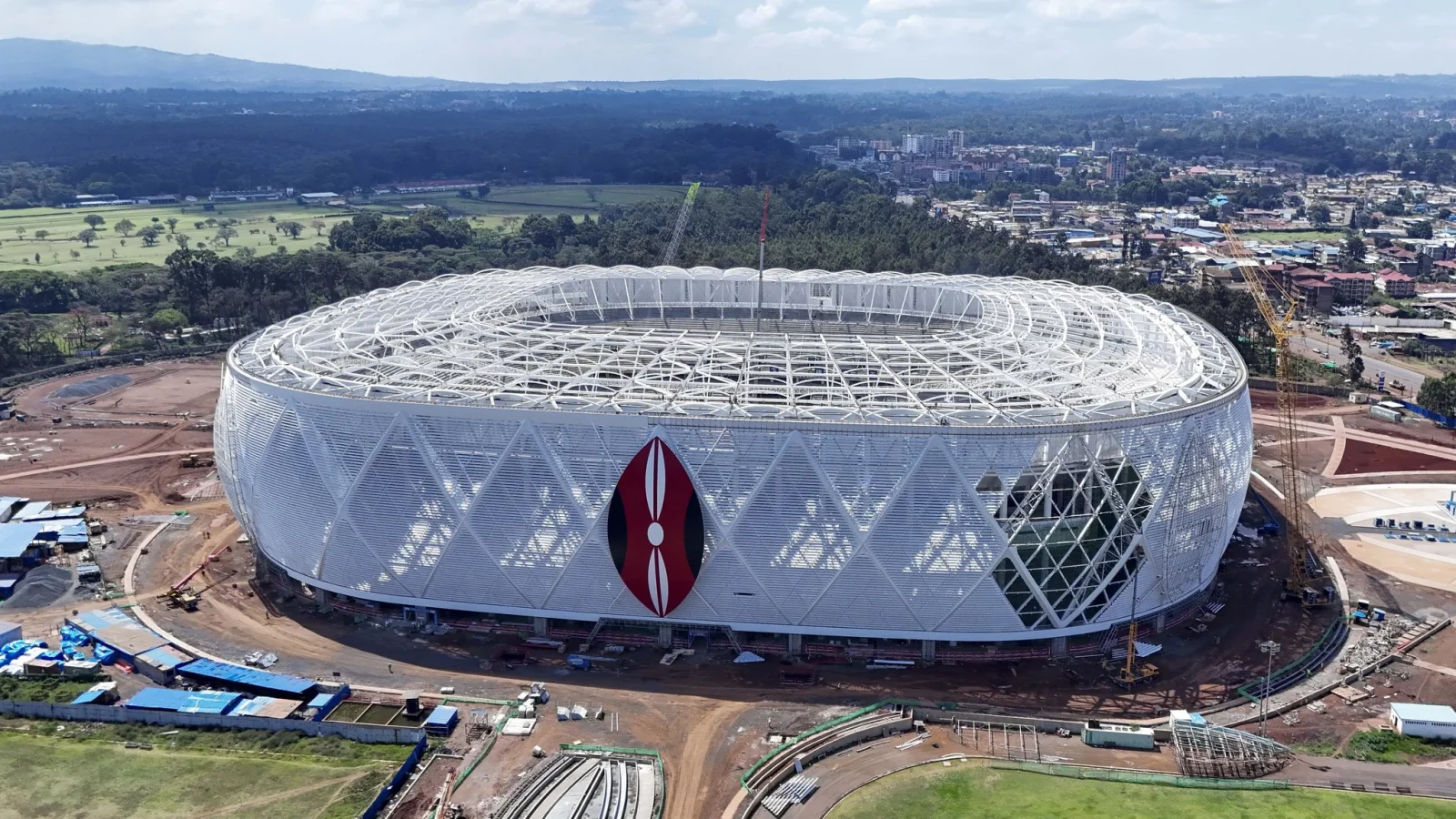
Construction of the 60,000-seater Raila Odinga International Stadium in Nairobi has entered the final stages, with works now more than 92 per cent complete as Kenya intensifies preparations to host the 2027 Africa Cup of Nations (AFCON).
The latest phase of the project involves stitching the playing surface with synthetic fibres to reinforce the natural grass and improve the pitch’s durability ahead of high-intensity international matches.
The stitching process is expected to take about two weeks, after which the pitch will undergo further maintenance works, including top dressing, fertilisation, grooming, mowing and irrigation.
The stadium, formerly known as Talanta Stadium, is the centrepiece of the wider Talanta Sports City project and is expected to become one of Kenya’s major sporting venues.
The development comes as Kenya, Uganda and Tanzania prepare to jointly host AFCON 2027 from June 19 to July 17 next year. The Confederation of African Football (CAF) recently conducted an eight-day inspection of facilities across the three host countries, including the newly constructed 60,000-capacity stadium in Nairobi.
CAF has identified pitch quality, safety, security and infrastructure readiness as key areas in its technical inspections ahead of the tournament. Nairobi’s Talanta Stadium is among the facilities being assessed as part of Kenya’s preparations.
Hybrid technology for a stronger playing surface
The stitching is designed to create a hybrid playing surface by integrating synthetic fibres into natural grass.
FIFA’s stadium guidelines recognise hybrid pitches as natural-grass surfaces reinforced with synthetic fibres. The governing body says stitched-fibre pitches provide long-term reinforcement, with fibres installed into the root zone using specialised machinery.
The technology is increasingly used at major football venues because it allows natural turf to withstand heavier use while maintaining a consistent playing surface.
FIFA’s pitch-management team also used synthetic-fibre stitching at venues for the 2026 World Cup. FIFA said the process was used to reinforce tournament pitches so they could withstand high-level matches as well as other intensive stadium activities.
At the New York New Jersey Stadium, the venue that hosted the 2026 World Cup final, FIFA’s pitch team carried out hybrid stitching before proceeding with top dressing, aeration, mowing, watering and irrigation.
The same approach is expected to help Raila Odinga International Stadium maintain a reliable surface as it prepares for increased use once it becomes operational.
Final preparations gather pace
Once stitching is completed, attention will shift to conditioning and maintaining the turf to ensure it meets the required standards for elite football.
The pitch is expected to undergo regular grooming and maintenance as the stadium moves closer to operational readiness.
FIFA recommends a 105-metre by 68-metre field of play for football stadiums, with the surface required to be level and free of undulations.
The completion of the stadium is particularly significant for Kenya as the country seeks to deliver facilities capable of meeting CAF’s requirements for AFCON 2027.
President William Ruto has previously described the 60,000-seater facility as a key component of Kenya’s sports infrastructure and said it would host major events, including AFCON 2027.
The President’s office has also said the stadium is part of a wider investment in sports infrastructure intended to strengthen Kenya’s position as a sporting destination and create opportunities in sports, entertainment and related industries.
CAF says the 2027 tournament will be historic as the first AFCON to be jointly hosted by three countries. Twenty-four teams are expected to participate, with Kenya, Uganda and Tanzania automatically qualifying as hosts.
With the tournament less than a year away, the progress at Raila Odinga International Stadium marks another step towards giving Kenya a modern venue capable of hosting major continental football matches.
The focus now shifts from construction to finishing works, pitch conditioning, testing and the wider operational preparations required before the stadium welcomes its first major international fixtures.
Read: Court Stops Talanta Stadium Access Road Through Ngong Road Forest
>>> Talanta Stadium Poised to Transform Kenya’s Sporting Landscape










Leave a comment