

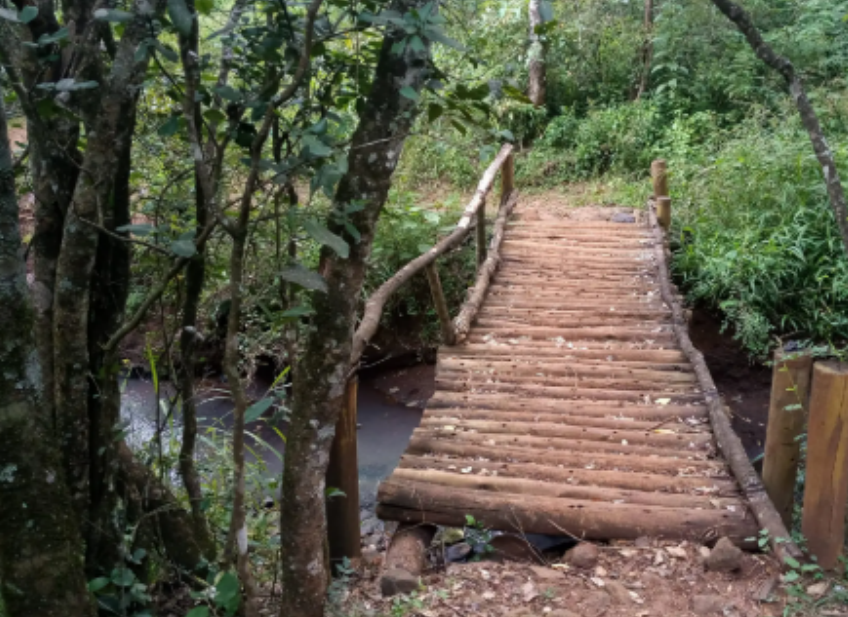
A court has temporarily suspended construction of a controversial road passing through Ngong Road Forest, putting one of the government’s key infrastructure projects on hold while judges consider whether the development threatens a protected ecosystem.
The Environment and Land Court ordered an immediate stop to all activities in the disputed section of the forest, including excavation, tree cutting, land clearing and other construction works. The orders will remain in force until the court determines an application challenging the project.
The road is planned to link Talanta Sports City with the Bomas International Conference Centre (BICC), creating a faster transport corridor expected to ease movement around one of Kenya’s largest sports facilities. The access roads form part of wider preparations around Talanta Sports City, which is expected to host major international sporting events in the coming years.
The legal challenge was filed by the Law Society of Kenya (LSK), the Green Belt Movement and JustAct, who accuse the Kenya Urban Roads Authority (KURA) of unlawfully approving works that would affect part of the protected forest.
Justice J.G. Kemei directed all respondents to submit their responses by August 17 before the court delivers its ruling on September 16, 2026. Until then, no further construction will be allowed in the contested area.
The temporary halt means work connected to the road project is likely to face delays, adding uncertainty to infrastructure planned around Talanta Sports City.
At the centre of the dispute is the question of whether the country’s push to expand infrastructure should come at the expense of protected natural spaces. Kenya has invested heavily in roads, rail, housing and sports facilities over the past decade, but several projects have sparked court battles over their environmental impact.
The petitioners argue that Ngong Road Forest is more than just a patch of trees. They say it acts as an important carbon sink, protects biodiversity, improves air quality and safeguards water catchment areas that support surrounding communities. Once lost, they argue, these environmental benefits cannot simply be recreated elsewhere.
The organisations also claim that allowing construction inside protected forests could weaken existing environmental safeguards and encourage similar developments in other conservation areas.
Protecting Ngong Road Forest
In a joint statement, the Green Belt Movement and JustAct said development and environmental protection should go hand in hand.
“This case is not about opposing development. Kenya needs modern infrastructure to support economic growth and national priorities. However, development must be undertaken in a manner that respects the Constitution, environmental laws and the rights of present and future generations.”
The groups are asking the government to consider a different road alignment that would achieve the same transport objectives without affecting the forest.
The dispute comes at a time when Kenya is promoting ambitious environmental goals alongside major infrastructure investments. The government has pledged to plant 15 billion trees by 2032 to increase forest cover and strengthen the country’s response to climate change. Conservation groups argue that protecting existing forests is just as important as planting new ones, since mature forests provide environmental services that take decades to replace.
Urban forests such as Ngong Road Forest also offer recreational space for residents while helping reduce pollution and heat in Nairobi, where rapid urban growth has increased pressure on green spaces.
For now, construction equipment will remain idle in the affected section of the forest as the court considers whether the road project meets constitutional and environmental requirements. The outcome of the case is expected to influence how future infrastructure developments involving protected land are planned, approved and implemented across the country.











Leave a comment