

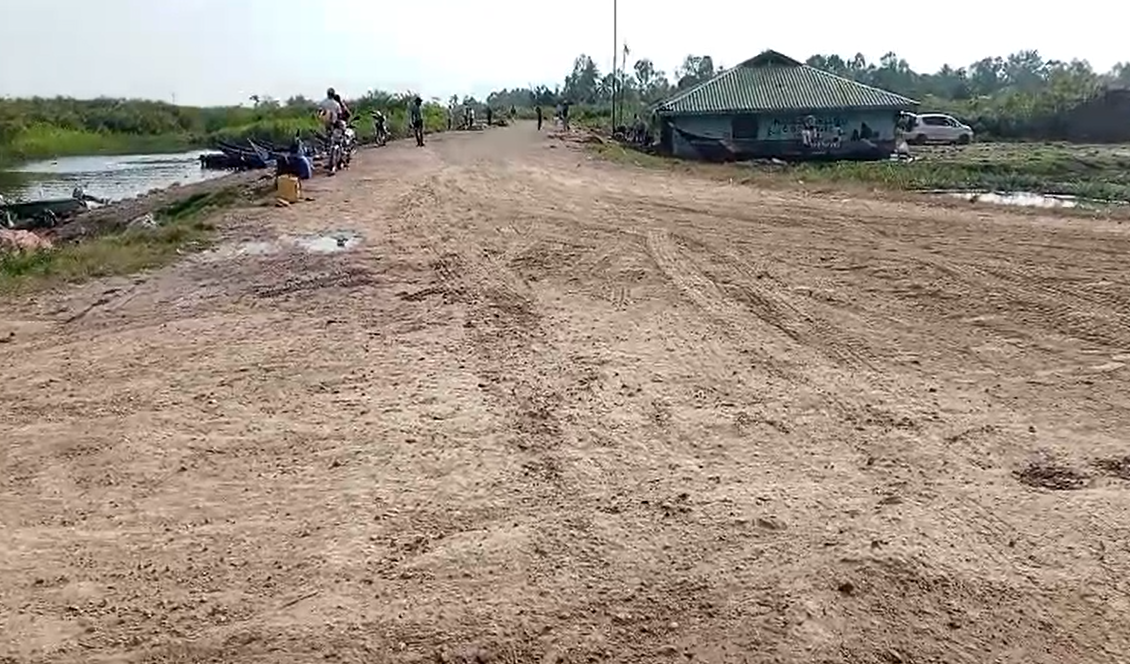
Farmers in Budalangi, Busia County, are returning to farmland that was previously rendered unproductive by perennial flooding, following the construction and strengthening of dykes along the River Nzoia.
Residents say the secondary dykes have helped keep floodwaters away from sections of farmland, allowing them to resume cultivation of crops including beans, cassava and sweet potatoes.
For communities that have lived with recurring floods for years, the development is offering renewed hope that land once associated with destruction can once again contribute to household food supplies and the wider economy.
The National Irrigation Authority identifies dykes along River Nzoia in Budalangi as flood-mitigation structures designed to prevent overflowing water from damaging farms, homes and other property.
The Lower Nzoia project has also incorporated improvements to existing flood-protection structures. Official project information says 34 kilometres of dykes have been strengthened, protecting more than 66,000 people and surrounding agricultural land from seasonal flooding.
Farmers return to productive land
The impact is increasingly visible in parts of Budalangi, where farmers are preparing fields that previously remained submerged or too risky to cultivate during periods of heavy rainfall.
The return to farming comes as communities continue to experience the benefits of improved flood protection, with some residents now seeing an opportunity to increase food production instead of repeatedly losing crops to rising waters.
Recent reports from Budalangi indicate that farmers have started tilling previously flood-prone fields as the dykes provide greater protection from River Nzoia. However, some areas remain exposed to flooding risks, particularly as water levels rise during periods of heavy rain.
For residents, the ability to plant beans, cassava and sweet potatoes represents more than a return to normal farming. It offers an opportunity to improve household food security and generate income from land that had previously been difficult to use.
The development also comes as the government continues to pursue broader irrigation and flood-control interventions in the Lower Nzoia basin.
The Lower Nzoia Irrigation Project was designed not only to control perennial flooding but also to expand irrigation and reduce the cost of farming by shifting from pump-fed water systems to gravity-fed irrigation. The project targets thousands of farmers and seeks to bring significant additional acreage under production.
From flood losses to food production
Budalangi has for decades been associated with recurring floods caused by the River Nzoia and its proximity to Lake Victoria.
The flooding has periodically destroyed crops, homes and infrastructure, forcing families to abandon farms and disrupting economic activity.
Recent improvements to the dykes have begun changing that experience for some communities.
Residents have previously reported that areas protected by the structures have seen homes and farms return to productive use, with farmers resuming cultivation and local economic activity recovering.
The National Water Harvesting and Storage Authority has also been involved in flood-control interventions in the area. Its mandate includes developing national public water works for water storage and flood control.
The government’s wider Lower Nzoia plans include construction and improvement of dykes, irrigation and drainage canals, rehabilitation of the Bunyala Irrigation Scheme and provision of agricultural support and value-chain services to farmers.
Hope for food security
The reclamation of farmland could give Budalangi farmers an opportunity to diversify food production and reduce the losses associated with repeated flooding.
The Lower Nzoia Irrigation Project is expected to support production across thousands of acres, with official plans targeting rice and other food crops as well as higher-value agricultural commodities. The National Irrigation Authority has projected that the wider project could generate substantial economic activity while improving farmers’ access to reliable water.
For residents now cultivating reclaimed fields, however, the immediate priority is putting the land back into production.
The planting of beans, cassava and sweet potatoes signals a change from years when floodwaters determined whether farmers could use their land.
Residents remain optimistic that continued investment in flood-control infrastructure will allow more farmland to be reclaimed, increase food production and strengthen household livelihoods.
They also hope the gains will be sustained through continued maintenance of the dykes and complementary investments in irrigation, drainage, agricultural inputs and markets.
For Budalangi, the transformation offers the prospect of turning a long-standing vulnerability into an agricultural opportunity — with previously submerged farms once again contributing to food on household tables and, ultimately, to Kenya’s food supply.
Read: Budalangi Residents Hopeful of Flood-free Future After Construction of New Dyke
>>> Nairobi Unveils Ksh38.1B Water Plan as Floods Expose Infrastructure Gaps














Leave a comment