

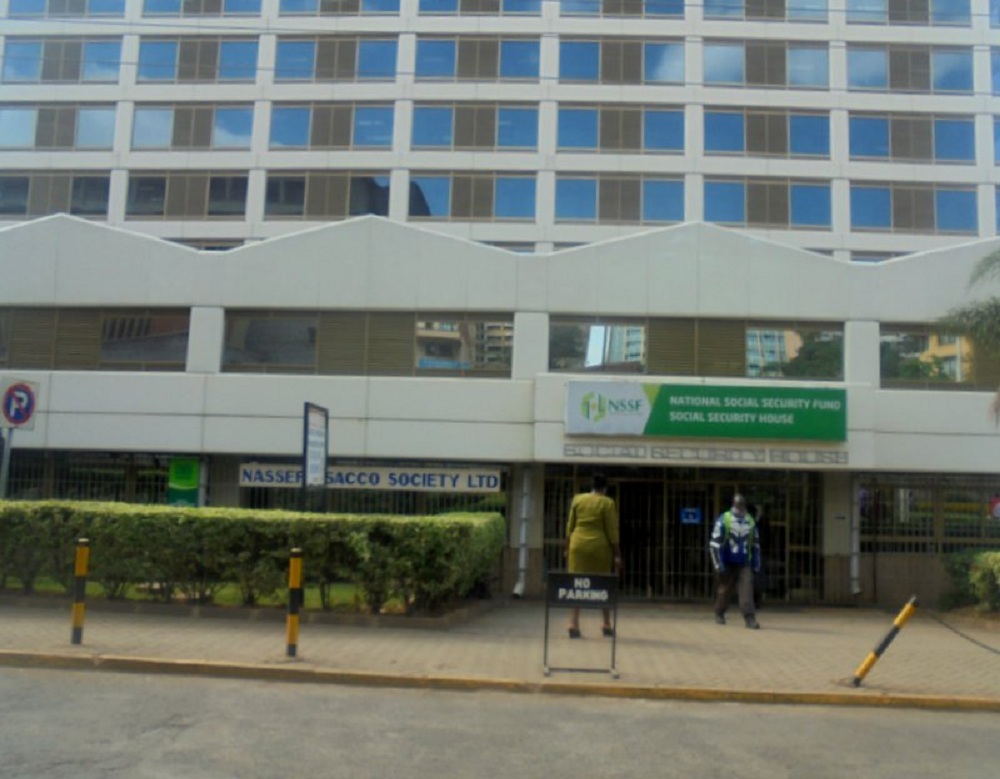
Employers and workers across Kenya have been told to continue making pension contributions under the current National Social Security Fund (NSSF) rates, even as court battles over the 2013 pension reforms continue to unfold.
The Fund has moved to calm growing confusion in the labour market after reports suggested a return to the old system of flat deductions of Sh200 for employees and Sh200 for employers. NSSF has firmly dismissed those claims, insisting that the existing contribution framework remains legally active and must be followed without interruption.
In its clarification, the Fund said that the NSSF Act, 2013, remains operational. It pointed to the Court of Appeal ruling delivered on 3 February 2023, which upheld the continued application of the law while disputes proceed through the courts.
“This is to clarify to our members and stakeholders that the NSSF Act is still in force on account of the judgment of the Court of Appeal,” the Fund stated.
NSSF further explained that the ongoing legal questions do not affect the contribution rates currently in use. It maintained that employers and employees should continue contributing under the fourth-year cycle outlined in the Third Schedule of the Act, which links contributions to a percentage of gross earnings rather than fixed amounts.
The clarification comes at a time when uncertainty has been building following a series of court decisions challenging the legality of key parts of the NSSF Act, 2013. Earlier, the Employment and Labour Relations Court (ELRC) had declared sections of the law invalid, citing concerns over how the law was passed and whether it properly involved the Senate. The court also raised issues around competition in the pensions sector and the scope of NSSF’s mandate.
That ruling created confusion about whether Kenya should revert to the old pension structure under Cap. 258, which was based on the provident fund model and low fixed contributions.
However, the Court of Appeal later declined to suspend the implementation of the ELRC decision, saying the NSSF Board had not met the threshold required for a stay. The judges noted that while the appeal raises arguable legal questions, the Fund had not shown that it would suffer irreparable harm if the case continued without suspension.
In effect, this means the broader constitutional and legal questions around the NSSF reforms are still active in court, but the existing contribution structure has not been paused.
In opposing calls for a return to the old system, some respondents in the case argued that there is no legal vacuum in the pension system. They maintained that the earlier framework under Cap. 258 still exists in practice, even as the courts determine the validity of the 2013 reforms.
NSSF has also defended its performance during the period of legal uncertainty. The Fund reported that its asset base has grown significantly, reaching about Sh715 billion as of March 2026. It credited the growth to higher contributions and strong investment returns, including 11 per cent returns in the 2023/24 financial year and 17 per cent in 2024/25.
According to the Fund, this performance shows improved stability and long-term protection for members’ savings despite ongoing legal disputes.
At the same time, NSSF has warned employers that failure to comply with the current contribution rates could lead to penalties and may also affect employees’ ability to access full retirement benefits in future.
The Fund has reaffirmed that it will continue implementing court rulings while ensuring members’ savings remain protected, even as the final determination of the pension reform case is awaited.









Leave a comment