

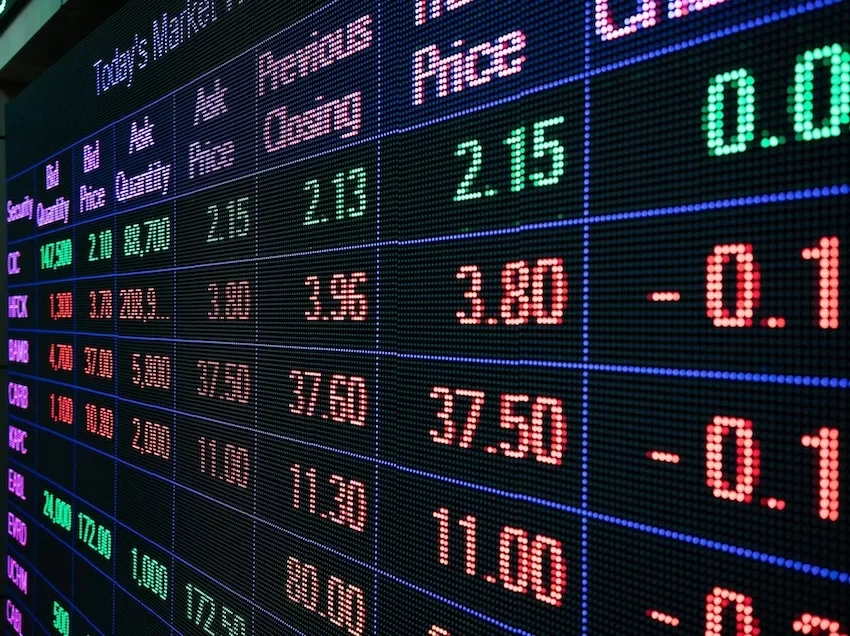
The current correction at the Nairobi Securities Exchange(NSE) is not simply about dividends. Dividend adjustments explain part of the movement in individual counters, but the broader correction reflects profit-taking, liquidity, valuations, foreign flows, institutional positioning and changing investor sentiment.
With most listed firms at the NSE making their dividend payments, those investors who bought in so as to earn the dividends, are ow busy selling. This has led to a price fall on most of the counters, with the NSE closing in the red during this week’s trading sessions.
In yesterday’s trading session, the NSE closed on a mixed note with the NASI, N10 and NSE 25 declining by 0.6%, 0.5% and 0.4% respectively while the NSE20 remained flat. Losers were led by Longhorn, Shri Krishana, Car and General, Olympia and I&M Bank.
Gainers were led by Africa Mega Agricorp, Centum, Flame Tree Group, Kenya Power and Williamson Tea.
Leading movers were led by Equity Group, with a volume of 11,591.8K, Safaricom 7,057.9K shares, KCB 2,636,7K EABL 630.4K, Diamond Trust 656.7k and BAT 155.8K
“We should read the market through the cycle: Accumulation, Mark-up, Distribution, Mark-down, and Accumulation,” said Dedan Maina CFA – Financial Consultant & Capital Markets Analyst
He says that understanding how foreign investors, institutional investors and retail investors behave at the NSE through these stages is critical.
ACCUMULATION
This is where smart money or institutional and foreign investors as well as fund managers builds positions quietly. Patient capital accumulates fundamentally sound counters while sentiment remains subdued and prices offer attractive entry points.
Retail participation is low because the market is not yet exciting. This is where value is built.
MARK-UP
The NSE begins moving as buying pressure builds and the trend becomes established. Foreign investors enter tactically during the mark-up to ride the wave.
They respond to momentum, liquidity and the established upward trend. Their participation adds further buying pressure, accelerates the rally and attracts broader market attention.
Retail investors then join the move. The psychology changes quickly.
The investor who ignored the counter when it was cheap now wants to buy because the price is rising. Greed enters the market.
DISTRIBUTION
This is where sophisticated investors at the NSE begin taking money off the table.
Institutional investors, fund managers and foreign investors gradually distribute their positions into the strong demand created during the rally. They sell progressively while the market remains strong and buyers remain available. The retail investor sees a rising market and interprets the strength as confirmation that prices will continue rising. Meanwhile, sophisticated capital is reducing exposure into that demand.
This is the critical transfer of ownership: strong hands gradually sell to increasingly optimistic buyers.
MARK-DOWN
The buying pressure eventually weakens. The trend reverses and prices begin falling. Retail investors who entered late become the most vulnerable. Fear turns into panic selling. Retail investors provide the supply that drives the mark-down. Prices fall faster as investors rush for the exit. But this is also where the next opportunity begins to emerge.
ACCUMULATION AGAIN
As panic selling creates cheap supply, smart money starts absorbing it. Patient investors gradually accumulate quality counters at increasingly attractive prices. The process starts again: Accumulation, Mark-up, Distribution, Mark-down and Accumulation.
This cycle is not about predicting the exact day of a reversal. It is about understanding where we are in the cycle and managing our capital accordingly.
STRATEGY:
Do not deploy all your cash during the mark-up simply because prices are running away. Do not wait indefinitely for the perfect bottom during the mark-down. Buy progressively. Keep liquidity. Add on weakness. This gives us the flexibility to participate in the market without exhausting our capital too early. It also prevents two common mistakes: Over-averaging up and Missing the opportunity because we are waiting for the exact bottom. We don’t need to beat the market at every turn.
We need to position ourselves intelligently through the cycle. When others become greedy, remain disciplined. When others panic, remain rational. When quality counters become cheaper, use the liquidity you deliberately preserved.
BOTTOM LINE
The current correction at the NSE is part of the market cycle. Don’t chase the mark-up. Don’t fear the mark-down. Don’t try to catch the exact bottom.
Maintain a margin of safety. Preserve liquidity. Accumulate quality progressively. No greed. No panic. Let the market give us the opportunity, we don’t have to chase it.















Leave a comment