

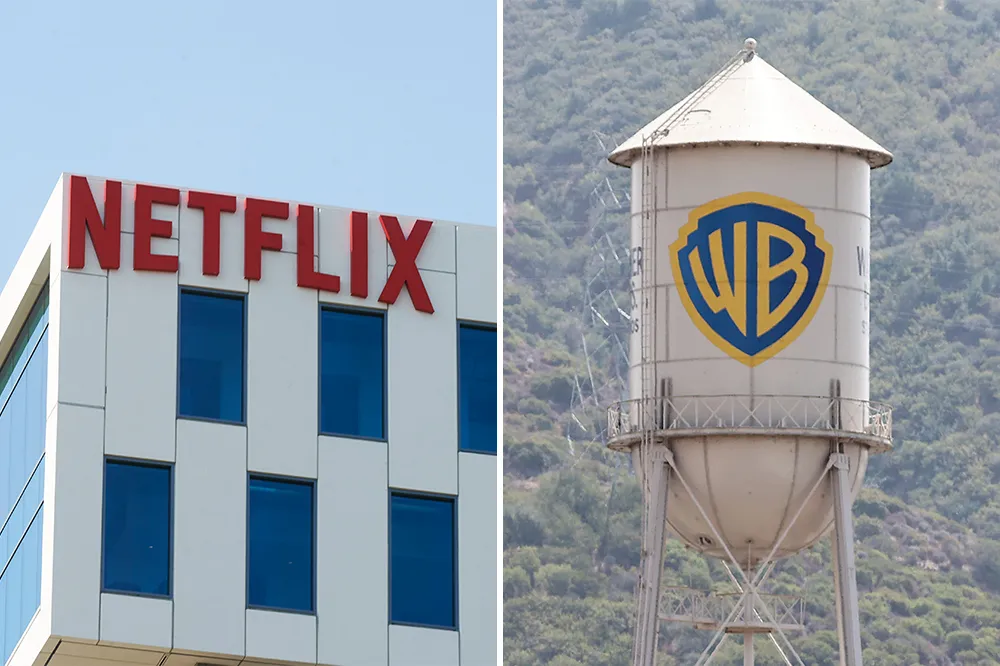
Netflix Inc. has agreed to acquire the studio and streaming assets of Warner Bros. Discovery Inc. (WBD), a landmark $82.7 billion deal that secures the streaming giant an iconic content library, the premium HBO brand, and a century-old Hollywood studio. The transaction, confirmed by both companies on Friday, carries a substantial equity value of $72 billion.
The acquisition—which includes Warner Bros. film and TV studios, its gaming division, and the crown jewel, HBO and HBO Max—brings to a close a heated, multi-week bidding contest that reportedly involved Paramount Skydance and Comcast. News that Netflix was in exclusive talks with WBD for the key assets first emerged late Thursday, positioning the dominant streamer to become an unparalleled force in global entertainment.
Financials and Strategic Rationale
The cash and stock transaction is valued at $27.75 per share of WBD common stock, with shareholders receiving $23.25 in cash and $4.50 in Netflix common stock. The total enterprise value includes the assumption of WBD debt.
Netflix co-CEO Ted Sarandos, addressing analysts on Friday, acknowledged the break from the company’s historical strategy. “I know some of you are surprised we are making this acquisition,” Sarandos said, noting the company has traditionally been more “builders” than “buyers.”
Strategically, the merger vaults Netflix’s content portfolio. It will integrate classic and modern franchises—from The Sopranos and the DC Universe to Game of Thrones—with Netflix’s current global hits like Wednesday and Squid Game.
The company forecasts substantial financial upside, expecting to realize $2 billion to $3 billion in annual cost savings by the third year post-closing. The deal is projected to be accretive to earnings per share by year two.
Operations and Antitrust Hurdles
The deal structure involves a critical prerequisite: the separation of WBD’s TV networks division, “Discovery Global”—encompassing CNN, TNT Sports, and the flagship Discovery Channel—into a new, publicly traded entity. That spin-off is expected to be completed in the third quarter of 2026, with the Netflix acquisition closing 12 to 18 months thereafter.
Netflix signaled it intends to maintain Warner Bros.’ existing operations, including the practice of theatrical releases for films through 2029, and will initially keep HBO Max as a distinct streaming offering.
However, the size of the combined entity—with Netflix boasting over 300 million global subscribers—raises immediate regulatory concerns. Competitors, notably Paramount Skydance, highlighted potential antitrust issues during the bidding process. Congressman Darrell Issa (R-Calif.) has already voiced concerns over the market power of an expanded Netflix.
In the event the deal fails to close due to regulatory blockage, Netflix is obligated to pay WBD a breakup fee of $5.8 billion, according to an SEC filing. Sarandos stated the company is “running full speed toward regulatory approval.”
The role of WBD President and CEO David Zaslav, who was slated to lead the stand-alone Warner Bros. entity, in the combined company was not disclosed.











Leave a comment