

Rain is part of Nairobi’s rhythm. When dark clouds gather over the city, people instinctively prepare for slow traffic, muddy pavements and the occasional flooded street. It is almost a routine many residents have grown used to over the years.
But the heavy rains that pounded the capital on the night of March 6 and continued into the early hours of March 7, 2026, were far from routine. What began as a typical rainy night quickly escalated into flash floods that swept through several parts of the city, leaving behind destruction, disruption and a growing economic toll.
Floodwaters surged through major roads, residential neighbourhoods and commercial zones after intense rainfall overwhelmed Nairobi’s drainage systems and caused rivers to swell. Cars were submerged, homes were flooded, and businesses woke up to shops filled with mud and water. Across the capital, traders, transport operators and property owners are now counting losses that run into millions of shillings.
Beyond the immediate damage, the floods have exposed just how vulnerable the city’s economy can be when extreme weather collides with fragile infrastructure. For many businesses, particularly small and informal enterprises, the storm has translated into ruined stock, damaged property and days of halted operations.
Spare parts markets and garages hit hard
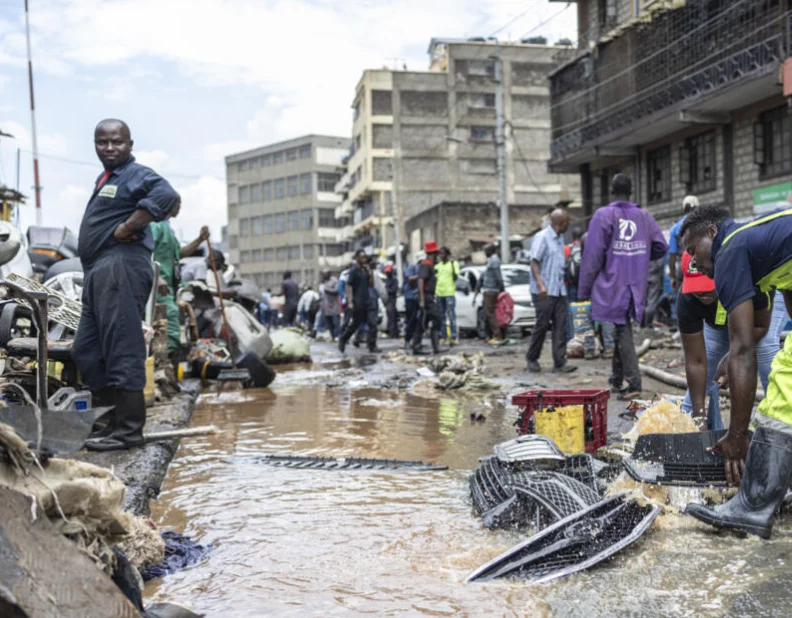
One of the most severely affected areas was Grogan in Nairobi’s Industrial Area, a bustling hub known for spare parts dealers, garages and mechanical workshops. The area is a critical centre for the city’s automotive industry, supplying parts and repair services to thousands of motorists daily.
When floodwaters swept through the area, they carried with them mud, debris, and in some cases vehicles that had been parked along the streets overnight. By morning, traders arrived to find workshops flooded, spare parts soaked and tools buried under thick layers of silt.
For businesses that deal in second-hand automotive parts, the damage can be devastating. Many items such as engines, electronics and mechanical components, cannot be easily restored once exposed to floodwater and mud. Traders who rely on imported stock also face the added challenge of replacing goods that were purchased using significant capital.
Mechanics spent hours trying to salvage usable parts while others cleared water from their garages and assessed the damage. Some vehicles left in workshops for repairs were destroyed entirely after being swept away by the rushing water.
For small traders operating on tight margins, the destruction of a single container of spare parts can erase months of earnings and investment.
Motorists face heavy repair costs
Motorists across Nairobi were also left grappling with the financial consequences of the floods. Several major roads were submerged after the heavy rains, trapping vehicles in deep water and forcing some drivers to abandon their cars.
Images shared across social media showed vehicles nearly completely submerged along key transport corridors, including sections of the Central Business District and roads leading into the city. In some neighbourhoods, flood currents were strong enough to push cars off the road or pile them together in flooded parking areas.
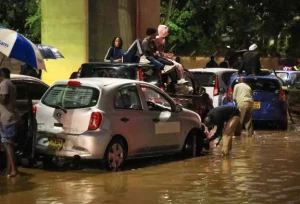
Authorities reported that more than a hundred vehicles were damaged during the flooding, with some suffering extensive mechanical and electrical damage. For many car owners, repairing flood-damaged vehicles can be extremely expensive. Once water enters an engine, electrical systems and interior components can fail, sometimes rendering the vehicle beyond repair.
Transport operators have been particularly affected. Matatu owners and logistics companies rely on daily vehicle operations to generate income. When a vehicle is damaged or taken off the road, operators not only face repair bills but also lose crucial revenue.
For some motorists, the floodwaters turned what began as a normal commute into an unexpected financial burden.
Flooded roads disrupt the city’s business operations
Beyond direct damage to property and vehicles, the floods also disrupted the normal flow of commerce across Nairobi. Several major roads were rendered impassable as water levels rose, creating traffic gridlock and stranding commuters across different parts of the city.
When movement within Nairobi slows, the economic impact is felt almost immediately. Workers struggle to reach their offices, suppliers cannot deliver goods, and customers stay away from shops and restaurants.
Businesses that depend on daily foot traffic or timely deliveries were forced to shut down temporarily as floodwaters made it difficult for employees and customers to access commercial areas. Restaurants closed earlier than usual, retail shops experienced low turnout and transport services were delayed.
Even the aviation sector experienced disruption as severe weather conditions affected operations at Jomo Kenyatta International Airport, leading to delays and diverted flights.
For a city that functions as the economic heartbeat of the country, interruptions to transport networks ripple quickly through multiple sectors of the economy.
Homes and small enterprises destroyed together
While commercial districts experienced significant losses, the floods also devastated residential neighbourhoods across the city. In many low-lying areas, water entered homes and forced families to evacuate as flood levels rose.
For thousands of residents, the disaster affected not only their homes but also their livelihoods. In Nairobi’s informal settlements and densely populated neighbourhoods, small businesses often operate within residential spaces. A grocery kiosk may be attached to a house, while a tailoring shop or barber station may occupy a small room within a home.
When floodwaters enter such spaces, both shelter and business are destroyed simultaneously. Household goods are damaged, small stocks of merchandise are ruined, and equipment used for income generation is lost.
For many families who depend on daily trade to survive, the destruction of these small enterprises represents a major setback that may take months to recover from.
Infrastructure challenges worsen the impact
The flooding has once again drawn attention to Nairobi’s long-standing infrastructure challenges. Experts have repeatedly warned that the city’s drainage systems are insufficient to handle intense rainfall events, particularly as rapid urban development continues to expand across the capital.
Blocked drainage channels, encroachment along riverbanks and construction on natural waterways have reduced the city’s ability to absorb and redirect heavy rainfall. When intense storms occur, water accumulates quickly on roads and in residential areas, leading to flash floods.
The result is a recurring cycle where businesses and residents suffer similar losses each rainy season.
Without significant improvements to drainage infrastructure and urban planning, many traders fear that the economic disruption caused by floods will remain a recurring feature of doing business in Nairobi.
Businesses begin the long recovery
As floodwaters slowly recede, businesses across the city have begun the difficult process of recovery. Shop owners are cleaning mud from their premises, mechanics are inspecting damaged vehicles, and traders are trying to salvage whatever stock remains usable.
For many, however, the financial damage has already been done. Replacing lost inventory, repairing property and restoring operations will require time and capital that small businesses often struggle to access.
The recent floods have therefore served as a harsh reminder of the vulnerability of Nairobi’s urban economy to extreme weather events.
While the rains may eventually pass, the economic consequences for businesses and households across the capital are likely to linger long after the streets dry. In a city where daily commerce depends heavily on movement, infrastructure and stability, a single night of heavy rain has once again shown just how quickly the flow of business can be washed away.










Leave a comment