

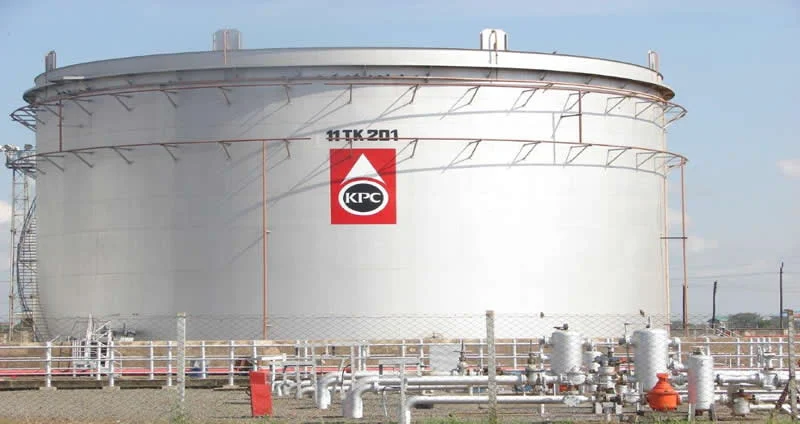
Kenya’s petroleum supply remains stable despite growing public concern over intermittent fuel shortages in some parts of the country, Parliament’s Energy Committee has confirmed after inspecting national fuel storage systems in Nairobi.
The committee visited the headquarters of the Kenya Pipeline Company to assess current stock levels, distribution capacity, and overall fuel security at a time when global oil markets are experiencing renewed pressure from geopolitical tensions and supply disruptions.
Energy Committee Chair and Nakuru Town East MP David Gikaria said the country’s fuel position remains secure based on the data presented by officials during the inspection.
“So we are satisfied that the country has enough fuel stock,” Gikaria said.
Strong national reserves
According to figures shared by the Kenya Pipeline Company management, Kenya currently holds approximately 162.8 million litres of petrol and about 169 million litres of diesel. Officials noted that the petrol stock alone can support national consumption for more than 20 days, assuming normal demand patterns.
The committee also confirmed that major depots in Mombasa, Nairobi, Nakuru, Kisumu, and Eldoret are all sufficiently stocked, indicating that there is no nationwide shortage at the storage level.
Uneven distribution raising concerns
Despite these strong national figures, lawmakers flagged localized fuel shortages reported in Kisii and Nyamira, where motorists have recently experienced intermittent fuel station dry-ups.
Interestingly, the Kisumu depot, which supplies much of western Kenya, was confirmed to have adequate fuel reserves, raising questions about the distribution chain rather than supply availability.
Gikaria said the committee will now seek answers from the Energy and Petroleum Regulatory Authority to determine whether fuel marketers are lifting and distributing products efficiently.
“So it is for us now to go and check with Energy and Petroleum Regulatory Authority (EPRA) to understand whether marketers have actually gotten their fuel and taken it to those areas,” he said.
The committee also wants clarity on how fuel is allocated between domestic consumption and exports to neighbouring countries such as Uganda, especially during periods of high demand.
Global oil market pressure still a factor
While Kenya’s reserves remain stable, the local situation is unfolding against a backdrop of continued volatility in global oil markets.
International reports indicate that crude oil prices have remained under pressure due to ongoing conflicts in major producing regions and disruptions in global shipping routes. The Middle East tensions, alongside production cuts by key oil exporters, have tightened global supply and created uncertainty in pricing.
In recent years, similar disruptions—such as the Russia–Ukraine war—led to sharp increases in global fuel prices, with ripple effects felt across Africa in transport costs, food prices, and inflation levels.
Analysts note that even when countries have sufficient domestic stocks, global shocks still influence landing costs, fuel pricing, and supply planning for import-dependent economies like Kenya.
Local market dynamics under scrutiny
In Kenya, energy stakeholders say that most “fuel shortages” experienced at retail stations are often linked to distribution inefficiencies rather than a lack of national supply.
These include delayed lifting of fuel from depots by marketers, uneven stock allocation across regions, or logistical bottlenecks in transport networks.
The Energy Committee is now pushing for closer oversight of these processes to ensure that fuel available in depots translates into a consistent supply at petrol stations across all counties.
For now, authorities maintain that Kenya’s fuel system is adequately supplied, even as global oil market instability and local distribution challenges continue to test efficiency in the downstream petroleum sector.










Leave a comment