

Kenya is resetting its upstream oil and gas sector this year, aiming to attract fresh global investment after years of company pullouts and financing challenges.
The big move is opening 50 newly redesigned exploration blocks to bidders in the second half of 2026, backed by a national petroleum data centre to help investors access critical information before placing bids.
The 50 blocks were reshaped from a previous set of 63 after careful analysis of geological data and international best practice, focusing on areas with stronger chances of finding oil or gas. Most of the reconfigured blocks are in the Lamu Basin, with others in the Tertiary Rift, Anza Basin, and Mandera Basin.
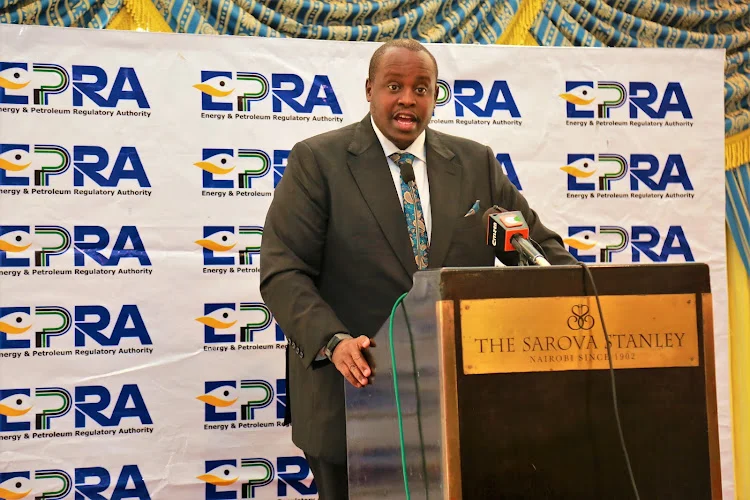
Daniel Kiptoo, Director General of the Energy and Petroleum Regulatory Authority (EPRA), said interest is rising from national oil companies and private firms across the world, but capital remains competitive.
“We are seeing a lot of interest from both national oil companies and private sector players from different regions of the world, but competition for capital remains intense. This capital is looking for a home and it is not only Kenya. It comes down to how you market yourself and what incentives you give,” Kiptoo said.
He added that banks had been hesitant to fund new oil and gas field developments in frontier markets like Kenya in recent years.
But global shifts in financing and energy policy have sparked a broader push back into upstream energy, which Kenya hopes to leverage.
“Banks were not willing to finance new oil and gas projects. But now, with the ‘drill, baby, drill’ push, there has been a lot of opening up of the upstream. This presents a window of opportunity for Kenya to market its blocks,” he said.
The reconfiguration followed the Petroleum Act, 2019, which allows the Cabinet Secretary and advisory committee to redraw blocks through a Gazette notice.
Key reasons for the reshuffle included merging lower-value areas into larger blocks with better chances of discovery, optimising block size to make exploration programmes manageable, and targeting areas with stronger geological indicators for hydrocarbons.
Under the revised map, the Lamu Basin now has 29 blocks covering onshore, offshore, and transition zones. The Tertiary Rift has 12 blocks, the Anza Basin six, and the Mandera Basin three.
To make bidding smoother and more transparent, EPRA is setting up a national petroleum data centre where prospective investors can access seismic, well, and geological information. Kiptoo said this will be a “critical enabler” ahead of competitive bid rounds.
South Lokichar Basin
Kenya’s most advanced upstream project remains the South Lokichar Basin in Turkana County, where commercial oil discoveries date back to 2012. Despite interest, production has yet to begin at scale.
In 2025, Gulf Energy acquired the main exploration blocks in the basin from British firm Tullow Oil in a deal worth around $120 million. The takeover requires a revised Field Development Plan (FDP) to be approved by Parliament for Kenya to start commercial production.
The government and industry are pushing to begin commercial oil production and first exports from the South Lokichar Basin as early as December 2026 or early 2027.
The first phase is expected to produce 20,000 to 50,000 barrels per day, later increasing beyond 60,000 bpd in future phases.
Kenya’s upstream sector has spent years waiting for major fresh investment. The combination of better-focused exploration blocks, a centralised data centre, and renewed global interest in oil and gas financing could help Kenya reposition itself as a credible destination for oil and gas investment, even as the world balances energy transition with demand for hydrocarbons.














Leave a comment