

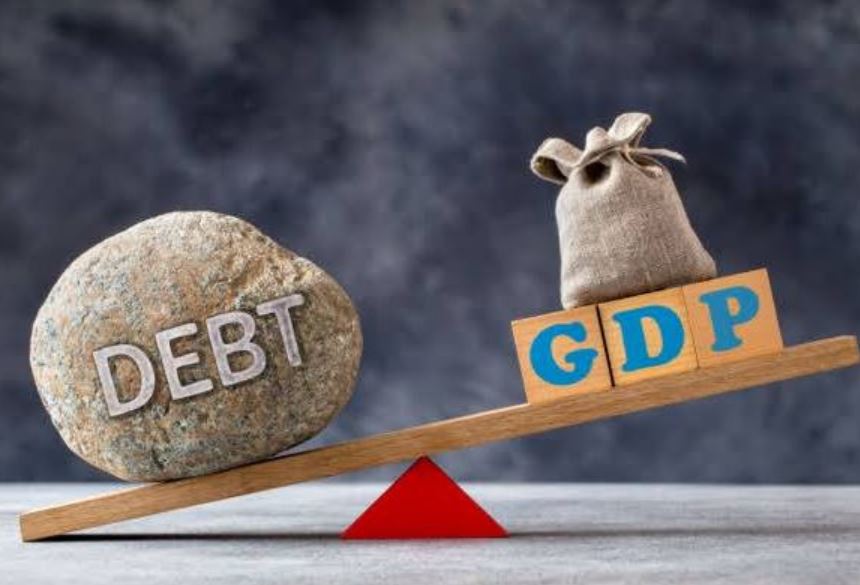
Kenya could be forced to borrow more money to finance its operations in the 2027/2028 financial year, with projected government expenditure exceeding expected revenue by more than Ksh 1.35 trillion.
The widening financing gap could push public debt to approximately 71 per cent of the country’s Gross Domestic Product (GDP), adding to concerns about the government’s ability to meet its financial obligations while funding essential services.
The Institute of Public Finance (IPF) raised the concerns in its Annual National Shadow Budget for 2027/2028, which was launched in Upper Hill, Nairobi, on Wednesday, November 25, 2026.
According to the assessment, the government plans to spend Ksh5.415 trillion during the financial year but expects to collect only Ksh 4.003 trillion in revenue.
This leaves a deficit of Ksh 1.352 trillion that must be financed through borrowing and other funding sources.
IPF estimates that domestic borrowing will account for 69 per cent of the deficit, meaning the government will depend heavily on loans from local financial institutions and investors to meet its obligations.
The report also projects that interest payments will consume 45 per cent of ordinary government revenue.
This allocation highlights the growing cost of public debt, with a substantial share of government collections going towards interest rather than new programmes and public services.
Government faces pressure over spending priorities
Beyond the rising debt, IPF questioned how the government intends to distribute the money available in the next financial year.
The institute noted that recurrent expenditure is expected to take up approximately 74 per cent of the proposed budget, leaving a smaller allocation for development activities.
The spending pattern has raised questions about the government’s ability to meet the development spending requirements under the Public Finance Management Act.
Section 15(2)(c) of the law requires national government borrowing to support development over the medium term.
IPF also examined borrowing during the 2025/2026 financial year, when the government borrowed Ksh983.7 billion.
Of this amount, 79 per cent went towards development expenditure, while 21 per cent was used for recurrent spending.
The institute called for closer scrutiny of how borrowed funds are allocated, particularly as debt repayment obligations continue to place pressure on the national budget.
Ksh 235 billion difference in tax projections
The amount of money the government expects to collect from taxpayers has also emerged as a concern.
Treasury has set a tax revenue target of Ksh3.139 trillion for the 2027/2028 financial year.
However, IPF estimates that a more realistic target would be Ksh2.904 trillion, creating a difference of Ksh235 billion between the two projections.
The institute based its assessment on historical performance, noting that tax revenue had grown by an average of about 9 per cent annually over the previous ten financial years.
Economic growth assumptions also featured in the assessment. Treasury projects the economy to expand by 5.1 per cent, compared with World Bank and African Development Bank forecasts of 4.4 per cent and 4.7 per cent, respectively.
IPF warned that the 2027 General Election could affect economic activity and make the government’s growth target difficult to achieve.
Billions committed to incomplete projects
The report further exposed challenges in the implementation of public projects, with the number of stalled or incomplete developments increasing within one financial year.
Figures from the Auditor-General cited in the assessment show that 219 projects worth Ksh291.2 billion were stalled or incomplete in the 2024/2025 financial year.
This represented an increase from 188 projects valued at Ksh240.5 billion in 2023/2024.
Delayed payments and difficulties in contracting were among the reasons identified for the growing number of unfinished projects.
IPF urged the government to focus on completing existing projects that can still deliver services to citizens instead of committing additional resources to new developments.
The institute also recommended stronger monitoring of public borrowing, more realistic revenue targets and reduced spending on non-essential government activities.
Its assessment places debt management, revenue collection and the completion of public projects among the major issues facing the government as it prepares the 2027/2028 national budget.








Leave a comment