Kenya has stepped up talks with the International Monetary Fund (IMF) as the country faces growing pressure from rising fuel prices, a weakening global economy and fresh fears over instability in the Middle East.
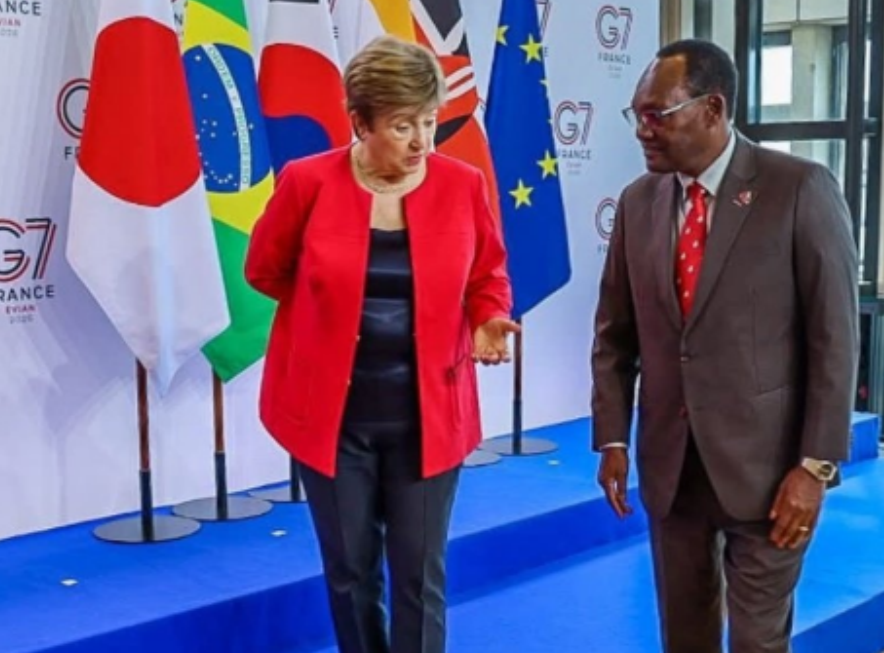
National Treasury Principal Secretary Chris Kiptoo met IMF Managing Director Kristalina Georgieva in Paris on Tuesday, May 19, during the ongoing G7 Finance Ministers’ and Central Bank Governors’ Meeting.
The talks focused on Kenya’s economic reform agenda, public debt management and ways of protecting the economy from global shocks that are beginning to affect many developing countries.
The meeting happened at a difficult time for Kenya, with the country dealing with high fuel prices, rising transport costs and increasing public frustration over the cost of living.
Kiptoo said Kenya appreciated the IMF’s continued support as the government pushes ahead with reforms meant to stabilise the economy and restore investor confidence.
Georgieva also reaffirmed the IMF’s commitment to Kenya, saying the lender remained ready to support programmes aimed at strengthening the country’s economy.
“The IMF values our strong partnership with Kenya and remains committed to supporting reforms that strengthen macroeconomic stability, resilience, and sustainable growth, benefiting all Kenyans,” Georgieva said.
The discussions took place on the sidelines of the G7 summit hosted in Paris under France’s presidency. The meeting brought together finance ministers, central bank governors and leaders from institutions such as the IMF, World Bank and OECD. Kenya joined other partner nations, including India, Brazil and South Korea, in the high-level discussions.
A major concern during the summit was the growing instability in the Middle East, especially around the Strait of Hormuz, one of the world’s most important oil shipping routes. Global leaders warned that continued tensions could disrupt energy supplies, raise fuel costs further and slow economic growth worldwide.
The G7 said the world was currently facing “multiple and complex global challenges,” including inflation, supply shortages and economic uncertainty.
For Kenya, those global pressures are already being felt at home.
In recent days, protests have broken out in several parts of the country following the latest fuel price changes announced by the Energy and Petroleum Regulatory Authority (EPRA). Transport operators, especially matatu owners and drivers, have complained that the cost of operations has become too high.
The government attempted to ease the situation by lowering diesel prices while increasing kerosene prices in a move aimed at reducing fuel adulteration. However, many Kenyans and transport stakeholders argued that the changes had done little to address the rising cost of transport and basic commodities.
The IMF talks are also linked to Kenya’s ongoing negotiations for a new support programme with the global lender.
Treasury Cabinet Secretary John Mbadi recently revealed that discussions on a fresh IMF arrangement were progressing well and could be completed by June or July.
Unlike previous programmes that focused heavily on direct financing, officials say the new arrangement will mainly support policy reforms designed to strengthen the economy and improve resilience against external shocks.
Kenya’s public debt remains one of the biggest concerns facing the government. Current estimates place the country’s debt at around Ksh12.4 trillion, while the proposed 2026/27 budget projects a deficit of Ksh 1.14 trillion.
Economists say this leaves the government with limited room to spend while still trying to manage repayments and fund development projects.
The IMF has also cautioned that economic growth across Sub-Saharan Africa could slow due to global instability, weaker commodity markets and rising geopolitical tensions.
Despite the challenges, Kenyan officials believe continued engagement with institutions such as the IMF will help strengthen investor confidence and support economic recovery efforts.
The Paris meeting also highlighted Kenya’s growing involvement in major international economic discussions as the country seeks stronger partnerships to navigate an increasingly uncertain global environment.
Family-owned businesses have received support from Stanbic Bank Kenya, which is offering...
The Energy and Petroleum Regulatory Authority (EPRA), has released new prices, with...
Equity Group Holdings Plc has reported strong first quarter results for 2026,...
Manufacturers in Kenya have raised alarm over the ongoing nationwide protests by...
Leave a comment