Sapien Labs survey of 84 countries finds 41% of young adults in “mind health crisis,” with U.S., U.K. near bottom while sub-Saharan Africa dominates top five
Young adults in sub-Saharan Africa are outperforming their peers in wealthier nations on measures of mental well-being, even as a broader global decline deepens among younger generations, according to a new report from Sapien Labs.
The Global Mind Health Report 2025, based on online survey data from nearly 1 million people in 84 countries, found that 41% of internet-enabled adults aged 18 to 34 fall into what researchers describe as a “mind health crisis,” marked by declines in cognitive, emotional, social and physical functioning.
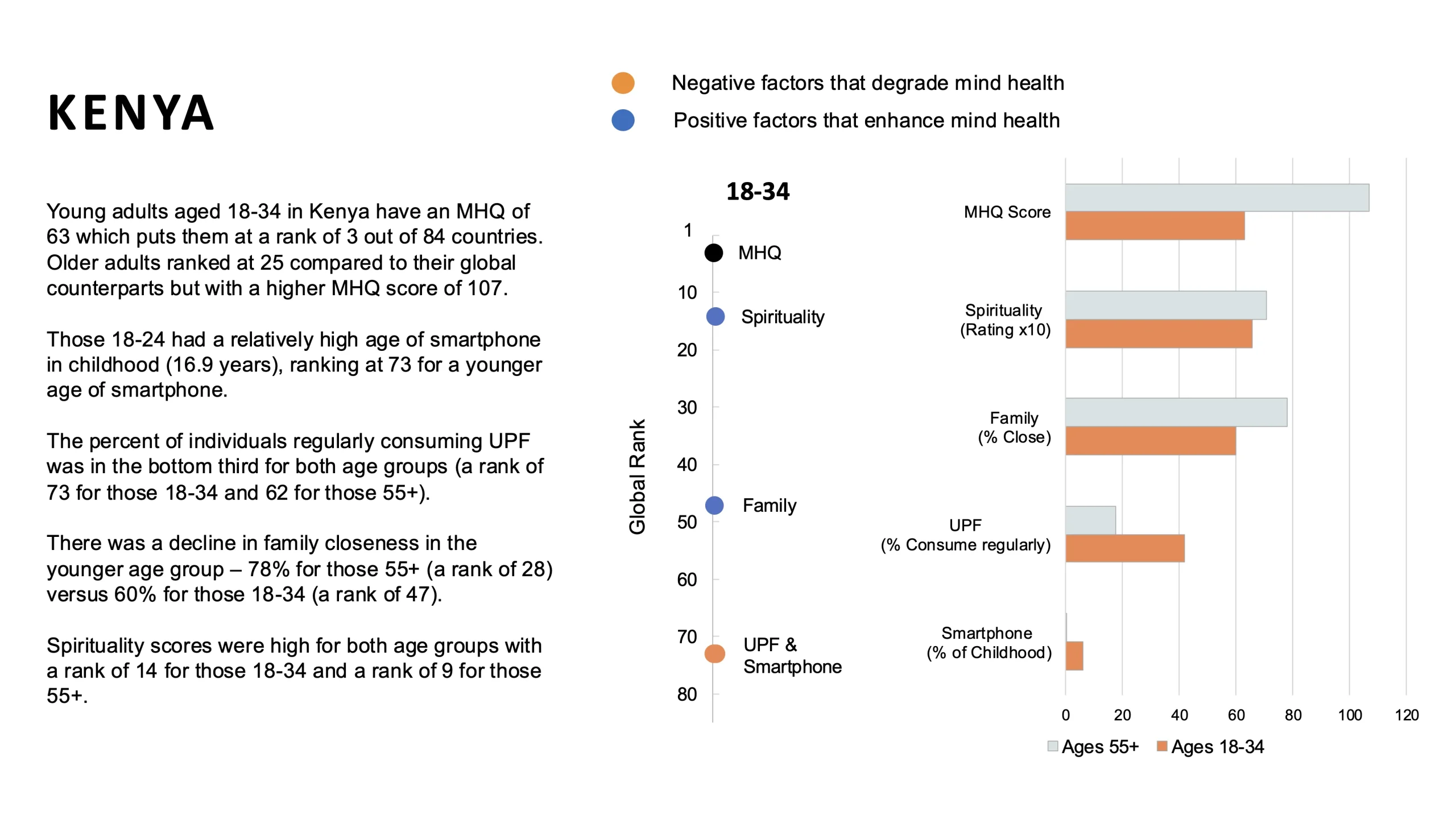
Yet the regional breakdown shows a stark divergence. Ghana ranked first worldwide for youth mind health, followed by Nigeria, Kenya, Zimbabwe and Tanzania — making the top five entirely African. By contrast, high-income countries including the United Kingdom, the United States and Finland ranked near the bottom.
Sapien Labs’ Mind Health Quotient (MHQ) shows a sharp generational reversal. In the early 2000s, young adults reported the strongest well-being of any age group. Today, they are four times more likely than those over 55 to experience clinically significant mental health challenges. The gap widened during the Covid-19 pandemic and has persisted over the past five years.

The report attributes much of the decline to early smartphone adoption, rising consumption of ultra-processed foods, weakening family ties and lower levels of spirituality. Countries in sub-Saharan Africa scored higher on measures such as later childhood smartphone access and stronger spiritual and family connections. Tanzania, for example, ranked highest globally for spirituality and had one of the oldest average ages of first smartphone use.
In the US and other Western economies, spending on mental health care has surged, but outcomes have not improved materially, the authors said. They called for policy interventions including school-hour smartphone bans, minimum age rules for social media and tighter scrutiny of food additives.
The findings point to a potential inverse relationship between national wealth and youth mind health, raising concerns about long-term workforce productivity as more young adults enter employment struggling with cognitive and emotional capacity, the report said.
Ooro George is a Kenyan journalist, blogger, editor-at-large, art critic and cross-cultural curator.
Kenya has been ranked Africa’s second-most innovation-ready nation, according to the 2026...
Cabinet Secretary for Investments, Trade and Industry Lee Kinyanjui has highlighted Kenya’s...
Kenya is resetting its upstream oil and gas sector this year, aiming...
Kenya’s Economic Growth Rate is projected to accelerate to 4.9% in 2026,...
Leave a comment