

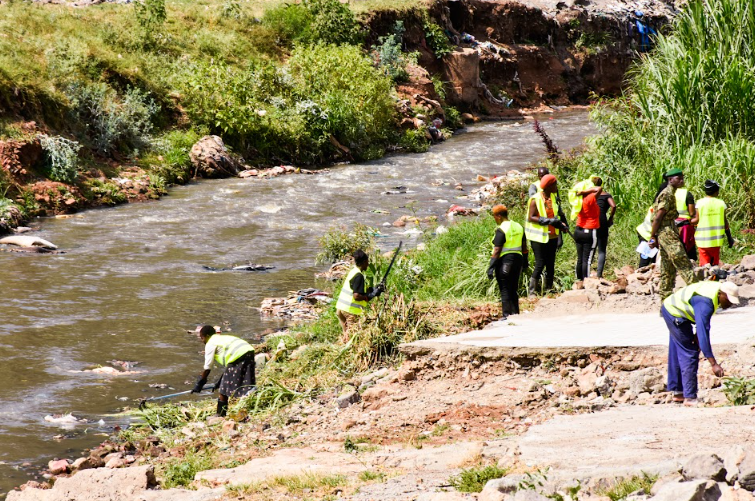
A major breakthrough has been reached between local communities and government agencies on the implementation of the Nairobi Rivers Regeneration Program (NRRP), following a consultative meeting held on November 10, 2025, at the Nairobi Rivers Commission (NRC) boardroom.
The forum brought together the Minority Leader of the Nairobi City County Assembly, MCAs from Dagoretti, Kikuyu, Kiambu, Kangemi, and Riruta Wards, as well as landowners from affected areas. The session was coordinated by Waithaka Ward MCA and County Assembly Minority Leader, Hon. Antony Karanja.
The meeting resulted in a unified commitment among community leaders, landowners, and state agencies to support the NRRP while ensuring that the rights of residents living along riparian zones are respected. Key concerns discussed included riparian boundary guidelines, development regulations, and the Special Planning Area (SPA) framework, issues that have generated anxiety in communities fearing displacement or unclear land classification.
The NRRP comes at a critical time for Nairobi, a city grappling with environmental decay, rapid population growth, and strained infrastructure. Designed for 350,000 people in 1965, Nairobi’s sewerage and drainage systems are now severely overstretched, serving a population of 5.3 million in 2023, projected to hit 20 million by 2053. This pressure has worsened pollution in waterways, increased illegal sewage discharge, and strained solid waste management, especially around the Dandora dumpsite.
Encroachment on riparian reserves has also degraded ecosystems such as the Ondiri Wetland, the source of the Nairobi River, while climate change has intensified flooding risks across the metropolis. The NRRP seeks to restore river health, enhance urban planning, and reduce public health risks.
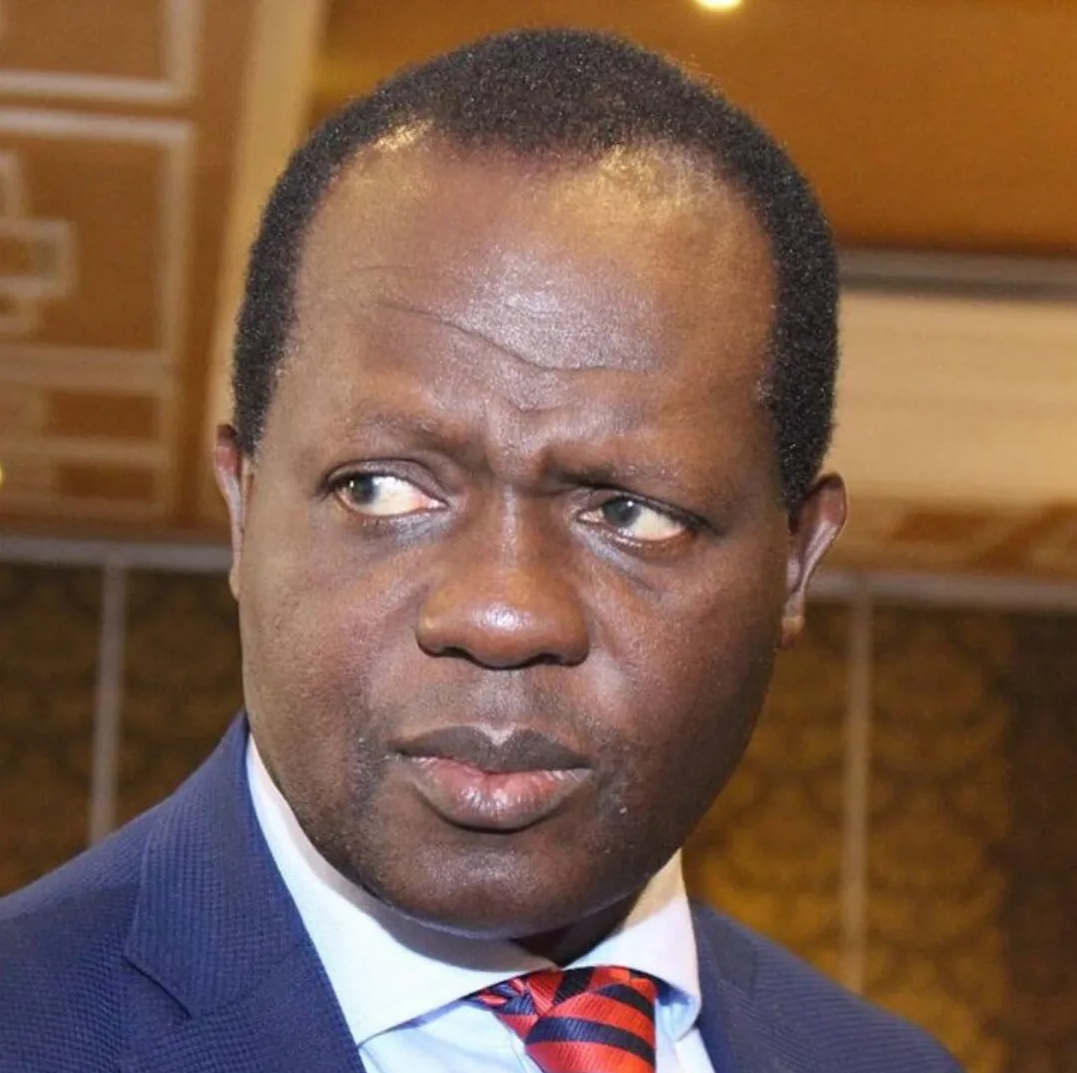
Nairobi Rivers Commission Deputy Commissioner Arch. Musuvo Mumo emphasized transparency and collaboration in defining riparian boundaries.
“We will work with Water Resources Authority, NEMA, and other agencies together with landowners to determine the true high-water mark and the correct riparian. That is the proper process,” he said.
He assured landowners that riparian sections within their parcels remain their propert, albeit with development limits.
“The fact that the riparian sits within your land does not mean it is not your land. It simply means there are limits to what you can do within that area,” he added.
“Planning is a process, and the policies that come out of it will guide what can or cannot be built close to the river.”
Antony Karanja lauded the meeting for clearing misinformation and establishing a roadmap for deeper local consultations.
“The original idea when we came here was to demystify some of the things you have heard, and that is exactly what has happened. From here, we will move to shorter spans where you live. Together with the Nairobi Rivers Team, we will organize even smaller citizen engagement meetings,” Karanja said.
He stressed the role of political leaders in bridging communication between communities and development programmes.
“As political leaders, our role is to create a link between our electorate and development programs to ensure they are represented,” he added.
Nairobi Rivers Commission Chairperson Bishop Wanjiru praised the spirit of collaboration and promised a review of laws governing the NRRP, especially SPA guidelines, through inclusive public participation.
“We have had positive and insightful engagements with the communities from Kangemi and Dagoretti. We have agreed to re-examine the laws governing NRRP’s work that were of distress to them with the intention of reviewing them with public participation,” Wanjiru said.
She described the regeneration programme as a climate action initiative anchored in community ownership.
“The Nairobi Rivers regeneration is a climate action project at its core—an ecosystem restoration effort that brings together government, communities, and young people to reclaim our river systems,” she added.
“This time, we are doing it differently. We are deliberately engaging the communities and youth, ensuring they are co-owners and beneficiaries of the transformation.”
Community representatives also called for greater inclusion of young people in the programme through Climate WorX, a youth-focused climate action initiative.
The meeting closed with a joint commitment from all stakeholders to support the regeneration programme while ensuring fairness, environmental protection, and respect for community rights.
Read: Mazingira Day 2025: Restoring Rivers, Rebuilding Cities
>>> Inside the Nairobi Rivers Regeneration Project Which Promises 30,000 Jobs











Leave a comment