

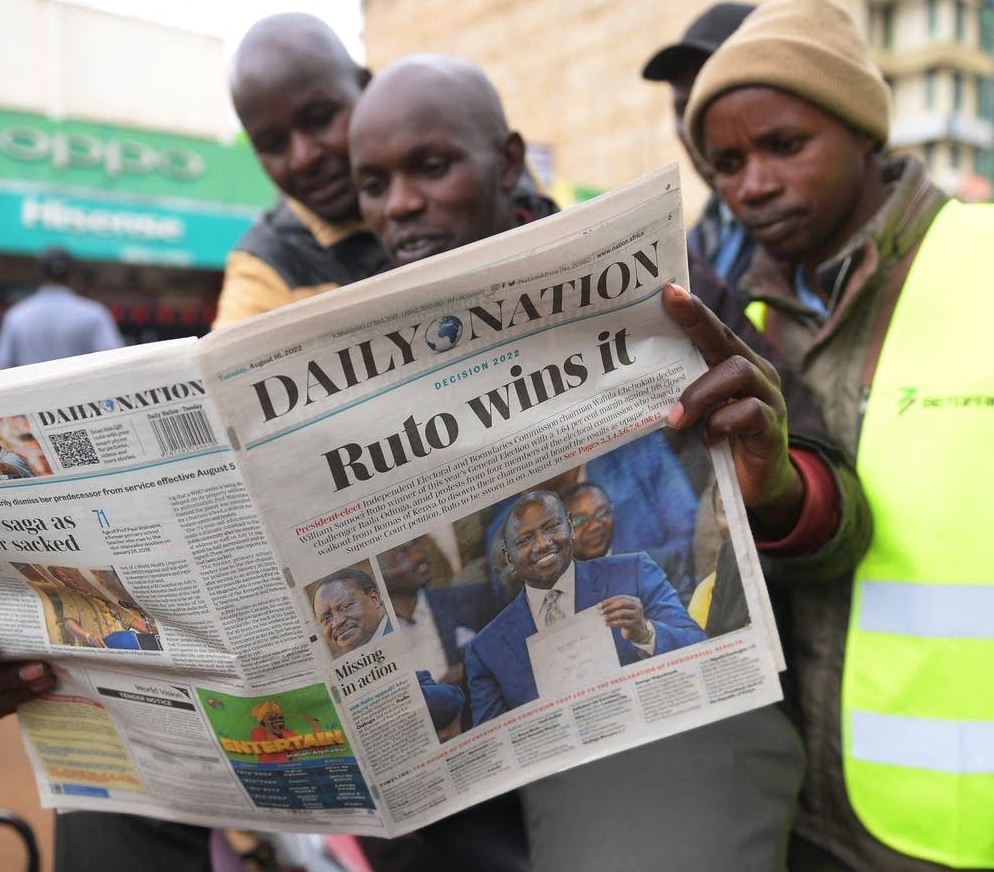
The Judiciary has stepped up preparations to handle electoral disputes arising from the 2027 General Election, with more than 400 judges, judicial officers and other personnel undergoing specialised training to strengthen the institution’s readiness for what could be a demanding post-election period.
The programme is being undertaken through the Kenya Judiciary Academy and the Judiciary Committee on Elections and is intended to promote consistency in the application of electoral law and improve the Judiciary’s capacity to resolve disputes effectively.
Speaking at the Kenya Editors Guild Annual Convention in Mombasa on Thursday, Chief Justice Martha Koome said electoral preparedness had become a priority for the Judiciary as the country moves towards the 2027 elections.
“The Judiciary is equally treating electoral preparedness as a matter of the highest institutional priority,” she said in a keynote address delivered on her behalf by Deputy Chief Registrar Paul Ndemo Maina.
READ >> Head Of Judiciary Warns Against Intimidation of Journalists
The Chief Justice said the credibility of elections depended not only on the conduct of the electoral process but also on the availability of an independent and accessible mechanism for resolving disputes that may arise.
The Judiciary is also preparing for the increasingly complex technological environment surrounding elections. Koome said judges and magistrates would need to be equipped to assess electronic records, digital communications and other technology-based evidence that could become central to electoral disputes.
“Modern elections increasingly involve electronic records, digital communication and technology-based results management systems,” she said.
She added that the Judiciary would strengthen its capacity to deal with emerging technological and evidentiary challenges, noting that judicial officers must be able to understand and fairly evaluate digital evidence presented before them.
The preparations also extend to case management and public communication on electoral dispute resolution. According to the Chief Justice, the Judiciary intends to improve access to information about the processes through which electoral disputes are handled, while engaging the media and the public to counter misinformation that could undermine confidence in electoral institutions.
“We shall continue engaging the media and the public to promote understanding of electoral justice processes and counter misinformation that may undermine confidence in constitutional institutions,” she said.
The focus on electoral dispute resolution comes against the backdrop of growing concern about the information environment surrounding elections, where political claims, misinformation and rapidly circulating digital content can complicate both public understanding and the adjudication of disputes.
Koome urged editors to recognise the media’s constitutional responsibility as the country approaches the election, saying citizens needed credible information to make informed choices.
She said journalism should interrogate political promises, examine public expenditure and investigate governance while resisting attempts to turn newsrooms into instruments of propaganda, misinformation or incitement.
The Chief Justice also stressed that accuracy should not be confused with caution that prevents journalists from pursuing difficult stories. “Responsible journalism must not become timid journalism,” she said, arguing that democracy requires a media that is both fearless and fair.
The Judiciary’s preparations therefore place it alongside the media as one of the institutions expected to play a critical role in sustaining public confidence in the electoral process.
While the media’s responsibility will be to provide citizens with verified information and scrutinise the exercise of political power, the Judiciary will be required to provide an independent avenue for resolving disputes when electoral processes are challenged.
Koome said the two institutions should continue engaging each other while respecting their distinct constitutional mandates.












Leave a comment