

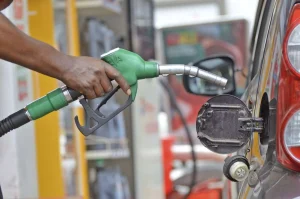
Kenya could be staring at higher fuel prices in the coming weeks as global crude oil costs edge upward.
The Central Bank of Kenya (CBK), in its weekly bulletin dated September 12, 2025, confirmed that international oil prices have climbed ahead of the Energy and Petroleum Regulatory Authority’s (EPRA) next review.
The bulletin indicates that Murban crude traded at USD 69.39 per barrel, equivalent to approximately Ksh 8,966.91, on September 11. This represented a rise from USD 67.69, roughly KSh8,747.22, the previous week.
The CBK linked the surge to instability in the Middle East and the ongoing war in Ukraine, noting that a drone strike had forced a halt in shipments from Russia’s biggest western port. Still, it said concerns about slowing US demand and expected supply increases from OPEC+ countries prevented prices from spiking further.
“International oil prices rose, reflecting potential supply disruptions from the conflict in the Middle East and the war in Ukraine, even as concerns over weakening US demand and an expected oversupply from planned output increases by OPEC+ countries remain,” the CBK statement read.
Despite the turbulence in the oil market, the shilling has remained steady. CBK data placed the exchange rate at Ksh 129.24 to the US dollar as of September 11.
The bank also highlighted that Kenya’s foreign exchange reserves stood at USD 11.17 billion, which is equivalent to 4.9 months of import cover.
EPRA’s most recent price adjustments, covering the August–September period, had offered motorists slight relief. Super Petrol dropped by Ksh 1 per litre, kerosene by a similar margin, while diesel was left unchanged. For the past month, Nairobi motorists paid Ksh 185.31 for a litre of Super Petrol, Ksh 171.58 for diesel and Ksh 155.58 for kerosene. The regulator said the capped rates were inclusive of VAT and excise charges, as guided by existing laws and inflation adjustments.
The review also revealed a slight decline in the average landed cost of imported Super Petrol, from USD 628.30 per cubic metre in June 2025 to USD 623.71 in July. In contrast, diesel and kerosene recorded modest cost increases.
All eyes are now on EPRA, which is expected to release the new retail fuel prices for the September–October cycle on Sunday, September 14, 2025.









Leave a comment