

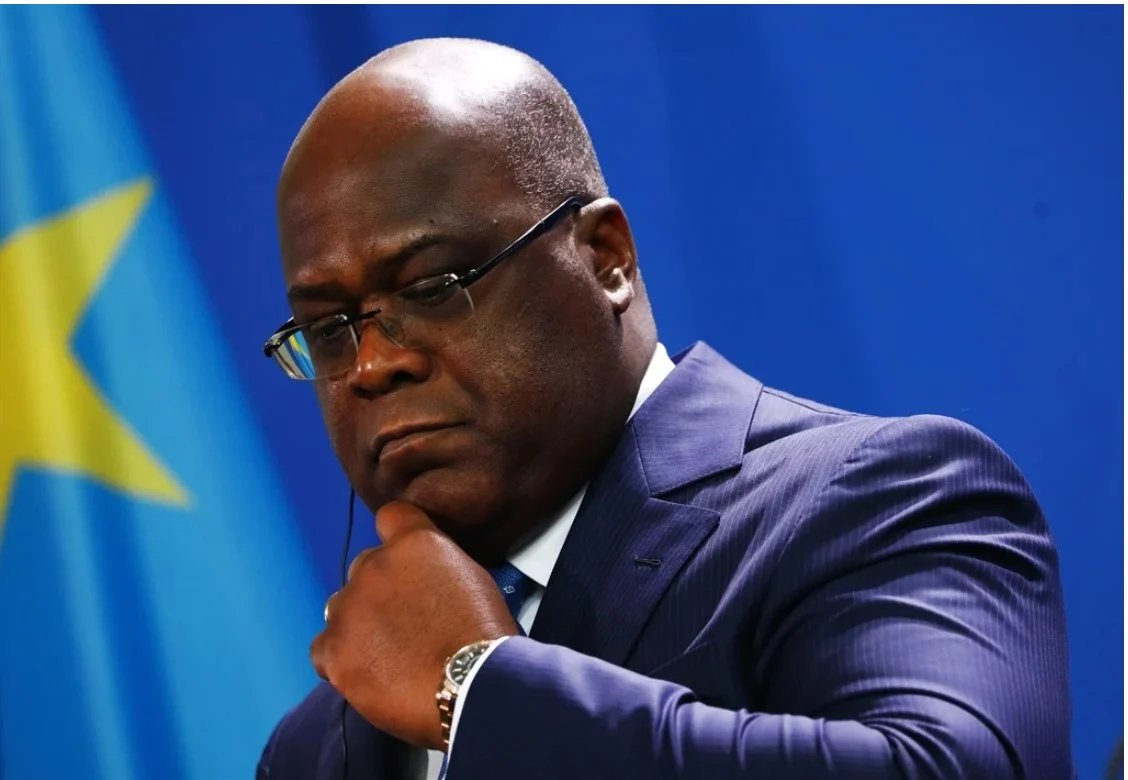
There is an outstanding legal complaint filed in Brussels against nine family members of Félix Tshisekedi, the president of the Democratic Republic of Congo (DRC), even as he seeks an investment of over $ 20 billion dollars (over Ksh 2.5 trillion shillings) from the wealthy nation of Qatar.
The accused Tshisekedi relatives, who are ironically all Belgian nationals and, therefore, legally foreign agents, face allegations of stealing from mines located in the provinces of Lualaba and Upper Katanga in the southern part of the country.
This is reminiscent of the klepto-manic reign of Mobutu Sese Seko – when the DRC was known as Zaire – where the country was transformed into a quintessential kleptocracy, with the mechanisms of governance deeply intertwined with corruption and personal enrichment. President Felix Tshisekedi seems to have now orchestrated a state machinery designed primarily to siphon off the nation’s wealth into his coffers and those of his close associates, including the charged nine family relations who seem to have bank accounts in Brussels with state resources as their bagels.
Tshisekedi’s seven years in power have seen him oversee a systematic manipulation of state resources that entrenches corruption at every level with chosen cronies, and a governance that’s marked by an intricate web of patronage and exploitation with him as the paternal patron handing coin to his kin-and-kith.
Those overseas named in the complaint include Tshisekedi’s sister-in-law, sons, brothers, cousins, and even the first lady of the country, Mrs. Denise Nyakeru Tshisekedi.
They are referred to in the complaint as “accomplices to acts of corruption and other criminal activities” in the charges presented to federal prosecutor Ann Fransen, by lawyers Bernard and Brieuc Maingain on behalf of several NGOs from Katanga; and four former directors of Gécamines, the Congolese state-owned mining company, when the quartet could no longer stand the brazen theft, left and have now whistle-blown the Tshisekedi actions through this legal avenue.
The lawyers clarify that the nine individuals mentioned are not the only ones they accuse of theft, but that this complaint is focused solely on those with Belgian nationality who can be prosecuted in their legal system. “Further charges may soon be filed in other countries where the looters of our resources are from,” one of the prosecutors remarked, leaving it unambiguous that the fraud and theft ride the elevator right up the top to the presidency.
> Tshisekedi’s Great Betrayal: Selling Congo Down the Imperialists’ River
Which makes it deeply ironic that the Lumumba Friendship University in Moscow is proposing to give an “Honoris Causa” degree to Felix Tshisekedi, who had power handed over to him peacefully in 2019 but whose misrule has come to represent cronyism and chaos, plagued by external conflicts, ranging from provincial separatism to regional wars in his confused geopolitical cauldron of fraud and incompetence.
“The Pan African Congress in Nairobi is considering writing to the Lumumba University to beseech that they don’t sully their respected intercontinental reputation by awarding Tshisekedi (Felix) anything from Lumumba university,” Pan African Congress executive member Adipi Sidang says.
It was in this setting of stealing from mines in Katanga that Etienne Tshisekedi, the father to president Felix, worked in league with secessionists in the province and the late Mobutu to transport to, torture and execute the great Independence Prime Minister Patrice Lumumba, an Iscariot act of treachery echoed in the son’s betrayal of the country; which Tshisekedi is not only selling cheaply down the river to the Americans, but letting family members plunder the proceeds of its mines.
The impact of Mobutu’s kleptocracy on Zairian society and the economy was devastating. Public services crumbled as state funds were diverted away from vital sectors like healthcare, education, and infrastructure, while public employees often went months without being paid, and soldiers mutinied and looted at will.
Just six years after inheriting a DRC that had grown fivefold economically in two decades under President Kabila, as DRC’s roads, hospitals, and schools fall into disrepair, Tshisekedi’s ‘foreign’ relatives are stealing from the Katanga mines, and stashing the lucre abroad, a state of affairs that is now headed for Brussels’ court.
This national neglect is creating widespread poverty and suffering among ordinary Congolese, creating a stark contrast between the high-flying life of Tshisekedi’s familial circle and the desperate conditions of the general populace of the DRC. Moreover, Tshisekedi’s corruption stinks every aspect of the DRC’s economic life. In Mobutu’s era, businesses faced relentless demands for bribes to operate, discouraging investment and stifling economic growth.
The informal economy flourished as a result, with black markets becoming a survival mechanism for many. Congolese developed a dark humor about their predicament, resigning themselves to the pervasive corruption that had become a part of everyday life.
> 120-Megawatt Suswa Solar Park to Relieve Kenya of Power Stress
But in this first quarter of the 21st century, no Congolese wants to see the clock go back to those dark days, but this kind of state-sanctioned theft of raw national wealth has dire implications for the Democratic Republic of Congo. The rampant first family corruption undermines any semblance of good governance and destroys the social contract between State and citizens. Trust in public institutions is eroded, and a sense of cynicism and disillusionment set in among the people. Economic disparities widen, and social cohesion frays as resources are hoarded by the elite few, like the Tshisekedi Klan.
Mobutu’s kleptocratic state left Zaire deeply impoverished and institutionally brittle. Similarly, an environment of systemic corruption, financial mismanagement, and social injustice lays the groundwork for future instability.
The Qataris, and certainly the Congolese, would be better served by “sitting” on their investment; until the wheel of history turns, as it will, to bring back another regime to the helm at Kinsasha.
Tony Mochama is a journalist and the author of ‘Political Parties After Parties: 1960 – 2020.’









Leave a comment