


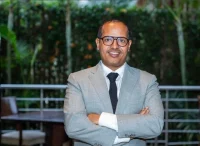
Growing a successful business takes time. That’s the key lesson from Bidco Africa chairman Vimal Shah, who grew the business from the family living room to a conglomerate with a presence now in four countries.
Mr Vimal recalls how he started strategizing for the company’s growth while studying at the university. He says to succeed in Africa, you need to position yourself with a lens that captures every challenge as an opportunity.
“Everything that has not been done in Africa is an opportunity waiting for something to happen,” he says. “While at the university I was looking at backward linkages and doing a paper on how to take the business further forward.”
Eventually, Vimal brought together his brother and father to fine-tune Bidco’s business plan, working at their home with no office to go to, and the help of an accounting firm.
The secret was looking at the business in terms of backward linkages and have the whole value chain in control – as in from garments to go into textiles, fabric weaving and spinning and even cotton. On the seeds side Bidco would move from farming to processing into oils and soaps.
Started in 1985, Bidco recorded its first commercial production the following year. “We started small and then we went backward into the linkages from soap to oil and from oil to crushing and from crushing to farming and now we are doing across the board,” he says.
Bidco is now the largest manufacturer of edible oils in East and Central Africa. It also produces detergents, baking powder personal care products and food and drinks, with a strong CSR programme that includes feeding school children and sponsoring Kenya’s rugby sevens team.
How he made it
He says they got some funding from friends and family, which was boosted by a loan from Industrial Development Bank to build a small manufacturing plant. As it hit the next stage of growth, the East African Development Bank came on board as a financier.
If manufacturing was hard, selling the products was harder. He soon realized that as startup, the market doesn’t accept your products since people were not asking for Bidco brands by name but just the product – as in, instead of someone asking for Nuru, they would ask generally for soap.
“We had to go back to retailers and markets and move house to house to get our brand known to people, and that why the whole idea of branding became important,” says Mr Vimal.
It is this tenacity that has seen Bidco grow into a $500 billion turnover company with eyes set on doubling it in the next five years. So bullish is Vimal, who served as Bidco CEO for decades, that the company is investing $200 million in its operations in Kenya alone. Besides, it has already pumped $500 million across East Africa in the processes.
“In 2000 we set ourselves a thirty-year goal to be number one in Africa,” he says. “That why we went into other countries beginning with East Africa and first Tanzania, Uganda and then Madagascar where we produce our products and sell in this market.”
[ See Also: Smart people also make mistakes – Kirubi’s investment in TV that went wrong ]
Bidco products are available in 16 African countries, though Mr Vimal says there are no plans to export out of Africa. “We don’t see ourselves exporting to Europe or Asia. Our plan is to serve the African market.”
We still have 12 years to go in achieving our dream of being number in Africa.
He says Bidco has been some sort of business school for him and the family, as every stage has provided key lessons. In the process mistakes were made but they opened more opportunities rather than slow business.
“Our biggest mistake was going into producing sachets,” he recalled. “We thought sachets would be a big thing because people were looking at price and affordability and we had lots of machinery for that. But then when you make a mistake you rectify quickly and you get on with it. If you sit with a mistake for long you won’t prosper.”
[ Don’t miss: Funeral insurance struggles to find life among the living ]
The Shahs had to learn to do without a profit for two years as their efforts started paying off three years since they launched. Production started off with one tonne per plant, or 20 tonnes per day, of soap. Now the company handles 3,000 tonnes per day.
That growth has been accompanied by an expansion in staff to 6,000 people fully employed and many more in the supply chain, from just 25 three decades ago.
Even then, the journey is not over. “We still have 12 years to go in achieving our dream of being number in Africa,” he says.














Mr vimal is just a great mentor i look up to him as so.