

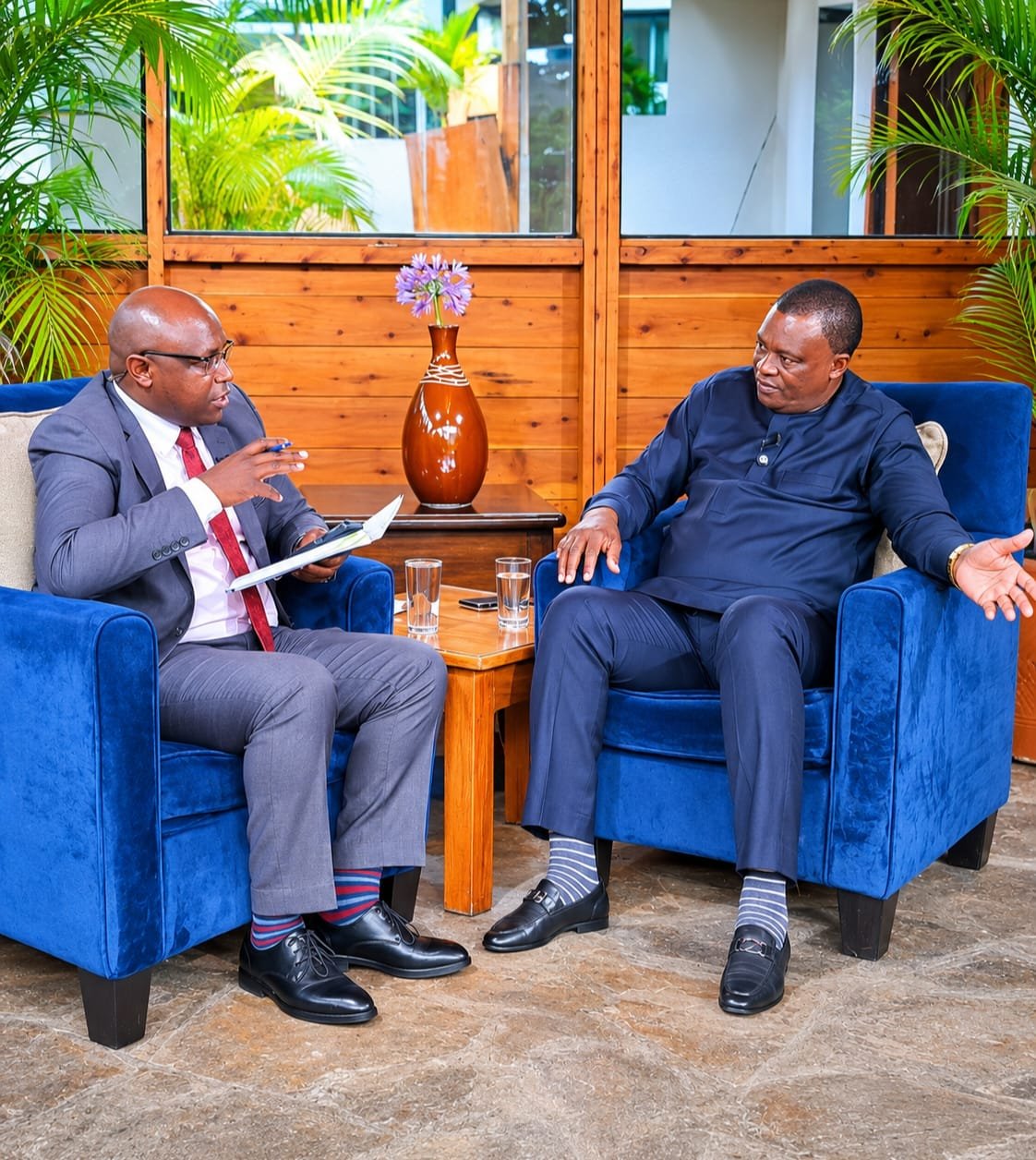
Democratic Party leader Justin Muturi has called for political negotiations based on mutual respect, equality, and recognition of each party’s identity, warning that internal friction and strategic delays could jeopardize the opposition’s chances in the 2027 General Election.
Muturi stressed that political negotiations are neither an act of surrender nor a platform for dominance, but an opportunity to build consensus, strengthen partnerships, and advance shared interests. He also cautions that such engagements must be anchored in mutual respect, equality, and recognition of each party’s identity.
“In forming the Kenya Kwanza Alliance, he (Dr. Ruto) demonstrated the value of engaging different political parties and respecting their leadership, structures, and constituencies,” Muturi said. “He understood that every party has its own followers, political influence, and contribution to make. He never approached alliances from a position of superiority but recognised that successful coalitions are built by bringing everyone on board.”
Muturi’s remarks appear to directly target growing internal friction within the opposition coalition as it attempts to form a unified front to challenge the incumbent president in August 2027. Invoking the Swahili proverb “haba na haba hujaza kibaba” (little by little fills the pot), he noted that every contribution, however small, matters and that collective strength comes from appreciating what each partner brings to the table.
“Our position is that political cooperation does not require parties to dissolve their structures or abandon their identities to join another party. We believe in a partnership where every political party retains its independence, enjoys equal recognition, and has a voice at the negotiating table,” Muturi said.
A sharp ideological dispute has emerged between Muturi and former Deputy President Rigathi Gachagua regarding the timeline for naming the joint opposition’s presidential flagbearer.
While Gachagua has proposed waiting until May 2027 to unveil the candidate, Muturi dismissed the timeline as dangerously late and operationally reckless.
Muturi warns that delaying the decision until May risks colliding with strict Independent Electoral and Boundaries Commission (IEBC) deadlines. He adds that presidential aspirants must submit comprehensive lists of 2,000 registered voters from a majority of counties by May 24, 2027, and demanded immediate institutional clarity for voters.
Government Moles
Muturi has also openly challenged Gachagua to name the alleged “government moles” infiltrating opposition negotiations. Gachagua had previously claimed that certain opposition entities were acting as saboteurs from within. Countering those claims, Muturi stated that he has witnessed no disruption during ongoing regional strategy meetings. He added that the manufacturing of suspicion and public ultimatums actively undermines coalition discipline, clarifying that his differences with Gachagua are strictly ideological rather than a personal feud.
The broader coalition context reveals an opposition united on the macro goals of electoral reforms and IEBC preparations, yet deeply divided on the mechanism to select their 2027 candidate.
With Muturi pushing for immediate structural clarity, other co-principals are pulling in different directions. Kalonzo Musyoka is advocating for consensus-based selection, while Fred Matiang’i is heavily in support of using opinion polls, all these taking place as the partners wrestle with underlying trust issues ahead of tightening electoral windows.
Reiterating his vision for a cohesive but pluralistic alliance, Muturi notes that, “Our objective is not to compete over whose party should disappear, but to build a partnership in which every party is respected, every voice is heard and every partner retains its identity.”













Leave a comment