

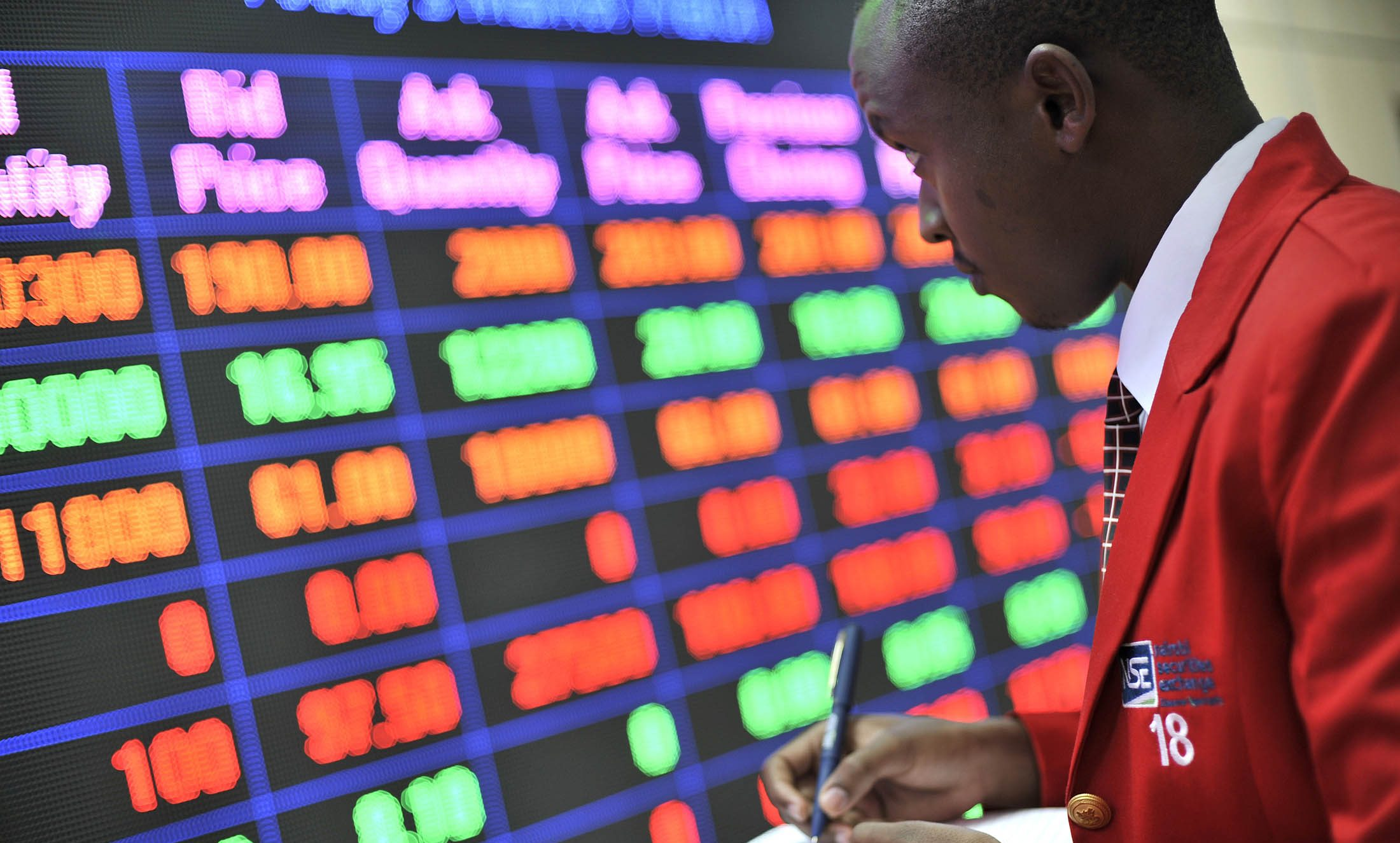
Dividend cheques have been streaming into the accounts of local and foreign shareholders of listed firms, with those owning a piece of blue chip companies at the now bullish Nairobi Securities Exchange(NSE), smiling all the way to the bank.
Available data below, shows the amounts that shareholders are receiving in final and interim dividends. Firms lined up to make interim dividend payments include BOC Kenya Plc which announced an Interim Dividend of KSh 4.00 on 21st August 2026; Books Closure is 21st September 2026; and Payment on 19th October 2026.
NCBA Group Plc has declared an Interim Dividend of KSh3.75 with Books Closure on 28th August 2026; and Payment Date on 8th September 2026.
Standard Chartered Bank Kenya Ltd announced an Interim Dividend of KSh 8.50 on 19th August 2026; Books Closure is 10th September 2026; with Payment Date of 24th September 2026. Stanbic Holdings Plc announced an Interim Dividend of KSh1.64 on 6th August 2026; Books Closure 1st September 2026; and Payment Date of 5th October 2026.
Dividend Payouts for 2025 performance
- Coop Bank KSh 14.5bn.
- Equity Group KSh 21.7 bn
- ABSA Bank KSh 11bn.
- Stanbic Bank KSh 8.7bn.
- StanChart Bank Kenya KSh 11bn.
- KCB Bank KSh 22bn.
- Safaricom Interim Dividend KSh 34bn.
- KPLC Interim Dividend KSh 0.585bn.
- EABL Interim Dividend KSh 3.163bn
- Diamond Trust Bank KSh 2.520bn.
- I&M Bank KSh 6.187bn.
- Kakuzi Plc KSh 0.314bn.
- NCBA Bank KSh 11.715bn.
- Kenya Re-Insurance KSh 0.84bn.
- Nairobi Stock Exchange KSh 0.261bn.
- CIC Insurance KSh 0.3744.
- Jubilee Insurance KSh 1.087bn.
- BOC Kenya Plc KSh 0.2499bn.
- Laptrust Imara I Reits Plc KSh 0.1419bn.
- TPS E. Africa (Serena Hotels) KSh 98.9mn.
- Total Energies Kenya Plc KSh 2.172bn.
- Safaricom Final Dividend KSh 46.13bn
- Crown Paints Kenya Plc KSh 0.427bn.
- E A Portland Final Dividend KSh 112.5mn.
- Kapchorua Tea Final Dividends KSh 468mn.
- Williamson Tea Kenya Final Dividends KSh 525mn.
- Centum Final Dividend KSh 510.9mn.
- EABL Final Dividends KSh 6.845bn.
Kenya’s investment infrastructure has a variety of available options, including the Fixed-income Securities market, Real Estate, Savings and Credit Cooperatives Societies(SACCOs), Money Market Funds(MMFs), Special Funds or Bank Savings.
Shareholders of listed firms, especially those who own stakes in blue chips and profitable counters, have been receiving their final dividend cheques, based on last year’s financials.
An investor with KSh 1 million in an infrastructure bond yielding 13% will have a return of KSh 130,000.00 per annum. This is compared to the same amount in BAT, a dividend king at the NSE with current dividend yield of 13.54%, giving a return of KSh 128,000 after taxes.
The same cash put into a money market fund with an annual yield of 10% will give a return of KSh 87,000.00, and KSh 170,000.00 for one who has deposited KSh 1 million in a SACCO.
Special Funds, which are now the talk in town, will give a net return of KSh 170,000.00 for KSh 1 million invested.
While the millennials have shown preference for other investment options, and not the stock market-which has been depressed for the past decade, nothing beats capital markets.
Although investment in real estate can give a developer or property owner some ordinary returns, experts maintain that this depend on a number of variables such as location of the asset or a desperate buyer/seller giving beyond market prices.
Unlike unregulated Chamas or the SACCO sector that is still reeling from poor governance issues, the stock market ranks at the top and is a safer bet. This is especially so for long term investors, who are willing to survive turbulence and long bearish conditions.
But stock markets can also crush, like what happened to the NSE in 2008. This is when trading at the bourse was halted following eruption of post-election violence after the disputed presidential polls. The NSE also took a plunge following the global financial crisis that triggered the flight by foreign investors from the Nairobi bourse.
Although Safaricom IPO lifted the mood at the NSE in June that year, there was panic-selling in the market following onset of the global markets meltdown.
So, stock markets are not perfect. This is especially so for those investors nearing retirement and need to cash out.
Available data shows that the current stock market boom is not only confined to NSE Kenya.
According to Weekly Markets Performance of African bourses, covering the period between August 16th and 20th, the NSE All Share Index(ASI) rose 2.72% compared to 0.17% in Rwanda, 0.67% in Tanzania and 2.97% in Uganda.
ALSO READ:SACCO to Have Heated Annual Gatherings As Dividends Fall











Leave a comment