

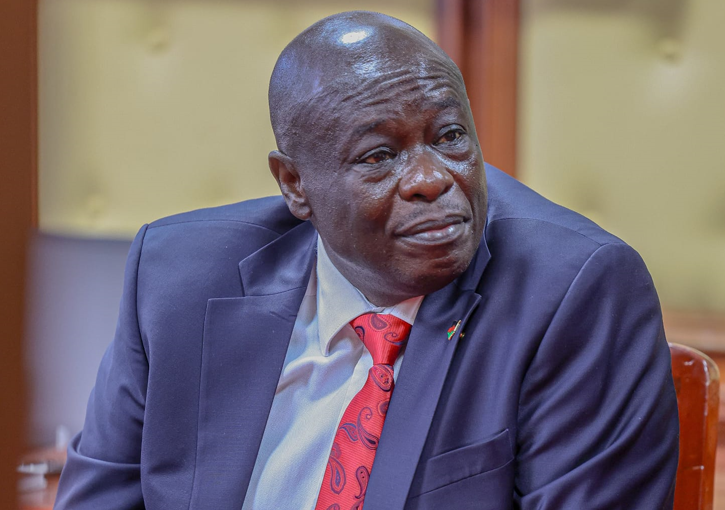
The High Court has upheld the impeachment of former Deputy President Rigathi Gachagua, rejecting multiple constitutional challenges to the process while finding that his fair trial rights were violated during the proceedings.
In a far-reaching judgment, a three-judge bench comprising Justices Eric Ogola, Freda Mugambi and Anthony Mrima dismissed key arguments advanced by petitioners seeking to overturn the impeachment, concluding that Parliament acted within its constitutional mandate in removing Gachagua from office.
The court, however, found that Gachagua’s right to a fair hearing had been infringed and held that he was entitled to constitutional remedies in the form of declarations and damages, although reinstatement was ruled out.
“The violation of His Excellency Gachagua’s fair trial rights during the impeachment process warrants an appropriate constitutional remedy. While reinstatement is not available, the infringement can be adequately vindicated through declaratory relief and an award of damages,” Justice Anthony Mrima held.
The ruling brings to a close one of the most consequential constitutional disputes in Kenya’s recent political history and clarifies the scope of judicial oversight over presidential and deputy presidential impeachment proceedings.
Court Rejects Political Question Argument
Justice Eric Ogola firmly rejected claims that courts should stay away from impeachment disputes because they involve political questions.
The judge held that courts have a constitutional obligation to examine whether impeachment proceedings comply with the Constitution and cannot abdicate that responsibility under the guise of respecting separation of powers.
According to the court, judicial review of impeachment proceedings serves as a safeguard against constitutional violations and is essential to preserving the rule of law.
The judge emphasized that reviewing the legality of impeachment processes does not amount to interference with Parliament but rather ensures accountability and constitutional compliance by political institutions.
Lawmakers’ Political Affiliations Not Evidence of Bias
The court also dismissed arguments that members of Parliament and senators who participated in the impeachment process were biased because of their political affiliations or prior public positions on Gachagua.
Justice Ogola held that impeachment is inherently political and lawmakers are not expected to approach such proceedings without political opinions.
The constitutional test, he said, is whether legislators remained willing to consider evidence and discharge their duties in good faith.
The court distinguished between lawmakers having prior views and having predetermined outcomes, noting that only the latter would undermine constitutional fairness.
The judgment further clarified that parliamentary speakers perform procedural functions and do not determine the outcome of impeachment proceedings, which rests with the voting decisions of members of the National Assembly and Senate.
Public Participation Challenge Fails
A significant portion of the petitions focused on allegations that Parliament failed to facilitate adequate public participation before the impeachment.
Justice Freda Mugambi rejected the claims, holding that constitutional compliance is measured by whether citizens were given a genuine opportunity to participate rather than by the number who actually take part.
The court found that the National Assembly had complied with previous High Court directives by instructing constituency offices nationwide to collect public views, receive written and oral submissions, provide participation templates and keep offices open during the designated period.
According to the judgment, Parliament’s responsibility is to facilitate participation rather than guarantee turnout.
The court found no evidence that citizens were denied access, that participation was suppressed, or that Parliament failed to create avenues for engagement.
Senate Had No Duty to Conduct Fresh Public Participation
The bench also ruled that the Senate was not constitutionally obligated to conduct a separate public participation exercise during the impeachment trial.
Justice Mugambi held that the Senate’s role under Article 145 is fundamentally adjudicative rather than legislative.
The court reasoned that while Parliament generally has obligations relating to public participation under Article 118, impeachment proceedings are governed by the more specific constitutional framework contained in Article 145.
As such, the Senate’s duty was to conduct a fair hearing of the charges rather than launch a separate public consultation exercise.
The judges further noted that Senate proceedings were conducted openly, broadcast publicly, recorded in Hansard and extensively covered by the media, satisfying constitutional requirements for transparency.
Court Backs Kithure Kindiki Appointment Process
The judgment also addressed challenges to the nomination and approval of Gachagua’s successor, Professor Kithure Kindiki.
Justice Anthony Mrima ruled that Article 149(1) creates a self-contained constitutional framework for filling a vacancy in the office of Deputy President.
The Constitution requires only that the President nominate a candidate within 14 days and that the National Assembly vote on the nomination within 60 days.
The court found no constitutional requirement for any additional clearance process beyond those expressly provided in the Constitution.
Petitioners had argued that Kindiki was ineligible because he was serving as a Cabinet Secretary when nominated.
The court rejected the argument, finding that the constitutional provisions governing general elections are distinct from those governing the filling of a midterm vacancy in the office of Deputy President.
The judges held that Article 149 establishes a unique constitutional mechanism designed to ensure continuity in government.
National Assembly Constitutionality Challenge Dismissed
The court also dismissed arguments that the National Assembly was improperly constituted because of unresolved issues surrounding the implementation of the two-thirds gender rule.
Justice Mrima held that because the constitutional mechanisms under Article 261 had not been fully exhausted, it would be premature to conclude that Parliament lacked authority to consider the impeachment motion.
The challenge therefore failed.
Court Upholds Speed of Process
Petitioners had also questioned the speed with which Parliament and the Executive acted following Gachagua’s removal.
The judges found no constitutional violation.
Citing Supreme Court and Court of Appeal precedents, the court held that constitutional timelines are intended to promote certainty, continuity and stability in governance.
The court concluded that the rapid gazettement of the Senate resolution, presidential nomination and parliamentary approval process complied fully with constitutional requirements.
The judges stated that speed alone could not be used as evidence of illegality or bias.
No Reinstatement for Gachagua
While the court found a violation of Gachagua’s fair trial rights, it ruled that reinstatement was not an available remedy.
Justice Mrima held that constitutional provisions governing the removal and replacement of a Deputy President are final once implemented.
The court distinguished the case from impeachment disputes involving county governors, noting that governors are removed under statutory frameworks while the removal of a Deputy President is governed directly by the Constitution.
Because the Constitution itself provides the mechanism for removal and replacement, the judges held that courts cannot reverse the process once completed.
The court consequently declined to disturb the appointment of Kindiki as Deputy President.
It further declined to determine whether a Deputy President removed through impeachment qualifies for retirement benefits, saying the issue had not been properly presented for adjudication.
Although Gachagua secured a finding that some of his constitutional rights had been violated, the court observed that most of the substantive prayers in the consolidated petitions had failed.
Given the public interest nature of the proceedings, the judges ordered each party to bear its own costs.
Read: How Gachagua Impeachment Case Verdict Could Reshape Opposition Power Matrix Ahead of 2027
>>> Gachagua Insists Opposition Will Field One Candidate Against Ruto














Leave a comment