

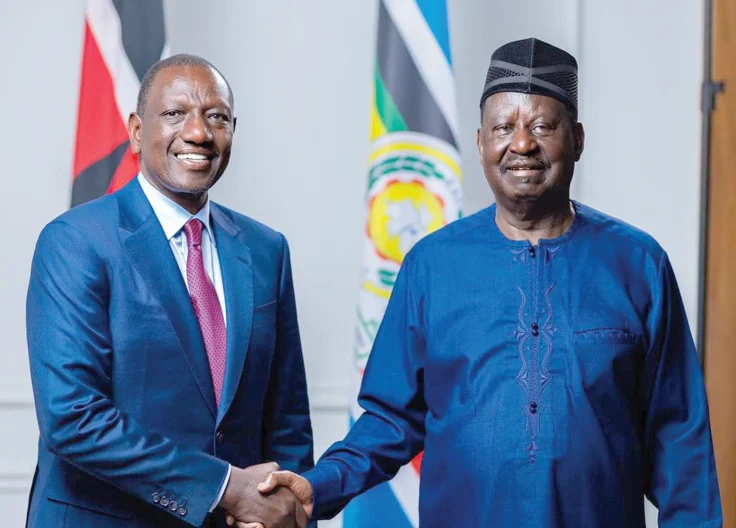
A growing number of Kenyans say corruption lies at the heart of their opposition to the Broad-Based Government (BBG) arrangement, a new opinion poll by TIFA Research has found.
The poll was conducted between November 10 and 17, 2025, involving 2,053 adults across all 47 counties, with a margin of error of ±2.16 per cent.
The survey, released on Tuesday, December 23, 2025, shows that 35 per cent of respondents who oppose the BBG cite corruption as their main concern, making it the most common reason for rejecting the political deal between President William Ruto and the late former Prime Minister Raila Odinga.
The poll indicates that opposition to the BBG is largely driven by governance issues rather than disagreements over policy. According to TIFA, 31 per cent of critics believe the arrangement undermines democracy by weakening the role of the opposition and blurring lines of leadership and accountability.
Another 16 per cent said the BBG lacks public trust, transparency, participation, and accountability, while 13 per cent faulted it for failing to address the real challenges facing citizens.
“Responses are quite varied, if somewhat overlapping, among those who oppose the BBG as to the main reason why they do so, though most are related to various governance issues,” TIFA said in its report.
Only 3 per cent of BBG opponents cited human rights violations as their primary concern. However, TIFA noted that such violations are often linked to deeper governance problems.
“While few specifically mention human rights abuses, these are more presumably likely to occur when the other ills cited remain unaddressed,” the polling firm observed.
The survey also found that respondents did not raise other common complaints against the government, such as high taxes, rising public debt, or delays in county funding, suggesting that opposition to the BBG is shaped more by political accountability concerns.
Despite the criticism, public support for the Broad-Based Government has been rising. TIFA’s data shows that support for the BBG increased from 22 per cent in May 2025 to 44 per cent in November 2025.
Meanwhile, opposition to the arrangement declined from 64 per cent in August 2025 to 48 per cent in November 2025, narrowing the gap between supporters and critics to just four percentage points.
TIFA suggested that the shift in public opinion may be linked to the goodwill generated after President Ruto and other Kenya Kwanza leaders publicly recognised Raila Odinga following his death.










Leave a comment