

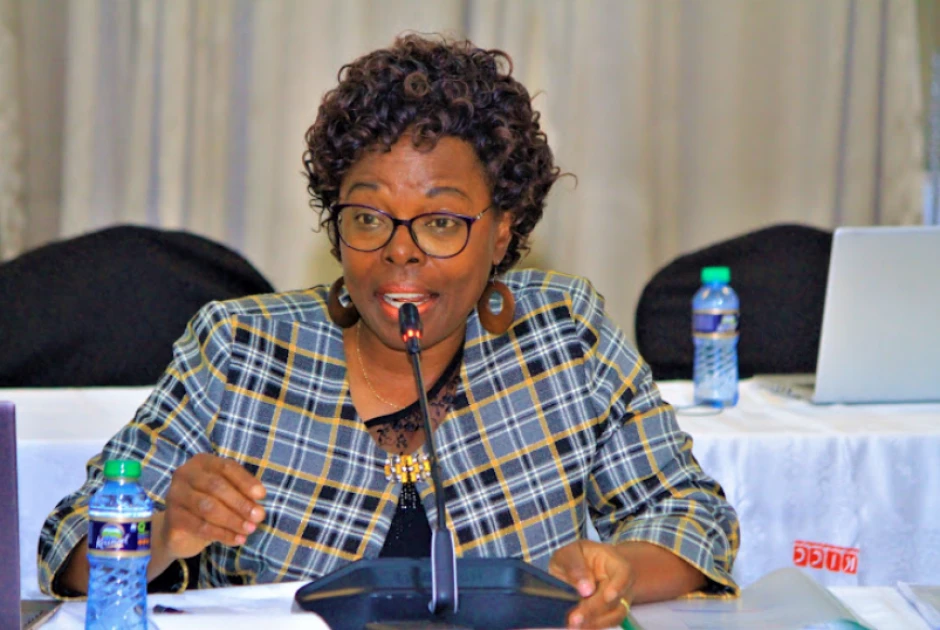
The proposed Sovereign Wealth Fund Bill, 2026, has come under scrutiny after Controller of Budget (CoB) Margaret Nyakang’o warned that weaknesses in the draft law could undermine oversight, expose public funds to risk and conflict with the Constitution.
Appearing before Parliament during scrutiny of the Bill, Nyakang’o said the idea of creating a fund to invest proceeds from minerals and petroleum is important, but argued the proposed framework needs stronger safeguards before it can work.
Her main concern is that the Bill does not clearly show how money would move between the proposed fund and the Consolidated Fund, where all government revenue is constitutionally required to be deposited first.
She warned that if revenues flow directly into the Sovereign Wealth Fund without passing through the Consolidated Fund and parliamentary appropriation, the fund could operate outside the national budget structure.
“The real risk here is that the fund will operate as a parallel financial architecture outside the national budget framework, which is unconstitutional,” she told lawmakers.
Nyakang’o recommended that the law be amended to require all revenues to first be paid into the Consolidated Fund and only transferred into the Sovereign Wealth Fund through Parliament-approved allocations, in line with Article 206 of the Constitution.
She also raised concern over the Bill’s treatment of withdrawals, saying it does not adequately protect the oversight role of her office. As drafted, she argued, the law could allow withdrawals to be approved without clear constitutional checks.
Nyakang’o said the law should expressly require written authorisation from the Controller of Budget before any money is withdrawn from the fund, alongside parliamentary approval.
CoB on annual withdrawals
She further proposed limits on annual withdrawals, warning that without clear caps, the fund could be drained for short-term government spending instead of serving its long-term purpose.
The governance structure proposed in the Bill also came under criticism.
Nyakang’o said the current board structure lacks sufficient protection against executive influence, particularly in appointments and decision-making. She called for a more transparent appointment process, parliamentary approval of board members and independent oversight representation.
“There is no provision for independent oversight representation at the board level,” she said, warning that weak governance could compromise the fund’s credibility.
She also questioned how investments would be managed, arguing the Bill gives broad discretion to the board and the Cabinet Secretary without clear legal guardrails.
Given that mineral and petroleum revenues are finite, she said poor investment decisions could have permanent consequences.
Her proposals include a statutory investment policy approved by Parliament, periodic reviews every three years and performance targets disclosed to the public. She also called for an independent advisory committee to strengthen investment oversight.
The concerns reflect broader global lessons on sovereign wealth funds, where strong legal controls have often determined success or failure. Countries such as Norway are widely seen as examples of funds supported by strict rules on withdrawals, investment and transparency.
Kenya’s proposed Sovereign Wealth Fund is designed to include a stabilisation fund to cushion the economy, an infrastructure fund to support development projects and a future generations fund to preserve wealth from natural resources.
Supporters argue it could help Kenya turn resource revenues into long-term investments and reduce exposure to economic shocks.
But Nyakang’o’s intervention has shifted attention to whether the legal framework is robust enough to protect those ambitions.
Her warning comes as Parliament prepares to receive public views on the Bill before debate proceeds.
While she supports the idea of a sovereign wealth fund in principle, her message to lawmakers was that the fund must be built within constitutional safeguards, not outside them.
Without stronger controls, she cautioned, the proposal risks creating a powerful financial vehicle with weak accountability, undermining the very purpose it is meant to serve.












Leave a comment