

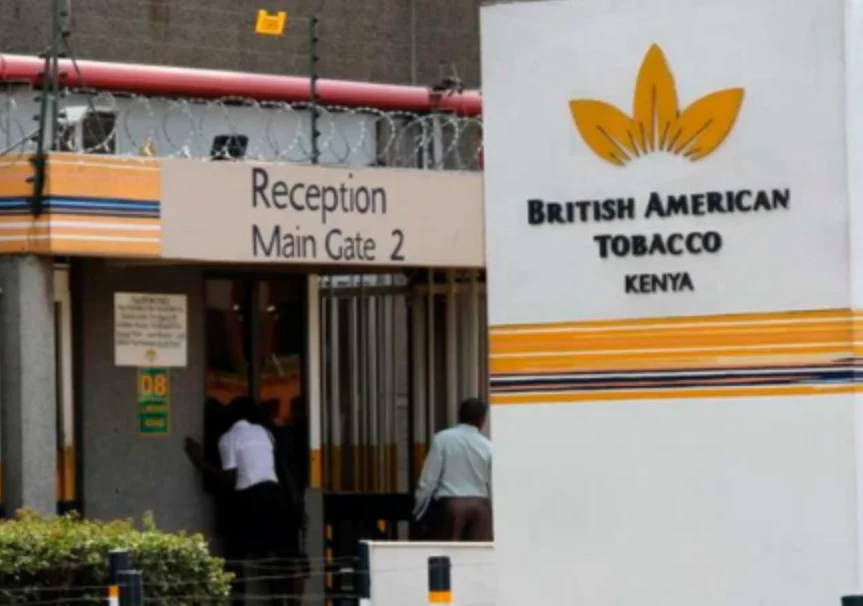
British American Tobacco (BAT) Kenya has reported a slight increase in profit for the first half of 2026, helped by stronger export sales and growing demand for its newer nicotine products, even as cigarette sales in the local market continued to come under pressure.
The Nairobi Securities Exchange-listed cigarette manufacturer announced that its profit before tax rose by two per cent to Sh4.4 billion for the six months ended June 30, 2026, compared to Sh4.3 billion recorded during the same period last year.
Revenue also improved during the period, with net revenue rising by five per cent to Ksh 12.3 billion. The company attributed the growth mainly to improved exports and increasing sales of its modern oral nicotine pouches, which were introduced in Kenya in June 2025 as part of BAT’s shift towards smoke-free alternatives.
Despite the improved earnings, BAT Kenya says business conditions remain difficult, particularly in the domestic market where consumers are spending less and illegal cigarette trade continues to eat into sales.
The company’s operating costs climbed seven per cent to Sh8 billion during the review period. Higher spending on raw materials, compliance with new graphic health warning regulations and investments in its expanding portfolio of nicotine products all contributed to the increase.
Even with the higher costs, operating profit still increased slightly by one per cent to Sh4.3 billion, supported by stronger revenues and cost-saving measures introduced across the business.
BAT Kenya Managing Director Sidney Wafula said the company had managed to remain profitable despite operating in a challenging environment.
He said the results demonstrate the company’s ability to adapt even as illegal cigarette trade continues to expand, making business increasingly difficult for legitimate manufacturers.
One of BAT Kenya’s biggest concerns remains the rapid growth of illicit tobacco products in the country. According to the company, third-party research conducted at the end of 2025 showed that illegal cigarettes now account for nearly 45 per cent of the Kenyan market.
Wafula warned that the situation is hurting both businesses and government revenue, estimating that Kenya loses around Sh12 billion in tax collections every year because of the illegal trade.
He called on government agencies to strengthen enforcement efforts, saying that while some progress has been made, more coordinated and sustained action is needed to curb the problem.
Besides illicit trade, BAT also pointed to reduced disposable income among Kenyan consumers as another factor affecting cigarette sales. Rising living costs and higher fuel prices, partly linked to the ongoing conflict in the Middle East, have continued to squeeze household budgets, leading many smokers to either cut consumption or turn to cheaper illegal products.
While local sales remained weak, the company’s export business provided much-needed support. BAT said exports recovered during the first half of the year, benefiting from relatively stable currencies in several regional markets. However, it noted that some neighbouring countries are still facing economic difficulties and unpredictable weather, factors that continue to affect regional demand.
BAT oral nicotine
The company also reported steady growth in its oral nicotine pouch business, reflecting changing consumer preferences as BAT continues its global strategy of developing alternatives to traditional cigarettes. The multinational tobacco company has been investing heavily worldwide in reduced-risk nicotine products, including nicotine pouches, vaping devices and heated tobacco products, although the availability of these products differs from one market to another.
BAT Kenya said it will continue investing in science-based innovation while advocating for regulations that support tobacco harm reduction and provide a predictable operating environment for the industry.
The company remains one of Kenya’s largest exporters, shipping more than 75 per cent of its cigarette production from its Nairobi factory to eight African markets. It also operates a green leaf threshing plant in Thika and works with about 2,200 contracted tobacco farmers across Bungoma, Busia, Migori, Meru and Homa Bay counties.
According to the company, its operations support more than 80,000 direct and indirect jobs across farming, processing, manufacturing, transport, distribution and retail. BAT also says it has paid more than Sh100 billion in taxes and other government levies over the past six years through excise duty, value-added tax, corporation tax and Pay As You Earn deductions.
In addition to announcing the improved half-year performance, the company’s board declared an interim dividend of Sh10 per share, maintaining shareholder returns despite the challenging business environment. As of May 31, 2026, BAT Kenya had 9,805 shareholders, the overwhelming majority of them local investors.














Leave a comment