

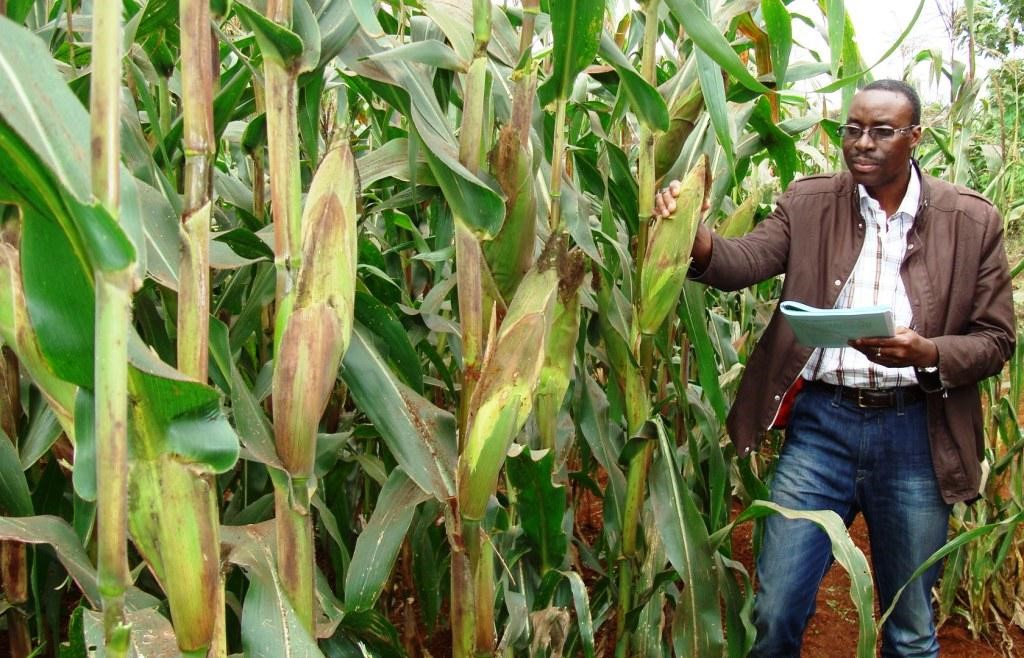
The African Agricultural Technology Foundation (AATF) has been awarded a $24.6 million (Ksh2.5 billion) grant by the Bill & Melinda Gates Foundation for the commercialisation of insect-resistant and drought-tolerant maize in Sub-Saharan Africa. This complements USAID’s ongoing $5 million (Ksh500 million) commitment to the project.
The new maize hybrids (branded as TELA maize) have been enhanced through biotechnology to improve their drought tolerance and ability to resist attacks by insects. The seeds have been tested in field trials in Mozambique, Kenya, Tanzania, South Africa, and Uganda, and shown increased drought tolerance, good protection against stem borers, and partial but significant protection against the newest menace, Fall Armyworm.
The TELA® hybrids are yielding on average 30% more than conventional hybrids. When insect attacks are intense, the new hybrids yield 50% more.
Approximately 15% of the maize harvest in East Africa is lost to stem borers each year. The Fall Armyworm threatens to destroy up to 25% more of the harvest. Drought is becoming more frequent because of climate change. The new maize hybrids offer significant protection from these threats and can help protect the harvest and the livelihoods of African farmers.
RELATED: THE HIGH COST OF FALL ARMY WORM
Dr Denis Kyetere, the Executive Director AATF, said the grant would support the organization and its partners in moving the TELA® products to smallholder farmers who are most affected by frequent droughts and insect menace.
“This is indeed great news for AATF, smallholder farmers and our partners. We are pleased that the Gates Foundation and USAID value the role of biotechnology in addressing the effects of climate change across the continent. With continued support of various country governments, we believe, we shall offer dependable solutions within five years,” said Dr Kyetere.
With the grant, AATF and its partners will pursue the regulatory approval and dissemination of the new biotech seeds across the six partner countries in Africa.
READ ALSO: GLOBAL TV STATION FINDS THE GOING TOUGH IN KENYA
The TELA Maize Project builds on progress made from a decade of excellent breeding work under the Water Efficient Maize for Africa (WEMA) Project. Through WEMA, 101 conventional drought-tolerant maize hybrids (DroughtTEGO) and five TELA hybrids have been released for commercialisation in the various countries with the TELA hybrids released in South Africa.
The Project partners include National Agriculture Research systems in the six countries (Kenya, Uganda, Tanzania, Ethiopia, Mozambique and South Africa), Monsanto, CIMMYT and African seed companies. AATF coordinates the partnership.













Leave a comment