

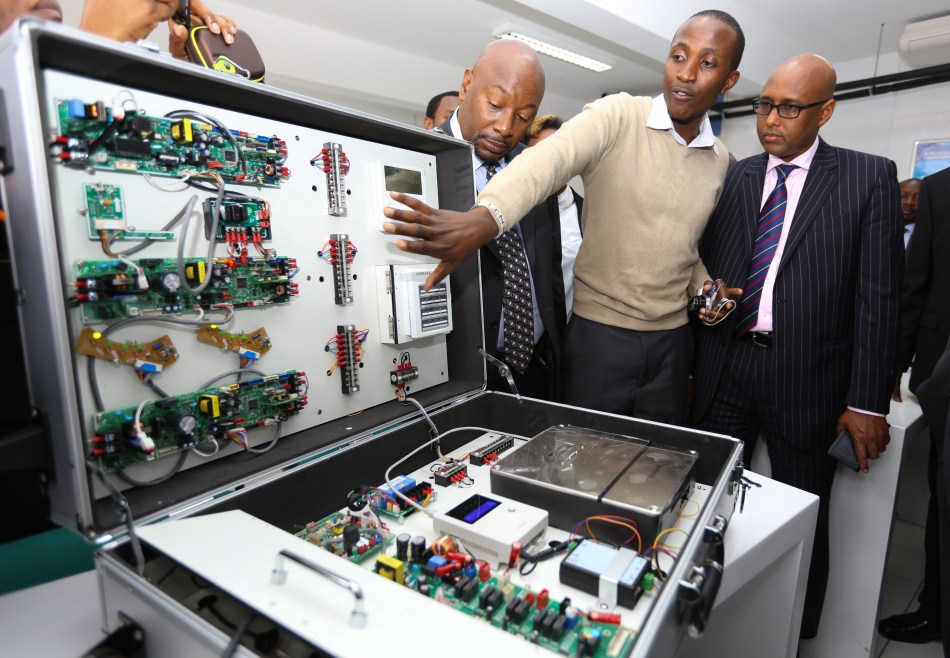
Kenya is witnessing a major shift in how young people view education and employment, with Technical and Vocational Education and Training (TVET) increasingly becoming a preferred pathway for those seeking practical skills, jobs and opportunities to start businesses.
The growth of the sector is being driven by rising demand for hands-on skills, government funding reforms, modern equipment and partnerships between training institutions, industry and international development partners.
TVET enrolment has risen to more than 825,000 learners spread across over 3,100 institutions, highlighting growing interest in technical training as young Kenyans seek qualifications that can translate directly into employment and entrepreneurship.
The courses offered cover a wide range of fields, including engineering, construction, information and communication technology, automotive technology, hospitality, agriculture, manufacturing and renewable energy, among other technical trades.
The changing attitude towards TVET comes as employers increasingly place a premium on practical competence alongside academic qualifications.
Across the economy, skilled workers are playing a growing role in supporting development projects. Electricians are needed in affordable housing developments, welders are fabricating steel structures, automotive technicians are servicing increasingly sophisticated vehicles, while solar technicians are supporting the transition to clean energy.
ICT specialists are also becoming increasingly important as Kenya expands digital connectivity, including fibre-optic networks.
Major government investments in affordable housing, transport infrastructure, manufacturing, industrial parks, renewable energy and digital connectivity are expected to further increase demand for technicians with specialised skills that can be applied immediately.
Ruto pushes TVET as employment pathway
President William Ruto has repeatedly positioned TVET as an important route to employment and entrepreneurship, arguing that Kenya needs to equip its youthful population with skills suited to a changing economy.
In 2024, Ruto said the country needed to “equip millions of young Kenyans with the education, training and skills necessary to enhance their productivity in a dynamic, globalised and competitive labour market.”
His administration has also sought to make technical training more affordable and accessible as part of wider education reforms.
Annual TVET fees have been reduced from Ksh105,000 to Ksh67,000, while the government has stepped up efforts to modernise institutions and increase enrolment.
The President has also announced plans to provide State funding to students placed in public universities, colleges and TVET institutions.
“There is a law in Parliament called the HELB (Amendment) Bill, 2026 that will enable us to ensure that every Kenyan student who has been placed in a TVET or a university gets state funding,” he said.
Education Cabinet Secretary Julius Migos Ogamba has described TVET as a critical pillar of the government’s efforts to achieve Vision 2030.
The sector is expected to help create a workforce with the technical capacity required to support industrialisation and Kenya’s broader economic transformation.
TVET Principal Secretary Esther Muoria has similarly urged institutions to ensure their courses and training methods keep pace with technological developments.
Speaking at the closing ceremony of the 8th Annual International Multi-Disciplinary Conference and 6th National Skills Competition (CARI 2026) at Kisumu National Polytechnic, Muoria said artificial intelligence, automation and climate change were rapidly changing industries.
She challenged institutions to move beyond displaying innovations at exhibitions and instead focus on commercialising technologies that address practical challenges.
“The technicians of the future must not only understand how systems operate but also how to make them safer, cleaner and more efficient,” she said.
Ksh58.49 billion allocated to TVET
The government has backed the expansion of technical training with increased public investment.
Parliament approved Ksh58.49 billion for the State Department for TVET in the 2026/27 financial year.
The allocation is expected to support infrastructure development, acquisition of modern equipment, training of instructors and institutional development.
Government investment is also being supplemented by international partnerships aimed at improving the quality and relevance of technical education.
Under Phase III of the Kenya-China Project, 70 institutions are expected to receive modern training equipment, while 1,190 instructors will receive training in priority disciplines.
The programme will also support the implementation of Competency-Based Education and Training (CBET).
Kenya has separately entered into a cooperation agreement with Italy aimed at modernising up to 70 institutions with advanced technologies.
The areas covered include robotics, renewable energy, artificial intelligence and digital manufacturing.
The government has set a target of increasing TVET enrolment to two million learners by 2027.
It is also expanding cooperation with Austria and the World Bank-funded EASTRIP programme to strengthen maritime education and other specialised technical training.
Funding and skills gaps remain a challenge
Despite the rapid expansion of TVET, the sector continues to face challenges that could limit its ability to supply the skilled workforce required by the economy.
Inadequate public financing remains a major concern, with some institutions struggling to secure the infrastructure and equipment needed to effectively deliver competency-based training.
Some colleges continue to operate with ageing buildings, outdated equipment and limited access to modern technologies.
This has raised questions about whether all institutions are able to provide training that reflects the current needs of industry.
The availability of qualified trainers is another challenge.
Technical education relies heavily on instructors who possess both theoretical knowledge and practical experience. However, the sector continues to face shortages of qualified trainers, while opportunities for systematic in-service training and continuing professional development remain limited.
There are also concerns about the mismatch between some of the skills produced by training institutions and those sought by employers.
The Ministry of Education has acknowledged that aligning curricula with the CBET framework, industry requirements and the priorities of Vision 2030 remains a challenge.
The issue is particularly important as technology changes rapidly and employers demand workers who can operate and maintain increasingly sophisticated equipment and systems.
Changing perception of technical careers
Beyond financing, equipment and staffing, TVET continues to confront a long-standing social perception problem.
For years, some parents and students viewed technical and vocational education as an option for learners who did not secure university places.
That attitude is increasingly being challenged by changes in the labour market.
Growing activity in renewable energy, advanced manufacturing, digital technology, construction and modern transport is creating new opportunities for people with specialised technical skills.
For many young people, technical training can provide a more direct route into employment, self-employment and entrepreneurship.
Unlike some office-based occupations that face increasing exposure to automation, many technical professions continue to require physical expertise, problem-solving and hands-on intervention.
This is particularly relevant in fields where machines and technology still require skilled workers to install, operate, maintain, repair and troubleshoot systems.
The expansion of TVET therefore reflects a broader shift in Kenya’s labour market, where practical skills are increasingly being viewed not as an alternative to academic education, but as an essential component of the country’s industrial and economic ambitions.
With the government targeting two million TVET learners by 2027, the sector is set for further expansion. The challenge will be ensuring that increased enrolment is matched by adequate financing, modern equipment, qualified instructors and training programmes that remain closely aligned with the needs of employers and emerging industries.
Read: Govt Expands TVET Investment as Kiharu College Enrolment Hits 1,800
>>> Schneider Electric Kenya Boosts Technical Training With Key TVET Equipment Donation













Leave a comment