

Kenya has stepped up its preparedness for possible Ebola outbreaks by rolling out a wide network of isolation and treatment facilities across the country, even as officials insist that no case has been confirmed locally.
The Ministry of Health announced that 23 specialised Ebola isolation and treatment centres have now been set up in collaboration with county governments, forming part of a broader emergency response strategy.
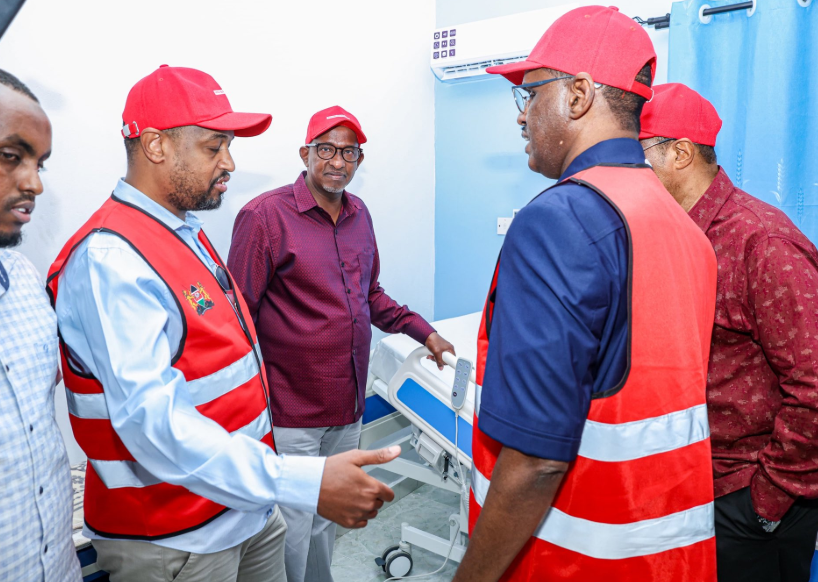
The announcement followed a visit by Health Cabinet Secretary Aden Duale to Garissa County Referral Hospital Garissa County Referral Hospital, where he inspected preparedness structures and commissioned new health facilities.
At Garissa, the CS highlighted a dedicated Ebola isolation unit designed to handle both suspected and confirmed cases. The facility includes a 20-bed ward for confirmed infections and a separate 10-bed section for suspected cases. Officials say this model is being replicated in the 23 centres spread across the country.
According to the ministry, the goal is to ensure that Kenya can quickly isolate, test, and manage any suspected Ebola case without overwhelming the main health system.
“The facility is among 23 isolation and treatment centres established through collaboration between the national and county governments,” the ministry noted.
While stressing that Kenya remains Ebola-free, the Health Ministry says the country is operating on high alert, especially given outbreaks in neighbouring regions over recent years. Uganda and the Democratic Republic of Congo have both experienced repeated Ebola flare-ups, raising concerns about cross-border transmission risks in East Africa.
The government says it has also invested heavily in training and surveillance systems. More than 34,000 healthcare workers have undergone specialised training in infection prevention, disease surveillance, and emergency response. Officials believe this is key in reducing response time during any outbreak.
In addition, over 100,000 travellers have been screened at entry points into the country, and four specialised laboratories have been equipped to test for Ebola and related viral haemorrhagic diseases. Rapid response teams have also been deployed across counties to handle alerts.
A statement from the ministry said, “More than 34,000 healthcare workers have undergone specialised training on surveillance, case management, infection prevention and control, and emergency response.”
Beyond preparedness, CS Duale also commissioned a newly refurbished 28-bed inpatient ward at Garissa County Referral Hospital, part of ongoing efforts to expand healthcare access in underserved regions. The upgrade is expected to ease congestion and improve patient care in the region.
Despite these efforts, the rollout of Ebola preparedness facilities has not been without controversy. In Nanyuki, plans to establish a quarantine facility at Laikipia Air Base sparked strong opposition from residents.
The proposed centre led to protests in Nanyuki, with locals raising concerns about safety, transparency, and fears that the facility could expose communities to risk. Demonstrations escalated into clashes with police, leaving several people injured and others dead, according to earlier reports.
Health officials maintain that the preparedness programme is meant to protect, not endanger, communities. But the debate highlights the tension between emergency readiness and public trust—especially in areas where misinformation and fear can spread quickly.
For now, Kenya continues to expand its surveillance systems, hoping that early detection and fast response will remain its strongest defence against any potential Ebola threat.








Leave a comment