

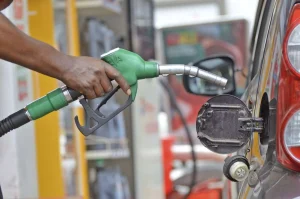
Kenyans will enjoy another month of steady fuel prices after the Energy and Petroleum Regulatory Authority (EPRA) announced that there will be no changes in pump prices for the period between October 15 and November 14, 2025.
EPRA said that in accordance with Section 101(y) of the Petroleum Act 2019 and Legal Notice No.192 of 2022, they have calculated the maximum retail prices of petroleum products, which will be in force from October 15, 2025, to November 14, 2025.
“In the period under review, the maximum allowed petroleum pump prices for Super Petrol, Diesel and Kerosene remain unchanged,” the Authority said.
This means that in Nairobi, Super Petrol will continue to retail at Ksh 184.52, Diesel at Ksh 171.47, and Kerosene at Ksh 154.78 for the next 30 days. In Mombasa, motorists will buy Super Petrol at Ksh 181.21, Diesel at Sh168.19, and Kerosene at Ksh 151.49. In Nakuru, prices will remain at Ksh 183.56 for Super Petrol, Ksh 170.87 for Diesel, and Ksh 154.21 for Kerosene. In Eldoret, the prices are Ksh 184.38, Ksh 171.68, and Ksh 155.03 respectively, while in Kisumu, motorists will pay Ksh 184.37 for Super Petrol, Ksh 171.68 for Diesel, and Ksh 155.03 for Kerosene.
Last month’s review, released on September 14, saw minor reductions across all three products, with Super Petrol dropping by Ksh 0.79, Diesel by Ksh 0.11, and Kerosene by Ksh 0.80 per litre. “The prices are inclusive of the 16 per cent Value Added Tax (VAT) in line with the provisions of the Finance Act 2023, the Tax Laws (Amendment) Act 2024 and the revised rates for excise duty adjusted for inflation as per Legal Notice No. 194 of 2020,” Epra said in a statement.
The last major adjustment came in July when EPRA increased the prices of petrol, diesel, and kerosene by Ksh 8.99, Ksh 8.67, and ksh 9.65, respectively.
The surge was linked to higher freight costs as global shipping lines reacted to tensions in the Strait of Hormuz, a crucial waterway between Iran and Oman through which about 20 per cent of the world’s oil and liquefied natural gas passes every day.
EPRA explained that the main goal of the Petroleum Pricing Regulations is to cap retail prices of petroleum products that are already in the country so that importation and other prudently incurred costs are recovered while ensuring reasonable prices for consumers.
“We wish to assure the public of its continued commitment to the observance of fair competition and protection of the interests of both consumers and investors in the energy and petroleum sectors,” the statement read.











![A packed Kasarani Stadium during the World Athletics Under-18 Championships in 2017. [Photo/ World Athletics]](https://businesstoday.co.ke/wp-content/uploads/2021/10/kenyas.jpg)


