

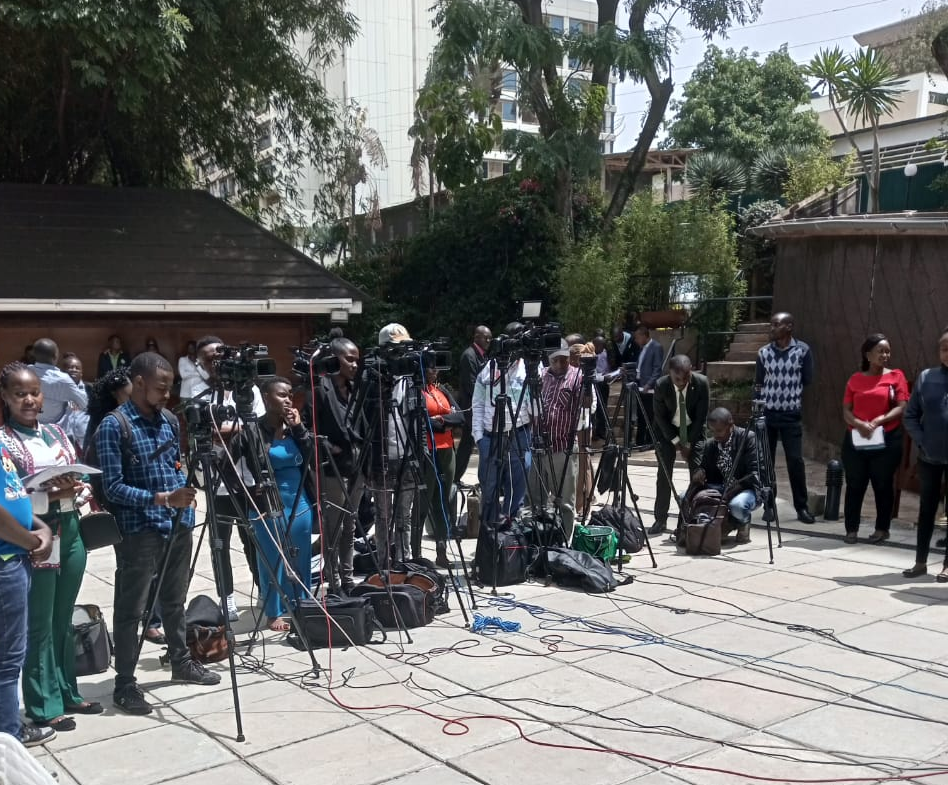
After watching in silence for a long time, the Media Council of Kenya (MCK) is moving to address the ever-presence nuisance of people masquerading as journalists who throng news events, giving journalism a bad name.
MCK, the media industry regulator, has issued a notice for a stakeholder meeting to chart a way forward on how to deal with the so-called quack journalists, who are accused of extortion and invading dining areas reserved for journalists during media functions.
“It has come to our attention that there’s an escalation of fraudsters masquerading as journalists and media practitioners who get access to events with the intention of extorting and harassing people,” MCK CEO, Mr David Omwoyo, says in the statement issued on 26th January 2023.
The Media Council of Kenya has organized a meeting with industry stakeholders on Friday, 27th January 2023, to provide a platform to deliberate on the matter “and agree on practical measures” to enhance professionalism and to deal with the rising cases of fraudsters posing as journalists.
While MCK does not specify who the stakeholders are, it certainly will rope in media owners, editors, Kenya Union of Journalists and PR practitioners.
Read >> Citizen TV couple’s media company behind a number of successful telenovelas
Players in the media industry say MCK should, in addition, run awareness campaigns to educate news sources – who include politicians, corporates, churches, government departments, development agencies, PR agencies and the public – that journalists are not paid to cover events.
“If there are no handouts at media events, the quacks will be jobless,” a senior journalist said in a media Whatsapp group. “Demands for cash must also be treated as extortion and fraud and escalated to arrest and prosecution.”
This, though, is easier said then done. The menace of quack journalists has been around for decades. Efforts to root them out have often fallen flat, snaring just a few who soon get back into business.
The problem has been how to profile a quack journalist since a good number of these ‘masqueraders’ are trained journalists who do not work with credible media houses. Some pose as freelancers, while others claim to work for amorphous foreign media outlets.
The work of event organisers has become a nightmare, forcing many organizations to hire PR companies to help filter out the fakes. “The Council is committed to fostering a conducive working environment for journalists and media practitioners through approved standard and constantly engaging relevant stakeholders to address pertinent issues affecting the sector,” Mr Omwoyo says.
See >> Sheila Kwamboka: From Big Brother Africa To Radio Queen
With the growth in media – FM radio stations, TVs and online publishing – there has been an explosion in the number of journalists on the media scene. Anyone with a blog or website has become a journalist and uses his or her online influence to claim a seat at the journalism table. The situation is made worse by an influx of interns who are happy to attend these events.
Picking a quack from this crowd can be about as hard as identifying a qualified driver on Kenyan roads. It gets more complicated since these quacks are often fronts of mainstream journalists, who give them tipoffs for extortion or collude in publishing paid-for articles presented by the same quacks.
That’s why MCK’s work is clearly cut out in an industry where the line between qualification and practice has increasingly faded. “MCK will remain at the forefront in protecting the credibility of the media and journalists by ensuring that only accredited journalists are allowed to practice in the country, in line with our constitutional provisions,” Mr Omwoyo says.
Next Read >> Hustler Fund Increases Loan Limit On One Condition












Leave a comment